
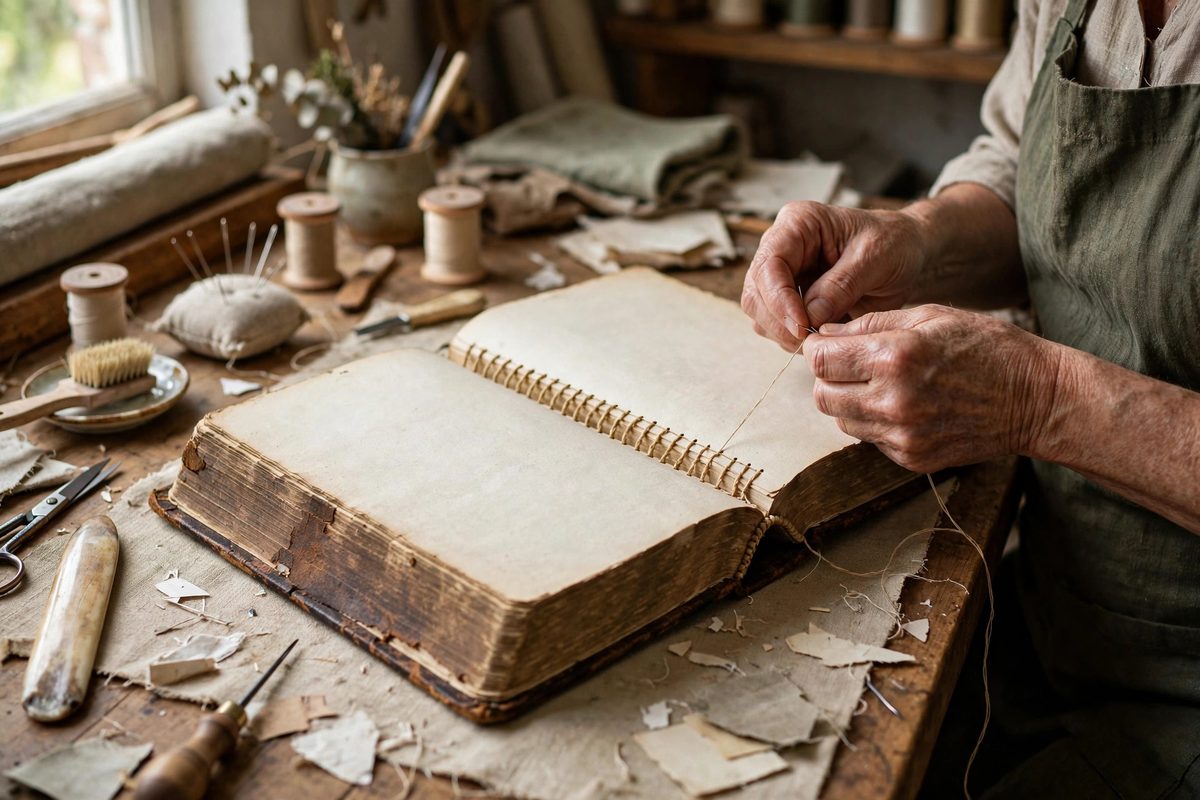
Rebinding a well-worn Bible is a commission of trust: the book is often a family heirloom, and the new binding must open flat, last generations, and respect the text block. The French link stitch, a traditional sewing structure that links each signature to its neighbors, produces a strong, flexible spine that opens beautifully. It is more work than simpler sewings, and for a Bible that will be opened daily, the work is justified.
Why the French Link Stitch for Bibles
Bibles are typically printed on thin paper in many signatures, making a thick text block that is hard to open. A rigid spine fights the reader; a flexible spine invites use. The French link stitch creates a spine that flexes evenly because each signature is sewn independently and linked to the next with a looping stitch, rather than being sewn on rigid cords that stiffen the back. The result opens flat from the first page to the last, with no tight gutter in the middle. The sewing is also strong: the interlocking links distribute stress across the whole spine, so no single signature bears the opening force alone. For a book that will be opened thousands of times, this combination of flexibility and strength is exactly right.
Preparing the Text Block
Strip the old binding carefully, preserving the text block intact. Clean the spine, removing old glue without tearing the signature folds; a soft brush and patience beat solvents here. Check the collation: every signature must be present and in order, since rebinding is the last easy chance to catch a missing section. If the original sewing holes are usable, they guide the new sewing; if not, punch fresh holes with an awl using a template so every signature matches. Guard any torn folds with thin Japanese tissue before sewing. The sewing can only be as good as the text block it holds, so preparation is not optional.
Sewing the Link Stitch
The French link stitch proceeds signature by signature. Enter the first signature, sew along its fold catching each station, exit, and then link to the previous signature with a loop around its sewing thread before entering the next signature. The linking loop is the heart of the structure: it connects each new signature to the sewn ones without a cord, creating the characteristic chain along the spine. Keep the tension even and firm but not tight enough to pucker the folds; uneven tension produces a spine that is tight in some sections and loose in others, and the book will open unevenly forever. Work methodically down the text block, checking periodically that the signatures align at the head and tail. Waxed linen thread in an appropriate weight is the traditional choice, strong and smooth.
Spine Lining and Backing
After sewing, the spine needs lining to consolidate the structure. Apply a thin, even coat of flexible adhesive to the spine, then lay on a spine lining of sturdy cloth or tissue, extending slightly onto the outer signatures. Some binders add a second lining for extra strength on heavy Bibles. The lining holds the signatures' backs together while preserving the flexibility the link stitch created; too much glue or too stiff a lining undoes the sewing's work. Shape the spine gently, rounding it slightly if the binding style calls for it, and let it dry under light pressure. A well-lined French link spine feels solid but supple, like a good handshake.
Casing In and Finishing
Make the case, boards and covering material, to fit the text block precisely; a Bible case that is too tight strains the joints, and one that is too loose looks sloppy. Attach the text block with pasted endpapers, working the hinges carefully so the boards open squarely. Press the book until fully dry, checking that it opens flat and the spine flexes evenly. The finished binding should invite daily use: pages that turn easily, a spine that yields without cracking, and joints that show no strain. A rebound Bible sewn with the French link stitch is built for a lifetime of readings, which is the whole point of the commission.
The French link stitch gives a rebound Bible a spine that is strong, flexible, and opens flat: prepare the text block meticulously, sew with even tension signature by signature, line the spine without stiffening it, and case in precisely. The reader should never think about the binding, only the words.
Related Guides
- Binding Glue Flexibility in Altered Book Spines: An altered book asks its spine to do something bookbinding never intended: open flat, fold back on itself, carry added bulk from collage and paint
- Kettle Stitch Binding Schedules for Rebuilt Folios: Rebuilding folios in an altered book means the signatures no longer behave like the ones the binder originally sewed, and the kettle stitch schedule
- Archival Hinging Tissue Mounting in Shadow Boxes: Shadow boxes present art with depth: objects and layered elements floating in a deep frame, casting real shadows. Mounting work inside them