
Iron has been used for millennia to darken and fix natural dyes on cloth, and the classic iron tannate process pairs a tannin soak with an iron afterbath to produce greys, charcoals, and blacks on cellulose fibers. On heavy cellulose fabrics like canvas, denim, and ticking, the fiber mass soaks up enormous amounts of chemistry, so the bath needs to be sized and managed differently than the light-cotton procedures in most books. This guide covers the why and how of iron tannate fixation on heavy cloth.
How iron tannate forms in the fiber
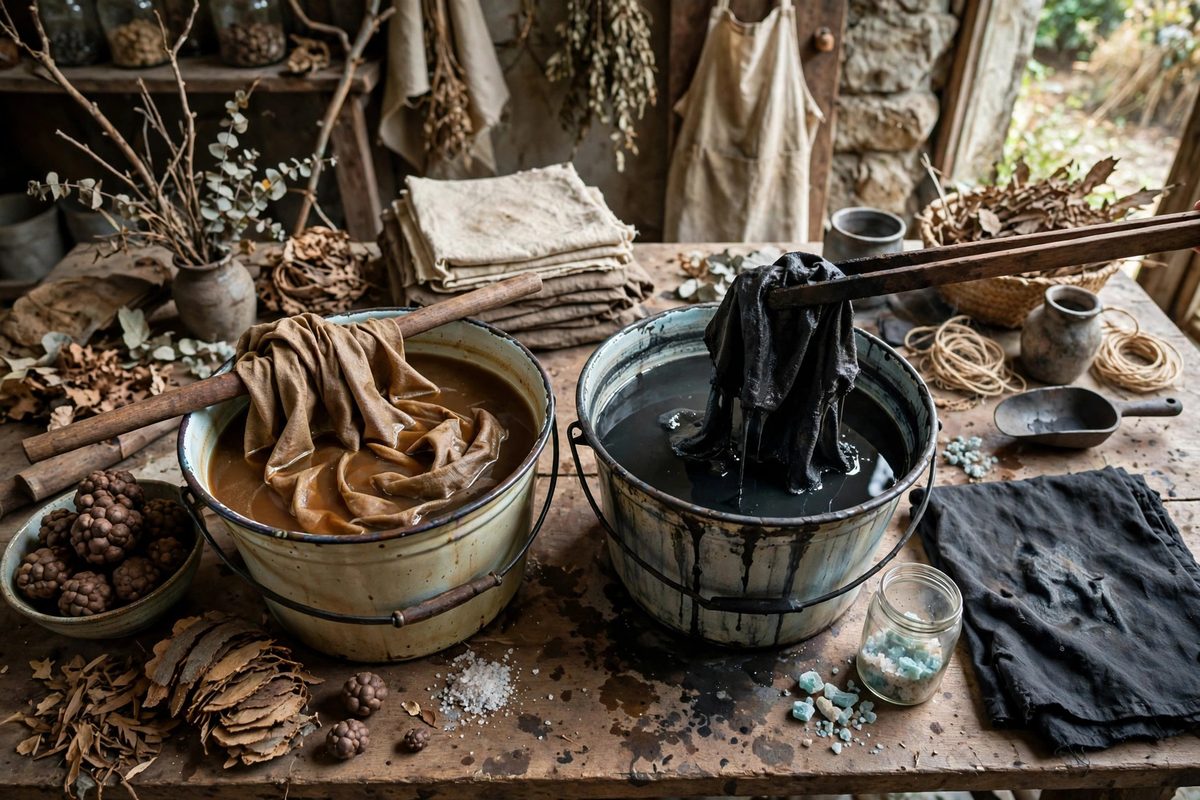
Tannins are large plant molecules that bind readily to cellulose. When cloth is soaked in tannin, the tannin molecules lodge inside the fiber's pores. A subsequent iron bath, typically made from ferrous sulfate or from iron liquor brewed from rusty iron and vinegar, reacts with that trapped tannin to form iron tannate, a large, dark, insoluble complex locked inside the fiber. Because the final color compound is bigger than the fiber pores, it cannot wash out easily. That is the fixation mechanism: the dark color and the improved dye take-up are two sides of the same chemical event.
Sizing the tannin bath for heavy cloth
Heavy fabrics drink. A yard of 12-ounce canvas can weigh four or five times what a yard of muslin does, and it needs proportionally more tannin to saturate its interior. A workable starting ratio is about one part tannin source to eight or ten parts fabric by weight, simmered in enough water for the cloth to move freely. Because the fiber is dense, extend the soak well beyond light-fabric times: a full day to two days of warm soaking gives the tannin time to migrate to the core of thick yarns. Shortcutting this step is the most common cause of pale, uneven results on heavy cloth, since surface tannin darkens while the fiber cores stay bare.
The iron bath and its strength
After the tannin soak, the cloth goes into the iron bath. Ferrous sulfate solutions around one to two percent weight of fabric produce a broad useful range, from warm grey at the light end to near-black with longer dips. Iron liquor from vinegar and rusty iron is traditional and works well, but its strength varies by brew, so test on swatches before committing a yard of canvas. Dip time controls depth more than concentration does: repeated short dips with airing between them build richer color than one long soak, because oxidation between dips darkens iron tannate progressively. Rinse well after the final dip.
Why iron rots cellulose and how to manage it
Iron is a catalyst for cellulose degradation. Over time, excess iron trapped in fibers accelerates oxidation, and heavy fabrics with deep iron penetration can weaken and eventually fall apart at the iron-darkened areas. This is not a rumor; it is the same chemistry that destroys iron-gall ink documents. The defense is moderation: use no more iron than the target shade requires, rinse thoroughly to remove unreacted iron, and store or use finished pieces dry. For items that will carry loads (bags, straps), favor lighter iron greys over full black, since the rot scales with iron concentration. Never iron-treat rope or load-bearing webbing unless you accept a reduced service life.
Fixation benefits beyond color
The iron tannate complex also improves the washfastness of other natural dyes applied over or under it. Tannin pre-mordanted cloth takes many plant dyes more deeply, and a light iron dip after dyeing (saddening) shifts and deepens colors while locking them in. On heavy canvas intended for outdoor use, a tannin-iron base can also improve mildew resistance slightly, though it is no substitute for proper storage. Think of the iron bath as both a color source and a dyeing tool: the same cloth, the same bath, different jobs.
Practical workflow and cleanup
Keep tannin and iron equipment separate, or at least rinse iron pots obsessively, because stray iron will stain everything it touches with grey freckles. Stainless steel or enamel pots are preferred; bare iron pots contaminate baths unpredictably. Dye in a ventilated space, since vinegar-based iron liquor gives off fumes, and wear gloves: iron solutions stain skin for days. Neutralize leftover baths before disposal, and never pour iron liquor into a septic field at full strength without diluting it first.
Heavy cellulose rewards the patient dyer. Size the bath to the fiber mass, soak long enough to reach the yarn cores, and use iron at the minimum strength that reaches your shade. The color you earn that way is deep, fast, and honest.
Related Guides
- Tannin Mordant Fixation on Cellulosic Linen Fibers: Natural dyes love protein fibers and merely tolerate cellulose. Wool and silk grab most dye molecules eagerly; linen, cotton, and hemp often let the
- Tannin Mordant Fixation on Cellulosic Linen Strands: Natural dyes love protein fibers and are indifferent to cellulose, which is why dyeing linen, a cellulosic fiber, with plant dyes is notoriously
- Mordant Alum Ratios for Colorfast Wool Dyeing: Natural dyes on wool need a mordant, a mineral salt that bonds dye molecules to fiber, or the color washes out with the first rinse. Alum, potassium
- Copper Acetate Fixative Ratios for Forest Tan Extracts: Tannin dyes from bark, leaves, and galls give the deep browns and grays of traditional dyeing, but tannins wash out without a fixative. Copper