
Natural dyes on wool need a mordant, a mineral salt that bonds dye molecules to fiber, or the color washes out with the first rinse. Alum, potassium aluminum sulfate, is the standard mordant: safe, effective, and predictable. The ratio of alum to fiber weight determines whether the dye bonds fully, and getting it right is the difference between colorfast wool and expensive disappointment. It is the least glamorous step in natural dyeing and the one most responsible for the final result, every single time.
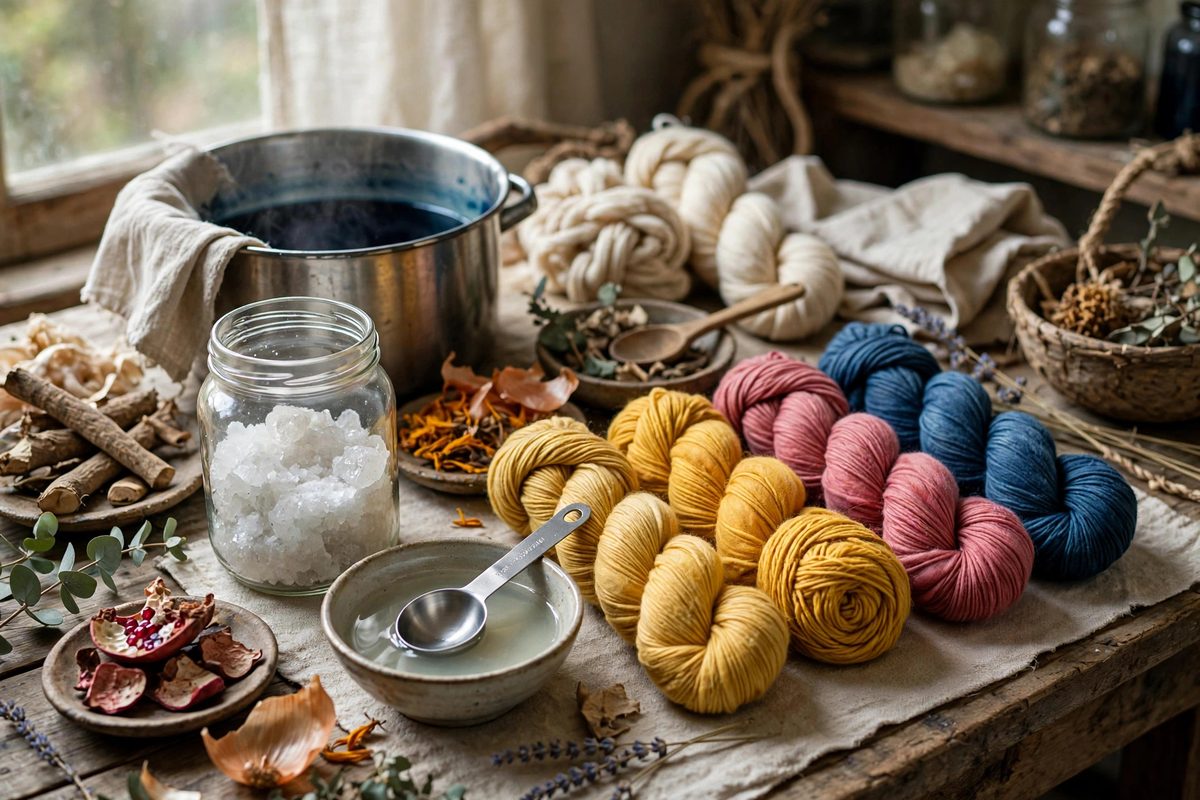
How mordanting works
Wool protein and most natural dye molecules do not bond strongly to each other directly. The aluminum ion acts as a bridge, forming coordination complexes with both the fiber and the dye, locking the color into the wool at a molecular level. Without this bridge, the dye sits on the surface and leaves with water, friction, and light.
The mordant must be distributed evenly through the fiber before dyeing, which is why mordanting is a separate bath preceding the dye bath. Uneven mordanting produces uneven dye uptake, visible as patchiness no amount of dye can fix. The ratio and the process together determine the result.
The standard ratio and its basis
The widely used alum ratio for wool is around 15 to 20 percent of the fiber's dry weight, dissolved in the mordant bath with a small addition of cream of tartar, which brightens colors and moderates the aluminum's effect on the wool hand. This ratio saturates the fiber's mordant-binding sites without excessive unbound aluminum, which can harshen the wool and dull colors.
Weigh everything. Mordanting by volume or by eye defeats the ratio's purpose; a kitchen scale and the dry fiber weight are the required instruments. Record the exact ratio used for each batch, because reproducing a beloved color depends on reproducing the mordanting exactly.
The mordanting process
Dissolve the alum fully in hot water before adding fiber; undissolved crystals create concentrated spots that mordant unevenly and can damage the wool. Wet the wool thoroughly first so the mordant liquor penetrates evenly rather than striking the dry outer fibers first. Bring the bath to a gentle simmer, around 180 degrees Fahrenheit, and hold for about an hour, turning the fiber gently for even exposure. Use a pot large enough that the wool moves freely; cramped fiber mordants unevenly no matter how careful the turning.
Avoid agitation and temperature shock, which felt wool. Move the fiber gently, keep temperature changes gradual, and cool the bath before rinsing. The mordanted wool can be dyed immediately or dried and stored; many dyers mordant in batches and dye later, since the mordant bonds stably to the fiber.
Adjusting for dye and fiber
Some dyes need more or less mordant: dyes with strong natural affinity may need the lower end of the range, while weak dyes benefit from the full ratio. Fine wools felt more readily and demand gentler handling at every step; sturdy wools tolerate more vigorous processing. Tannin-rich dyes often pair alum with an iron afterbath for color shifting, which is a separate step with its own ratios.
Test on sample skeins before committing a whole fleece. A small test with the exact ratio, temperature, and time reveals color, evenness, and hand feel, and it costs a fraction of a full batch. The test skein is also the reference that lets you reproduce the result.
Colorfastness and aftercare
Properly mordanted and dyed wool holds color through washing and light exposure far better than unmordanted fiber, but natural dyes still demand respect: wash in cool water with gentle soap, dry out of direct sun, and expect some graceful fading over years rather than the permanence of synthetics. Test washfastness on a sample before washing a finished garment.
Keep mordanting notes with the dyed fiber: alum percentage, cream of tartar addition, bath time and temperature, dye details. Natural dyeing is reproducible only through records; memory fades faster than the colors.
Alum mordanting is ratio plus process: weigh the fiber, dissolve the alum completely, mordant evenly at a gentle simmer, handle the wool kindly, and test before committing. The dye will bond, the color will hold, and the wool will stay soft. That is the whole craft in one bath.
Related Guides
- Tannin Mordant Fixation on Cellulosic Linen Fibers: Natural dyes love protein fibers and merely tolerate cellulose. Wool and silk grab most dye molecules eagerly; linen, cotton, and hemp often let the
- Tannin Mordant Fixation on Cellulosic Linen Strands: Natural dyes love protein fibers and are indifferent to cellulose, which is why dyeing linen, a cellulosic fiber, with plant dyes is notoriously
- Copper Acetate Fixative Ratios for Forest Tan Extracts: Tannin dyes from bark, leaves, and galls give the deep browns and grays of traditional dyeing, but tannins wash out without a fixative. Copper
- Iron Tannate Fixation Baths on Heavy Cellulose Fibers: Iron has been used for millennia to darken and fix natural dyes on cloth, and the classic iron tannate process pairs a tannin soak with an iron