
Natural dyes love protein fibers and are indifferent to cellulose, which is why dyeing linen, a cellulosic fiber, with plant dyes is notoriously frustrating: the color washes out, fades unevenly, or never takes at all. Tannin mordanting is the traditional bridge. Tannins bind to cellulose where most mordants cannot, creating an anchor that the dye can then grip. Done correctly, tannin fixation turns linen from a dye-resistant problem into a rich, lasting canvas for natural color.
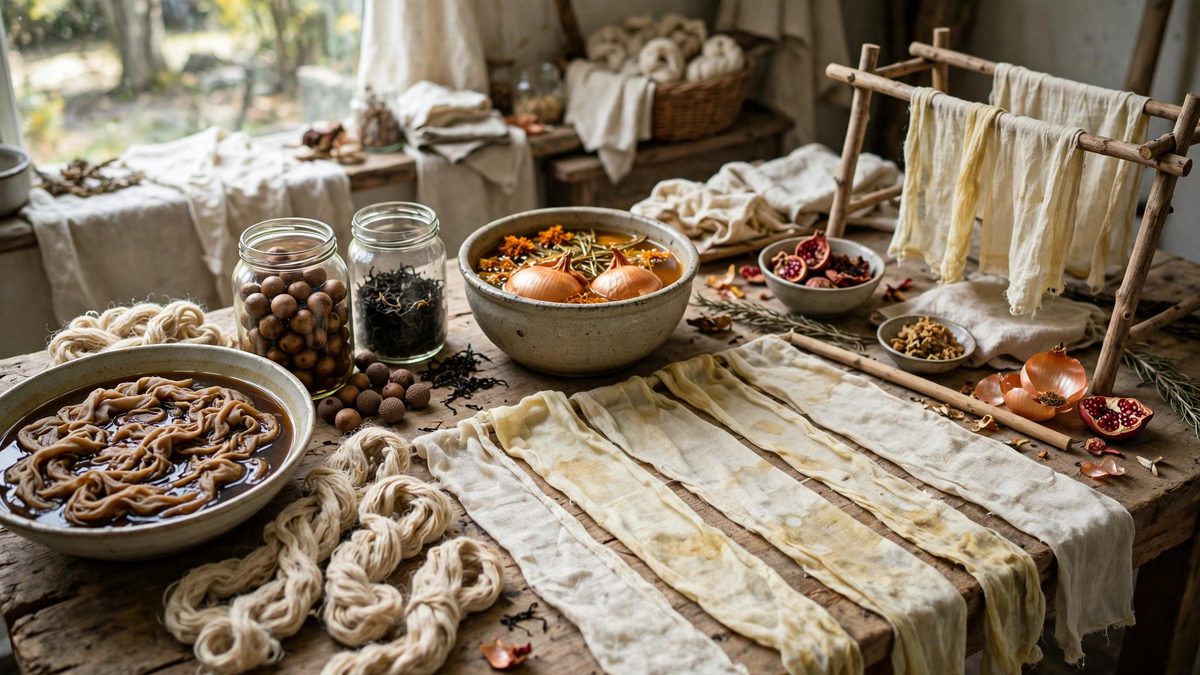
Why Linen Resists Natural Dyes
Cellulose fibers like linen and cotton lack the chemical binding sites that protein fibers (wool, silk) offer to dye molecules. Most natural dye compounds need a mordant, a substance that bonds to both the fiber and the dye, to achieve any permanence. The classic mordants, alum and iron, bond well to protein but poorly to bare cellulose, which is why alum-mordanted linen often dyes weakly and fades fast. Tannins solve this because they are large polyphenol molecules that physically and chemically attach to cellulose fibers, coating them with dye-receptive sites. The tannin does not dye the fiber itself so much as prepare it: it converts the fiber surface into something the mordant and dye can hold.
Choosing and Preparing the Tannin
Traditional tannin sources include oak galls, sumac leaves, pomegranate rind, and cutch, each giving slightly different undertones to the final color. Oak galls are among the strongest and most neutral; sumac is accessible and effective; pomegranate rind adds a warm yellow cast that becomes part of the final color. For consistent results, many dyers use purified tannin powder, which eliminates the variability of foraged materials. Dissolve the tannin fully in hot water before adding the fiber: undissolved particles create spots. The bath should be strong enough to matter but not so concentrated that it stiffens the linen excessively; tannin does add body to the fabric, which is usually desirable in linen but can go too far.
The Fixation Process
Scour the linen first: any oils, sizing, or pectin on the fiber block tannin uptake, so a thorough hot wash with a mild alkaline scour is non-negotiable. Enter the damp linen into the tannin bath and work it gently to ensure even penetration; linen strands and yarn need time for the tannin to reach the fiber interiors, so an extended soak, often overnight, gives more even results than a quick dip. Keep the bath warm but not boiling: excessive heat can damage linen over long soaks. After the tannin bath, the fiber typically goes into a mordant bath (alum is common after tannin, and the tannin-alum combination is the classic cellulose mordanting sequence), because the tannin holds the alum, and the alum holds the dye. Some dyers add an iron after-bath for darkening or color shifting, but iron on linen must be used sparingly: it weakens cellulose over time.
Evenness: The Hard Part
Uneven tannin uptake is the most common failure, showing up as blotchy dye results that no amount of careful dyeing fixes. The causes are familiar: fiber entered the bath dry (dry spots resist penetration), the bath was too cool or too short, or the material was not moved enough for even exposure. Pre-wet the linen thoroughly so it enters the bath uniformly damp. Stir and turn gently but regularly, especially in the first part of the soak when uptake is fastest. Do not crowd the bath: the liquor needs to circulate around every strand. And keep notes on timing and temperature, because tannin mordanting is one of those processes where repeatability comes from records, not memory.
Dyeing After Tannin Mordanting
Once mordanted, dye the linen with the same care as any natural dye process: enter damp fiber into the dye bath, raise temperature gradually, and hold long enough for full penetration. Tannin-mordanted linen takes dye more slowly than mordanted wool, so be patient and do not rush with high heat. Expect the tannin to influence the final color: tannins add their own warm, slightly dark cast, so colors on tannin-mordanted linen run deeper and earthier than the same dye on wool. This is a feature, not a bug: the rich, complex tones of tannin-ground natural dyeing on linen are among the most beautiful in the textile arts.
Washfastness and Expectations
Properly tannin-mordanted linen achieves good washfastness, though natural dyes on cellulose will never quite match the tenacity of the same dyes on wool. Wash finished pieces gently in cool water with mild soap, and expect some initial crocking (surface dye rubbing off) on the first wash: rinse until the water runs reasonably clear before considering the piece finished. With correct fixation, the color that remains is stable and ages gracefully, developing the soft patina that makes naturally dyed linen so prized.
Tannin is the key that unlocks natural dyeing on linen. Scour well, tannin thoroughly and evenly, follow with mordant, dye patiently, and the cellulosic fiber that once resisted color will hold it beautifully.
Related Guides
- Tannin Mordant Fixation on Cellulosic Linen Fibers: Natural dyes love protein fibers and merely tolerate cellulose. Wool and silk grab most dye molecules eagerly; linen, cotton, and hemp often let the
- Mordant Alum Ratios for Colorfast Wool Dyeing: Natural dyes on wool need a mordant, a mineral salt that bonds dye molecules to fiber, or the color washes out with the first rinse. Alum, potassium
- Iron Tannate Fixation Baths on Heavy Cellulose Fibers: Iron has been used for millennia to darken and fix natural dyes on cloth, and the classic iron tannate process pairs a tannin soak with an iron
- Copper Acetate Fixative Ratios for Forest Tan Extracts: Tannin dyes from bark, leaves, and galls give the deep browns and grays of traditional dyeing, but tannins wash out without a fixative. Copper