
Plastisol ink does not dry; it cures. The ink is a suspension of PVC particles in plasticizer, and it only becomes a durable print when the full thickness of the ink film reaches the temperature at which those particles fuse into a solid. On stretch cotton garments, which move, flex, and get washed aggressively, an under-cured print cracks and flakes while a properly cured one stretches with the fabric. Temperature control is the entire difference.
What curing actually requires
Curing means the entire ink deposit, from the surface touching the air to the ink touching the fabric, has reached fusion temperature and held it long enough for the PVC particles to melt together. The commonly cited target is around 320 degrees Fahrenheit throughout the ink film, though the exact number varies slightly by ink formulation, so the ink manufacturer's specification is the authority for the specific product on the press.
The critical word is throughout. The surface of the ink heats first and can read at cure temperature while the bottom of the deposit is still well below it, especially with thick prints like high-density or heavily underbased work. A surface temperature reading is not a cure confirmation. The heat has to soak through, which takes time as well as temperature.
Measuring the real temperature
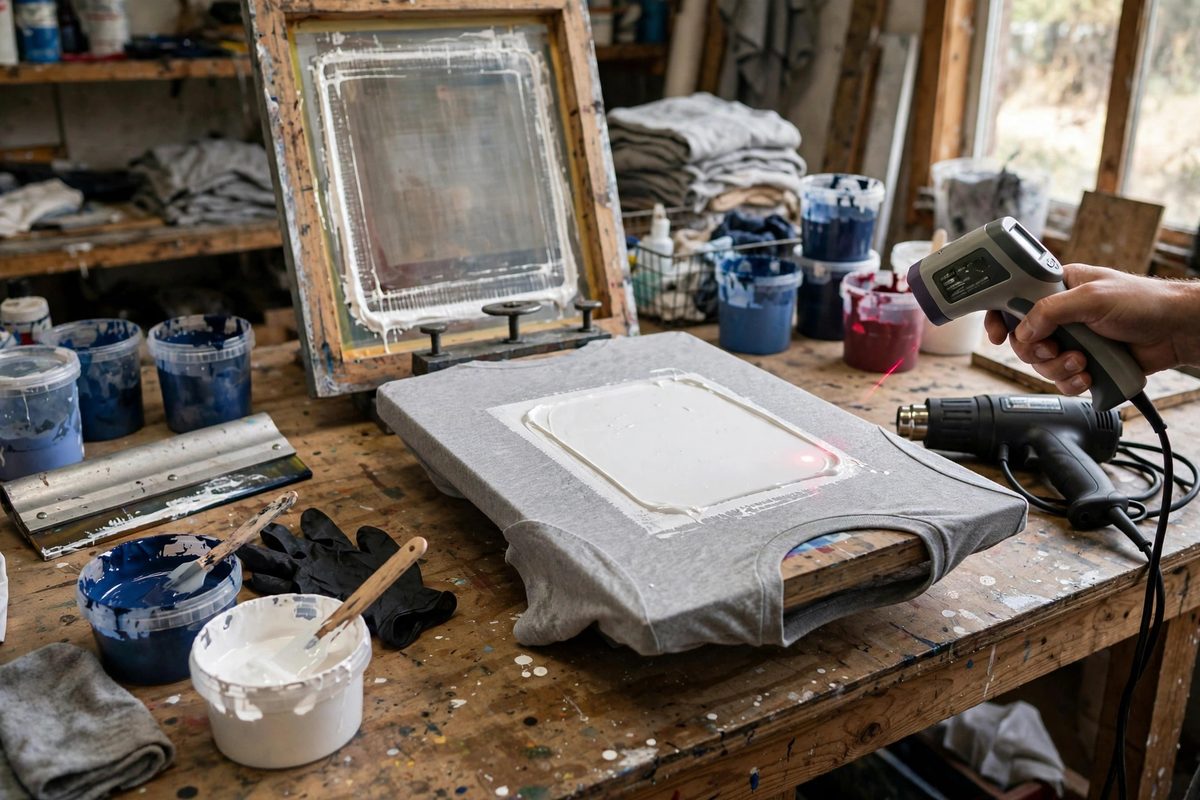
An infrared thermometer gun reads surface temperature only, which makes it useful for quick checks and misleading as a cure verdict. The reliable tools are a donut probe or thermocouple placed in the ink film during a test run, or temperature-sensitive test strips and crayons that record the maximum temperature the ink film actually reached. Run the test with a real garment and a real print, because an empty platen or a test pellon heats differently than production work.
Test at the start of every run and after any change: different garment color, different ink deposit thickness, different dryer settings, or a long pause that let the dryer heat-soak. Dryer temperature drifts, and a setting that cured yesterday's run may not cure today's if the shop is colder or the garments are heavier.
Stretch cotton's specific challenges
Stretch cotton, usually cotton blended with spandex or elastane, complicates curing in two ways. First, the fabric itself is heat-sensitive: too much heat or too long in the dryer damages the stretch fibers, and the garment loses its recovery. The cure window sits between hot enough to fuse the ink and cool enough to spare the spandex, which is narrower than the window for 100 percent cotton.
Second, the print has to stretch with the garment after curing. A fully cured plastisol film is inherently somewhat flexible, but thick deposits cure into a stiffer film that resists the fabric's stretch and eventually cracks along stress lines. Keep ink deposits as thin as the design allows on stretch garments, and consider a stretch additive in the ink, which keeps the cured film pliable. The additive does not change the cure temperature, but it changes what the cured film can survive.
Dryer setup for consistent cures
Conveyor dryer cure depends on three variables: chamber temperature, belt speed, and the distance from the heating elements. Set them so the ink film reaches fusion temperature with time to spare, then verify with a probe, not by guessing from the settings. A common failure is cranking the chamber temperature to compensate for a fast belt; the surface scorches while the ink base stays under-cured, and the garment's stretch fibers take the extra heat for nothing.
Flash curing between colors is a separate operation from final cure. The flash only needs to gel the surface enough to print the next color without pickup, which happens well below full cure temperature. Confusing a flash with a cure, either by flashing too hot or by assuming a flashed print is finished, is a classic source of prints that look fine off the press and fail in the first wash.
The wash test as final proof
No temperature reading replaces a wash test. Cure a test garment, wash and dry it the way the end wearer will, and inspect the print: it should show no cracking, no flaking, and no significant fading beyond the ink's normal behavior. Stretch the printed area firmly; a properly cured print on stretch cotton elongates with the fabric and recovers without fissures.
Temperature gets you to cure; the wash test proves you arrived. Build both into the production routine and the prints will outlast the garments.
Related Guides
- Emulsion Exposure Timing Under High-Output UV Units: High-output UV exposure units cure screen emulsion in a fraction of the time that old fluorescent or halogen setups needed, which is a blessing and a
- Mesh Tension Newton Ratings for Halftone Prints: Halftone screen printing, reproducing photographic tones as dots of ink, demands more from the screen than spot-color work does. The dots are small
- Off-Contact Distance Calibration on Textile Pallets: In screen printing on textiles, the screen should not lie flat on the garment; it should hover just above it. That gap, the off-contact distance, is