
The underpainting is the foundation of an oil painting, establishing values and composition in thin paint before the real color work begins. Linseed oil thinned with solvent is the traditional underpainting medium, and the solvent ratio controls how lean the layer is. Get the ratio right and the underpainting dries fast, grips the ground, and supports everything above it; get it wrong and the painting's foundation is compromised from the start.
Fat Over Lean: Why the Underpainting Must Be Lean
Oil paint dries by oxidation and polymerization, and each layer must be more flexible than the one beneath it, the fat-over-lean rule. The underpainting, being the bottom layer, must be the leanest: high in solvent, low in oil. A lean underpainting dries quickly to a matte, porous film that subsequent fatter layers grip mechanically and chemically. If the underpainting is too fat, rich in oil, it dries slowly to a slick, closed film; later layers sit on top without bonding and eventually delaminate or crack. The solvent ratio is how the painter controls leanness: more solvent means leaner paint. This is not a stylistic choice; it is structural chemistry.
Working Solvent Ratios
A typical underpainting mixture is roughly equal parts paint and solvent, up to about two parts solvent to one part paint for a very lean wash. Linseed oil is already in the tube paint, so the added solvent is what makes the mixture lean relative to later layers. Use an artist-grade solvent such as odorless mineral spirits or turpentine; hardware-store solvents can contain residues that interfere with drying. Mix the underpainting to the consistency of thin cream: fluid enough to draw and wash with, but still carrying enough pigment to establish values. Test on the palette: the mixture should flow off the brush easily and dry to a matte finish within a day or two. If it dries glossy, it was too fat; add more solvent next time.
Solvent Choice and Handling
Turpentine is the traditional choice, with a strong smell and excellent solvency; odorless mineral spirits are the modern studio standard, slower to evaporate but far less noxious. Whichever you use, ventilate the studio properly and keep solvent containers closed when not in use; solvent vapors are a health hazard with chronic exposure. Never use solvent near open flame. Dispose of solvent-soaked rags safely, spread flat to dry or stored in a sealed metal container, because oil-soaked rags can spontaneously combust. These safety habits are part of the technique, not an afterthought; the old masters' studios were firetraps, and there is no reason to repeat that.
Building the Underpainting
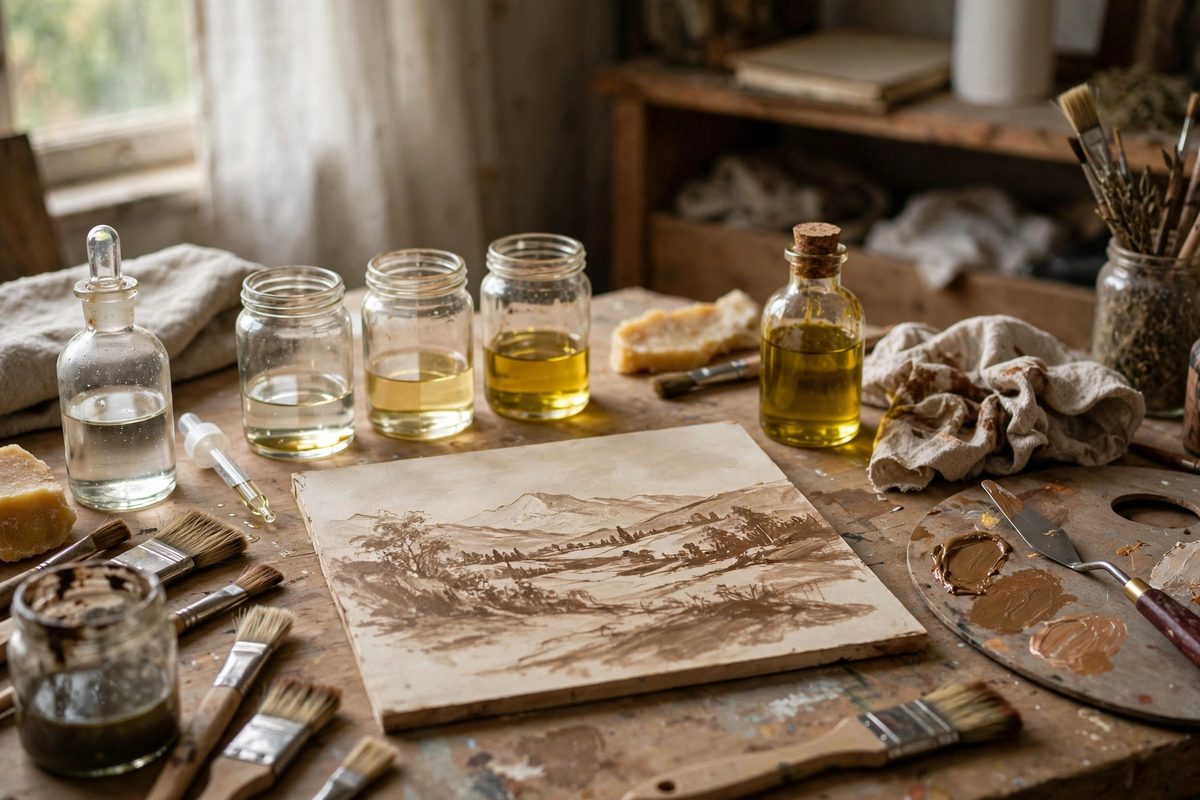
Apply the underpainting thinly, establishing the big value masses and the drawing. Many painters work monochromatically at this stage, in burnt umber or a similar earth color, since the job is structure, not color. Keep the paint thin enough that the ground's tooth still shows through slightly; a thick underpainting defeats the purpose. Let it dry fully before proceeding, which for a lean layer means a day or two in normal conditions; painting fat color over a tacky underpainting traps solvent and causes wrinkling. Some painters oil out lightly before the next stage, but on a properly lean underpainting this is usually unnecessary. The underpainting should feel dry, matte, and slightly absorbent, ready to receive the painting proper.
Common Underpainting Failures
Sinking in, where later paint looks dull and sunken over the underpainting, usually means the underpainting was too absorbent, often from excessive solvent or an overly lean mixture; the fix is to oil out the sunken areas before continuing. Cracking between layers means the fat-over-lean order was violated, typically an underpainting that was too oily; this is structural and cannot be fixed after the fact, only prevented. Beading or crawling of subsequent layers means the underpainting dried too slick, again a too-fat mixture. All three failures trace back to the solvent ratio. Keep the underpainting lean, thin, and matte, and the layers above will behave.
The underpainting's solvent ratio is the foundation's chemistry: lean enough to dry fast and matte, thin enough to grip, with fat-over-lean preserved for every layer above. Mix around one-to-one up to two-to-one solvent to paint, ventilate well, and let it dry fully. The painting stands on this layer.
Related Guides
- Stand Oil Dilution Curves for Glazed Oil Shadows: Shadow glazes in oil painting need to be dark, transparent, and level, and stand oil is the medium that makes all three possible at once. Stand oil
- Stand Oil Viscosity Control for Wet-on-Wet Blends: Wet-on-wet oil painting, laying fresh paint into fresh paint and blending on the canvas, is a viscosity performance. The paint must be fluid enough
- Fat Over Lean Paint Layering to Prevent Crazing: Crazing, the network of fine cracks that can appear in an oil painting months after it looked perfect, is almost always a layering error. The rule