
The Muppet look lives or dies on invisible seams: the fleece covering a puppet's muzzle should read as one continuous skin, with no visible stitch line breaking the character's face. Antron fleece (the nylon fleece the professional shops use) hides seams better than any other fabric because its pile brushes over the stitching, but only if the seam is scribed, cut, and sewn with the pile's direction and behavior in mind. Seam scribing is the technique that makes the magic happen.
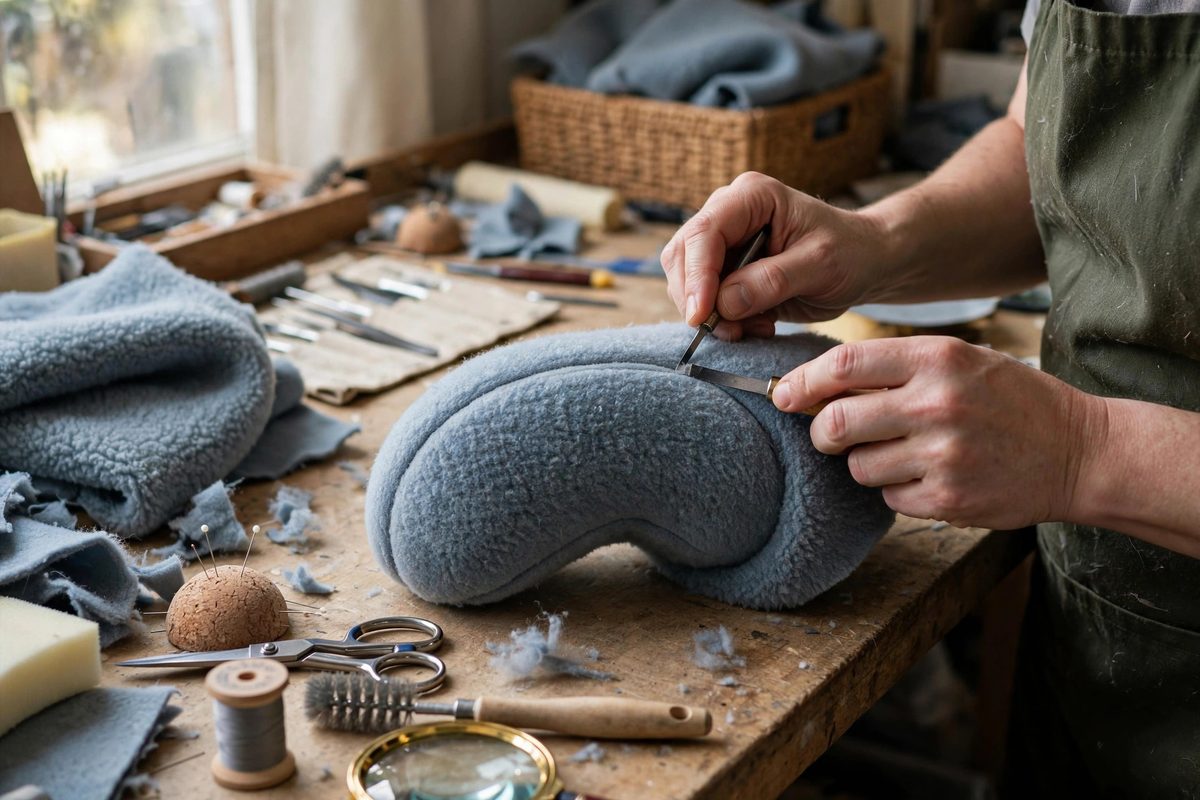
Why Antron Fleece Hides Seams
Antron fleece has a dense, directional pile over a knit backing. When two pieces are sewn with the pile running the same direction across the seam, the fibers from both sides intermix and the stitch line disappears under the nap. Sew against the pile direction, or let the seam allowance's raw edge peek through, and the seam announces itself. Every decision in scribing and sewing serves one goal: keep the pile continuous and the stitching buried.
Scribing the Pattern on the Foam
Start by fitting the muzzle's foam understructure and marking the seam lines directly on the foam with a pen, following the muzzle's natural contours: along the top ridge, around the sides, wherever the fleece must dart or join. These scribed lines become the cutting lines for the fleece pattern. Transfer them to paper by laying the paper over the foam and tracing, adding seam allowance (about 3/8 inch) outside each line. Cut the fleece pieces with the pile running downward on the muzzle (the direction fur would naturally lie), and mark the pile direction on every pattern piece so it never gets flipped during assembly.
The Hidden Seam Technique
Sew fleece seams with a ladder stitch or a whipstitch worked from the pile side, catching only the backing of each piece and never piercing through to show thread on the surface. Keep stitches small (about 1/8 inch) and tension even; loose stitches gap, tight stitches pucker, and both show. As you sew, brush the pile away from the seam line with a stiff brush so no fibers get caught in the stitches, then brush the pile back across the finished seam to intermix the fibers. The seam should be findable by touch (a slight ridge on the inside) but invisible to the eye.
Darts and Compound Curves
Muzzles curve in two directions, which means the fleece needs darts: wedge-shaped tucks that take up fullness. Scribe dart lines on the foam where the curvature is tightest (usually at the muzzle's front corners), cut them as separate pattern pieces or as slash-and-spread adjustments, and sew them with the same hidden technique. Each dart is a potential visible seam, so place darts where the character's design already has a feature: along a smile line, under the nose, at the mouth corners. A seam that follows a design line is camouflaged by the design itself.
Trimming Seam Allowances
After sewing, trim the seam allowances close (about 1/8 inch) to reduce bulk, being careful not to nick the stitching. On tight curves, clip the allowance so it spreads flat inside the muzzle. Then turn the piece and brush, brush, brush: a pet slicker brush or a stiff toothbrush worked across the seam in the pile direction is what finally erases the line. Steam from a kettle (held at a distance, never touching) can relax stubborn pile and help it lie uniformly. The brushing step is not optional; it is what converts a good seam into an invisible one.
Fitting Over the Foam
Slide the finished fleece skin over the foam muzzle and check the fit before gluing anything. The skin should be snug but not stretched; stretched fleece thins the pile and reveals the backing. Glue sparingly, only at anchor points (the back edge, around the mouth plate), because full-coverage glue stiffens the fleece and kills the soft hand-feel that makes the puppet work. A well-scribed, well-sewn fleece skin on a well-shaped foam muzzle is the foundation every great hand puppet is built on.
Seamless muzzles are not luck; they are scribing, pile direction, hidden stitches, and patient brushing. Mark the foam, cut with the nap, sew what cannot be seen, and brush until the seam surrenders; the character that emerges will look like it grew that way.
Related Guides
- Antron Fleece Seam Scribing for Seamless Puppet Faces: Antron fleece is the puppet builder's magic fabric: its long pile hides seams that would scream on any other material. But the pile only hides seams
- Foam Latex Pattern Pinning for Muppet Style Hands: The Muppet-style hand, that expressive mitten with a defined thumb that can grip, wave, and gesture, is the workhorse of hand puppetry. Built from
- Reticulated Foam Pattern Draping for Puppet Heads: Reticulated foam, the open-cell filter-like foam, is the puppet builder's sculpting medium: it carves like butter, glues easily, and its open
- Felt Draping and Hidden Seaming on Foam Head Blocks: Covering a carved foam puppet head in felt or fleece is where the character's skin comes from, and hidden seams are what make that skin look like one