
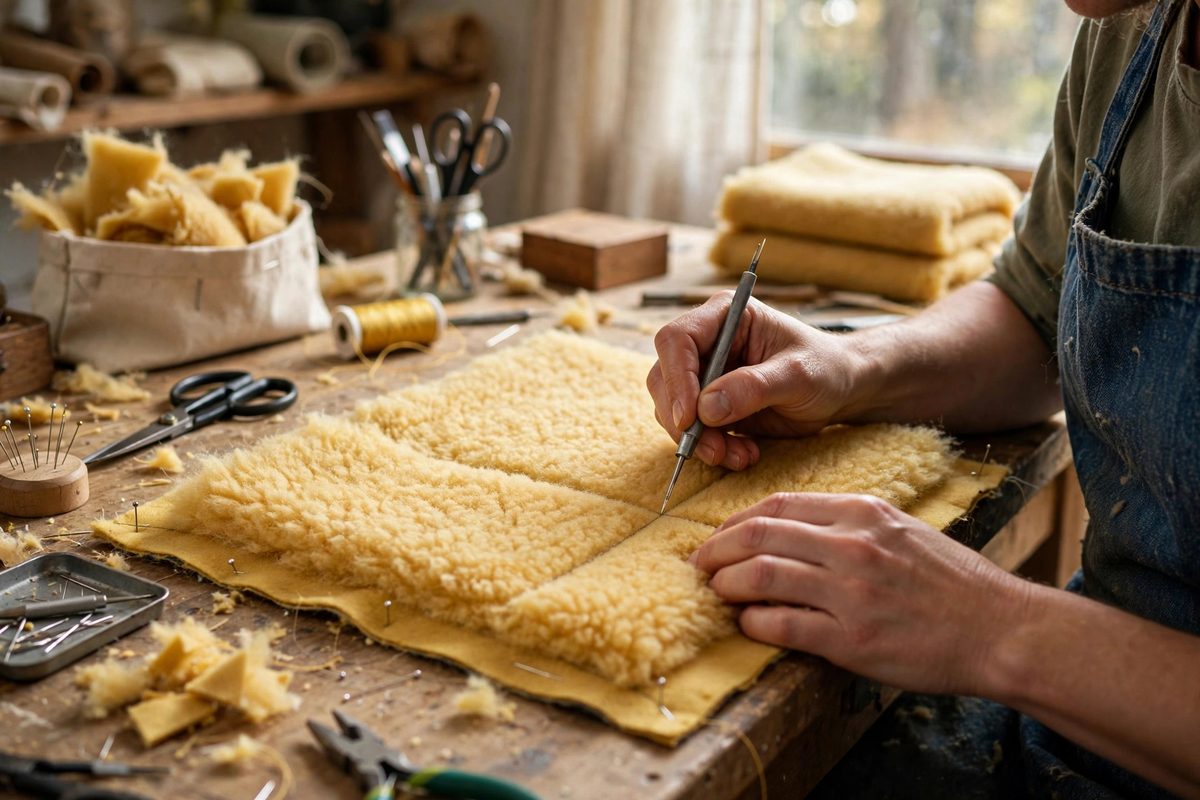
Antron fleece is the puppet builder's magic fabric: its long pile hides seams that would scream on any other material. But the pile only hides seams that are planned and placed correctly. Seam scribing, marking exactly where each seam falls on the pattern so it lands in the least visible spot, is the difference between a face that looks sculpted from one piece and a face that looks sewn together.
Why Seam Placement Matters on a Face
The eye reads a puppet face the way it reads a human face: it looks for symmetry and smooth surfaces, and any line that breaks those reads as wrong. A seam across the forehead or down the center of a cheek draws attention exactly where the audience looks. Seams tucked into natural boundaries, the edge of the jaw, under the brow ridge, along the hairline, disappear because the eye expects a transition there anyway. Scribing the pattern means deciding those placements on paper before cutting, not discovering them after the fleece is sewn.
Working With the Pile Direction
Antron fleece has a nap direction, and seams where the pile flows across the seam line hide far better than seams where pile meets pile head-on. Scribe the pattern pieces so the nap runs consistently across the face, usually downward, and so that seams fall where the pile from one piece flows over the seam allowance of the next. Test the nap direction by brushing the fabric; the smooth direction is with the nap. Mark the nap direction on every pattern piece with an arrow, because flipping one piece during cutting undoes the whole plan.
Scribing the Pattern
Start from the foam or sculpted head underneath. Wrap it, mark the natural boundary lines on the wrapping, and transfer those lines to the flat pattern as seam lines. Keep seam count low; every seam is a risk, so design the pattern with the fewest pieces that still cover the form without distortion. Where a seam must cross a visible area, scribe it as a curve following the form's contours rather than a straight line, because a curved seam following anatomy hides better than a straight seam fighting it. Label every piece and mark matching notches so assembly cannot drift.
Sewing for Invisibility
Sew with the pile brushed away from the seam line so it does not get caught in the stitching; trapped pile creates a visible ridge. Use a small stitch length and a thread color matched to the fleece, not to the skin tone you imagine but to the actual fabric. After sewing, pick the pile out of the seam with a pin or needle, fluffing it over the stitch line so the fibers bridge the gap. Turn the cover right side out carefully and work the seams from the outside, teasing pile across until the line vanishes. The last ten percent of this fussy work produces ninety percent of the seamless illusion.
Fitting Over the Sculpt
A scribed pattern only works if the cover fits the head underneath without pulling. Test-fit the sewn cover before final attachment, checking that seams sit where you scribed them and that no area is stretched tight enough to open the pile and reveal the seam. Ease fullness where the form curves sharply, and take in slack where the cover bags. Glue or stitch the cover to the sculpt at hidden anchor points, the neck, inside the mouth plate area, so performance movement does not walk the seams out of position over time.
Seamless puppet faces come from planning, not luck: scribe seams onto natural boundaries, run the nap consistently, sew carefully, and tease the pile over every stitch line. The audience should never find the seams, because you decided where they were allowed to be.
Related Guides
- Antron Fleece Seam Scribing for Seamless Muppet Muzzles: The Muppet look lives or dies on invisible seams: the fleece covering a puppet's muzzle should read as one continuous skin, with no visible stitch
- Reticulated Foam Pattern Draping for Puppet Heads: Reticulated foam, the open-cell filter-like foam, is the puppet builder's sculpting medium: it carves like butter, glues easily, and its open
- Foam Latex Pattern Pinning for Muppet Style Hands: The Muppet-style hand, that expressive mitten with a defined thumb that can grip, wave, and gesture, is the workhorse of hand puppetry. Built from
- Felt Draping and Hidden Seaming on Foam Head Blocks: Covering a carved foam puppet head in felt or fleece is where the character's skin comes from, and hidden seams are what make that skin look like one