
Borosilicate glass worked in a reduction flame develops a scummy, metallic-looking surface film that ruins clarity and muddies colors. The fix is flame chemistry: an oxidizing flame, with the right ratio of oxygen to fuel, burns clean and keeps the glass surface pristine. Learning to read and set that ratio is fundamental lampworking skill.
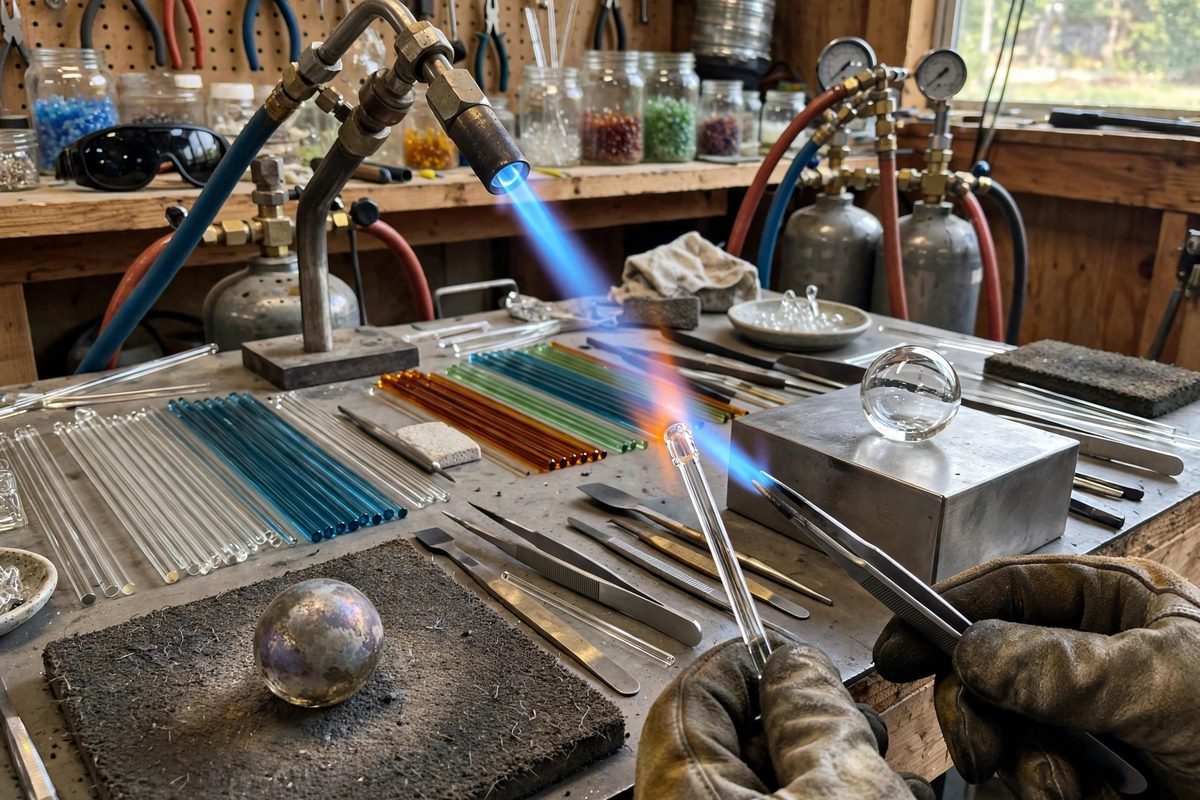
What Scumming Is
Scumming is a surface deposit caused by incomplete combustion: unburned fuel components and reduced metal oxides condense on the hot glass as a hazy or iridescent film. It shows worst on clear glass, where any surface film is visible, and it interferes with color work by putting a gray veil over everything. Once scummed, the surface can sometimes be burned clean in a hot oxidizing flame, but prevention beats correction; glass worked clean from the start needs no rescue.
Reading the Flame
A neutral flame, balanced fuel and oxygen, burns with a well-defined blue cone structure. An oxidizing flame, oxygen-rich, has shorter, sharper cones and a slightly hissing sound; it burns hotter and cleaner. A reducing flame, fuel-rich, shows longer feathery cones with orange tips and deposits soot. For clean boro work, set the flame just into the oxidizing side of neutral: sharp blue cones, no orange feathers, no soot on a test rod. The difference between neutral and slightly oxidizing is subtle visually but decisive on the glass.
Setting the Ratio
Start with the fuel gas at your normal working flow, then bring up the oxygen until the flame cones sharpen and any orange disappears. Work the glass in the outer part of the flame, past the cones, where combustion is most complete; the inner cone region is fuel-rich even in an oxidizing flame setting. For large gathers that need a big soft flame, increase both gases proportionally to keep the ratio oxidizing while scaling the flame size. Resist the temptation to crank the fuel for more heat without matching oxygen; heat without oxidation is what scums the work.
Flame Position and Glass Handling
Even in an oxidizing flame, parking the glass inside the cones bathes it in incomplete combustion. Keep the work in the clean outer flame envelope, rotating constantly for even heating. When flashing a piece to burn off minor surface haze, pass it quickly through the hottest clean part of the flame; lingering cooks the glass without additional benefit. Different colors have different sensitivities: striking colors and metallics may actually want brief reduction at specific moments, but the base working should stay oxidizing and clean.
Equipment and Gas Supply
The flame can only be as oxidizing as the oxygen supply allows. An oxygen concentrator that cannot keep up with the torch at working flows forces a fuel-rich flame no matter how you set the knobs; if you constantly fight scumming at wide-open oxygen, the supply is the limit. Check for leaks and kinked hoses that silently reduce oxygen flow. Clean torch ports matter too; a partially blocked oxygen port unbalances the ratio at the torch face regardless of the regulator settings.
Set the flame just oxidizing, work in the clean outer envelope, keep the oxygen supply ahead of the demand, and the boro stays clear. Scumming is a flame chemistry problem with a flame chemistry answer, and the answer is more oxygen.
Related Guides
- Surface Flame Chemistry for Borosilicate Rods: A lampworking torch burns fuel gas with oxygen, and the ratio between them determines the flame's chemistry: oxidizing, neutral, or reducing. That
- Oxygen Propane Flame Chemistry for Heavy Quartz Tubing: Heavy-wall quartz tubing demands more heat than standard borosilicate, and the oxygen-propane flame is the workhorse for the job. But brute heat is
- Annealing Soak Schedules for Hollow Glass Beads: Hollow glass beads look delicate and behave structurally like tiny pressure vessels, which means their annealing demands respect. A solid bead cools