
Heavy-wall quartz tubing demands more heat than standard borosilicate, and the oxygen-propane flame is the workhorse for the job. But brute heat is not enough: the flame's chemistry, the ratio of oxygen to propane, determines whether the quartz works cleanly or devitrifies, boils, or scars. Understanding the flame zones and tuning the chemistry for quartz is what separates successful heavy seals from frustrating failures.
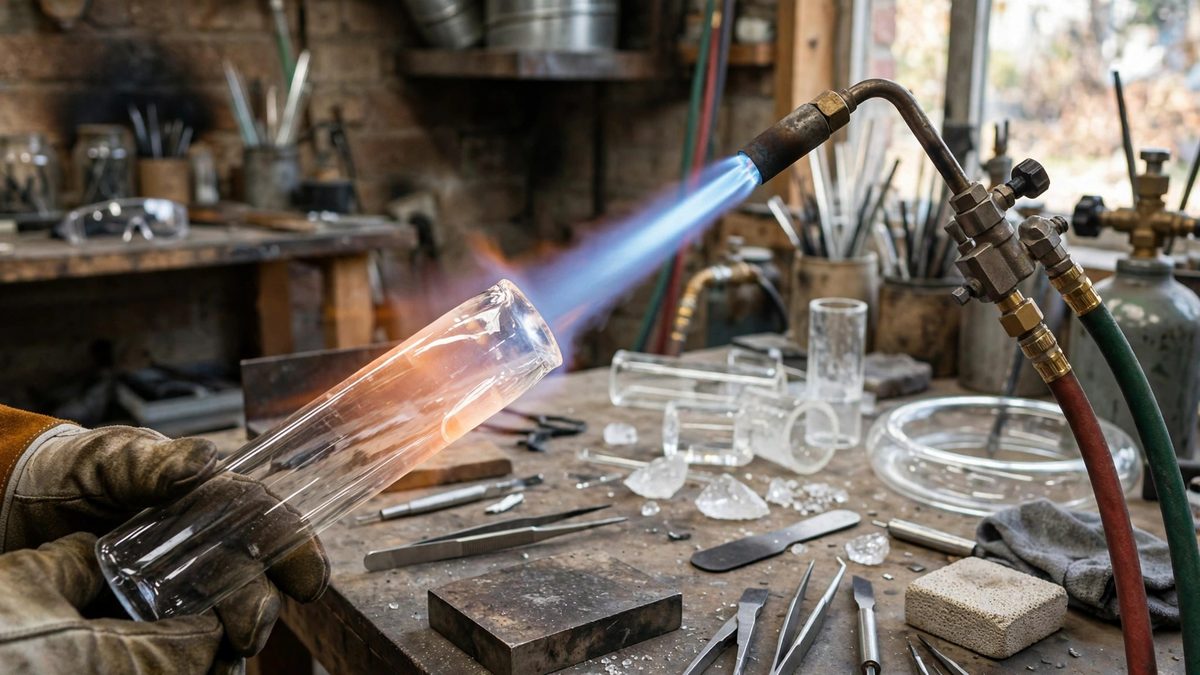
Why Quartz Needs a Hot, Clean Flame
Quartz softens at a much higher temperature than borosilicate glass, roughly 3000 degrees Fahrenheit and up for working. An oxygen-propane flame reaches these temperatures readily, hotter than most air-fuel flames. The challenge is delivering that heat without contaminating the quartz. Quartz is sensitive to flame chemistry: a reducing flame (excess fuel) deposits carbon and causes devitrification, the cloudy crystallization that ruins quartz, while a strongly oxidizing flame can overheat the surface and cause boiling or pitting. The usable window is a neutral to slightly oxidizing flame, hot enough to work the heavy wall but chemically clean. Finding and holding that window is the core skill.
Reading the Flame
Learn to read the flame by its appearance and sound. A neutral oxygen-propane flame has a short, well-defined inner cone and a steady, forceful hiss; the flame is nearly colorless to pale blue with minimal orange feathering. Add propane and the flame grows bushy and orange-tipped, the reducing condition that spells trouble for quartz. Add oxygen and the flame sharpens, shortens, and roars; slightly oxidizing is fine, but far into oxidizing territory the flame becomes harsh and the heat concentrates too aggressively. Set the flame by starting fuel-rich and adding oxygen until the orange just disappears, then a touch more oxygen for the slight oxidizing edge quartz likes. Check the setting periodically during a long session, since regulators drift as cylinders empty.
Heating Heavy Wall Evenly
Heavy-wall tubing has enormous thermal mass compared to standard wall, and quartz's low thermal conductivity means the outside can be working-hot while the inside is still stiff. Heat a broad section, rotating constantly, and give the heat time to soak through the wall before attempting to shape or seal. Rushing this produces the classic failure: the outside moves while the inside resists, and the seal wrinkles or the wall collapses unevenly. Work in the outer regions of the flame as much as possible, using the flame's radiant heat rather than the harsh inner cone; the inner cone's pinpoint heat is for spot work, not for soaking heavy sections. Patience with the preheat is the price of a clean seal.
Seals, Joins, and Devitrification Control
When making seals in heavy quartz, keep the work in the neutral-to-oxidizing flame throughout; dipping into a reducing flame even briefly can seed devitrification that spreads. If devitrification appears as a cloudy patch, it can sometimes be burned off by working the area hotter in a clean flame, essentially re-melting the crystallized surface, but prevention beats cure. Keep the quartz clean: fingerprints, dust, and handling residues all promote devitrification at working temperatures. Handle with clean tools and avoid touching the hot zone. For joins between heavy sections, match the heating carefully so both pieces reach working temperature together; a hot piece joined to a cold piece makes a strained, weak seal.
Safety and Equipment
Oxygen-propane work at quartz temperatures demands full safety discipline. Wear didymium or appropriate shade glasses; the intense flame and glowing quartz emit damaging light. Work with ventilation, since the flame consumes oxygen and produces combustion products. Secure cylinders upright, keep oil and grease away from oxygen fittings absolutely, and check hoses and connections for leaks regularly. Use flashback arrestors on both the oxygen and fuel lines. Keep a fire extinguisher within reach and know that quartz work involves long heating cycles; fatigue leads to mistakes, so take breaks during extended sessions. The flame that melts quartz deserves complete respect.
Heavy quartz wants a hot, neutral to slightly oxidizing oxygen-propane flame, even soaking heat, clean handling, and constant flame reading. Tune the chemistry by eye and ear, heat the full wall thickness before shaping, and the quartz will seal cleanly instead of clouding.
Related Guides
- Surface Flame Chemistry for Borosilicate Rods: A lampworking torch burns fuel gas with oxygen, and the ratio between them determines the flame's chemistry: oxidizing, neutral, or reducing. That
- Boro Flame Oxidizing Ratios to Stop Surface Scumming: Borosilicate glass worked in a reduction flame develops a scummy, metallic-looking surface film that ruins clarity and muddies colors. The fix is
- Annealing Soak Schedules for Hollow Glass Beads: Hollow glass beads look delicate and behave structurally like tiny pressure vessels, which means their annealing demands respect. A solid bead cools