
A lampworking torch burns fuel gas with oxygen, and the ratio between them determines the flame's chemistry: oxidizing, neutral, or reducing. That chemistry acts directly on the surface of the borosilicate glass you are working, changing colors, striking effects, and in extreme cases the glass's behavior. Borosilicate is famously forgiving compared to soft glass, but flame chemistry still matters enormously for the decorative effects that make boro work distinctive. Learning to read and control your flame is learning to paint with fire.
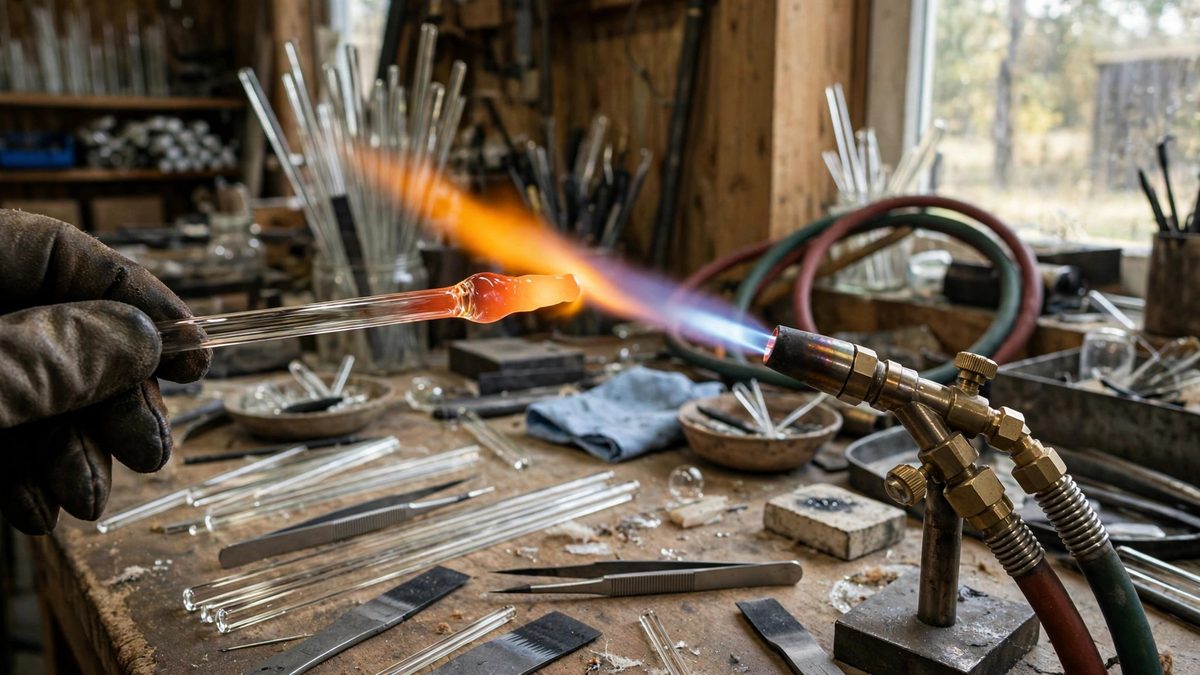
Reading the flame
A neutral flame, with fuel and oxygen balanced, burns with a well-defined inner cone and a clean blue envelope; it heats efficiently without chemically altering most glass. An oxidizing flame, with excess oxygen, has a shorter, sharper inner cone and a slightly hissing sound; it burns hotter and cleaner. A reducing flame, with excess fuel, shows longer, softer, sometimes slightly orange-tipped flames and may produce a bushy, less defined cone. Learn to set each deliberately and to recognize each by sight and sound, because you will move between them constantly during a session. The torch's knobs become an instrument: small adjustments shift the chemistry, and the glass responds visibly. Practice transitioning smoothly, since jerky adjustments show up as uneven effects in the work.
What flame chemistry does to boro surfaces
Many borosilicate colors are formulated with metals that respond to flame chemistry. Silver-based colors strike to metallic blues, purples, and oil-slick effects in a reducing flame, where the fuel-rich atmosphere pulls oxygen from the metal compounds and leaves reflective metallic deposits near the surface. The same colors worked in an oxidizing flame stay clearer and brighter, developing different hues. Copper and gold ruby glasses shift with chemistry too. This is not a defect; it is the palette. The lampworker's skill lies in choosing the chemistry that produces the intended effect: reducing for metallic strikes, neutral for clean color work, oxidizing when you want maximum heat with minimum chemical change. Work a test rod of each new color through all three flame types and keep the results as a reference; the effects are consistent enough to be predictable once you have seen them.
Neutral flame as the default
For structural work, joins, punties, and anything where the glass's integrity matters most, the neutral flame is the default. It delivers full heat without depositing unwanted chemistry into the glass surface. Beginners should live in the neutral flame until reading it is automatic, adding reducing and oxidizing excursions deliberately for specific effects. A common error is working everything in a reducing flame because the striking colors are exciting; the result is work with muddy, over-reduced surfaces and weakened areas where the chemistry went too far. Discipline the flame use: neutral for building, specialty chemistries for finishing effects, and always with intention.
Heat, stress, and borosilicate's forgiveness
Borosilicate's low thermal expansion makes it far more forgiving of uneven heating than soft glass, which is why boro dominates sculptural lampwork. But forgiveness is not immunity: severe thermal gradients still crack boro, and flame chemistry extremes can boil or scorch the surface. Keep the work evenly heated, rotating constantly, and garage finished pieces in the kiln rather than letting them cool in air. Anneal everything; boro's toughness tempts lampworkers to skip annealing small pieces, and small pieces with unrelieved stress break just as surely as large ones, usually at the worst moment. The flame chemistry affects the surface; proper thermal practice protects the whole piece.
Safety: eyes, ventilation, and gases
Lampworking safety is specific and serious. Wear didymium glasses or an equivalent sodium-flare filter whenever working glass in the flame; the bright sodium flare masks what the glass is doing and damages eyes with cumulative exposure, and didymium filters it while leaving the work visible. Ventilate aggressively: combustion products plus vaporized metals from striking colors belong outside your lungs, so work under a proper exhaust hood or outdoors with airflow. Handle fuel and oxygen safely: secure cylinders, check for leaks, light fuel before adding oxygen, and shut down in the reverse order. Keep a fire extinguisher rated for the fuels present within reach. The flame is a precise tool, and precision includes respecting what it can do off the workpiece.
Learn the neutral flame by heart, use reducing and oxidizing deliberately for their effects, test every color through all three chemistries, and anneal the results. Flame chemistry is an invisible ingredient in every boro piece; the skilled lampworker makes it a deliberate one.
Related Guides
- Oxygen Propane Flame Chemistry for Heavy Quartz Tubing: Heavy-wall quartz tubing demands more heat than standard borosilicate, and the oxygen-propane flame is the workhorse for the job. But brute heat is
- Boro Flame Oxidizing Ratios to Stop Surface Scumming: Borosilicate glass worked in a reduction flame develops a scummy, metallic-looking surface film that ruins clarity and muddies colors. The fix is
- Annealing Soak Schedules for Hollow Glass Beads: Hollow glass beads look delicate and behave structurally like tiny pressure vessels, which means their annealing demands respect. A solid bead cools