
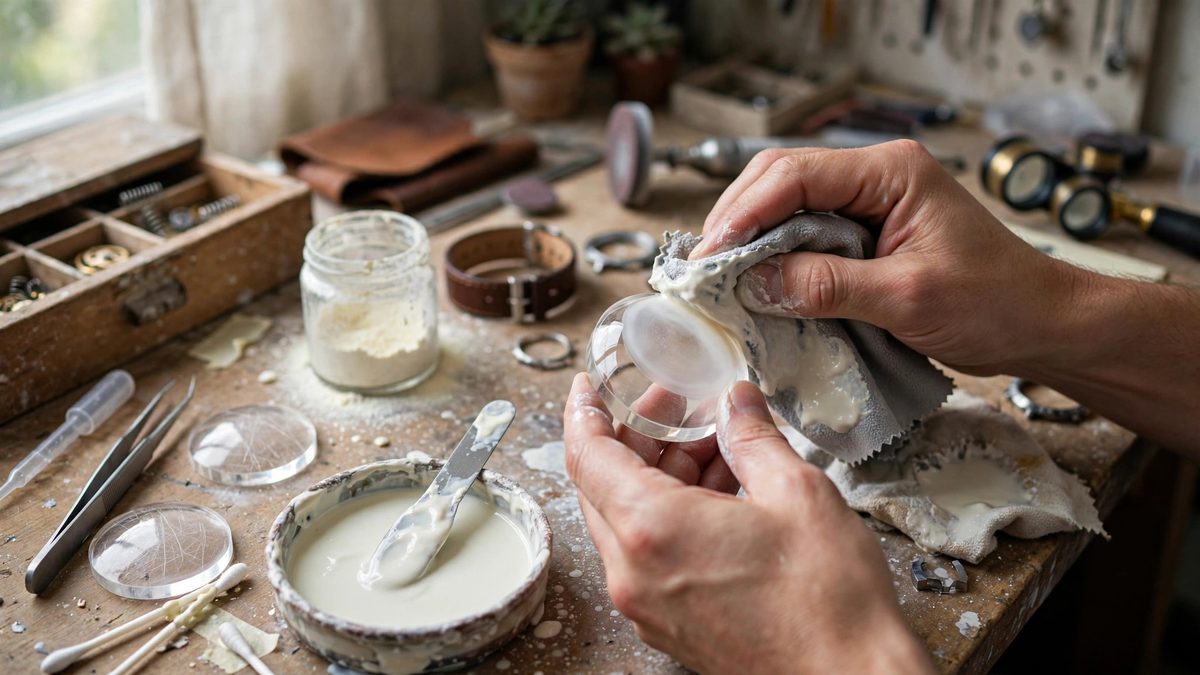
Acrylic watch crystals scratch easily, which is also why they restore easily: unlike glass or sapphire, acrylic can be polished back to clarity with abrasives. Cerium oxide slurry, the glass-polisher's standard, works beautifully on acrylic when used correctly, removing fine scratches and haze without the aggressive cutting of coarser compounds. The technique is gentle, progressive, and very forgiving, which makes it ideal for vintage watches with original crystals worth saving.
Why cerium oxide suits acrylic
Cerium oxide is a mild chemical-mechanical abrasive: it cuts slowly and also reacts slightly with the surface, producing a high-clarity finish rather than just a scratch-free one. On acrylic, that means it removes fine scratches while leaving optical clarity, not a frosted haze. It is far less aggressive than the aluminum oxide or diamond compounds used for metal polishing, which would chew acrylic and leave it worse. The slurry form, powder mixed with water, keeps the work cool and lets the abrasive distribute evenly; dry polishing acrylic generates heat that crazes the surface.
Preparing the crystal
Assess the damage first: cerium slurry handles fine scratches, haze, and light scuffing, but deep gouges need coarser abrasives first (progressing through fine sandpaper grits, used wet, before the cerium stage). Clean the crystal thoroughly; any grit on the surface becomes an abrasive under the buff and adds scratches. If the crystal is badly scratched, start with wet 1000-grit or finer paper and work up; jumping straight to cerium on deep damage wastes time. Mask or protect the case and bezel around the crystal, since the slurry will polish anything it touches.
Mixing and applying the slurry
Mix cerium oxide powder with water to a thin cream consistency, roughly the texture of milk with body; too thick and it cakes, too thin and it has no cut. Apply with a soft buff: a felt bob in a rotary tool at low speed for spot work, or a soft cloth pad for hand polishing larger areas. Keep the work wet throughout; if the slurry dries, it stops cutting and starts dragging, which heats and hazes the acrylic. Work in small areas with light pressure and overlapping passes, checking progress frequently by wiping clean and inspecting.
Technique and patience
Light pressure is the rule: let the slurry do the work. Heavy pressure flexes the crystal, generates heat, and can dish the surface unevenly, creating optical distortion visible as wavy reflections. Keep the buff moving; dwelling in one spot cuts a hollow. For domed crystals, follow the dome's curvature with the buff rather than flattening across it. The process is slow by nature; a moderately scratched crystal may take twenty minutes of steady work. Rushing with coarser compounds or more pressure is how crystals get ruined.
Finishing and inspection
When the scratches are gone, clean the crystal completely and inspect under good light from multiple angles; remaining haze shows as a milky cast in reflected light. A final pass with fresh, thin slurry and the lightest touch brings up the ultimate clarity. Rinse thoroughly; dried cerium residue in the case crevices looks terrible and is mildly abrasive. The finished crystal should be optically clear with undistorted reflections; if distortion appeared, the polishing was uneven and needs reworking with careful, even passes.
Thin slurry, light pressure, keep it wet, and take the time it takes. The original crystal, polished back to clarity, keeps the vintage watch honest.
Related Guides
- Lapping Beveled Case Edges With Diamond Paste: The beveled edges of a fine watch case, the crisp chamfers where the case flank meets the bezel or the lugs meet the case band, are among the most
- Hard Felt Wheel Lapping for Factory Satin Case Finishes: Factory satin finishes on watch cases, the soft directional grain on lugs and case flanks, look effortless and are surprisingly hard to reproduce
- Diamond Paste Micron Sequences for Steel Watch Lugs: Watch lugs are small, curved, and constantly visible, which makes them the hardest part of a case to refinish well. Diamond paste in descending