
A glaze that does not fit the clay body crazes, shivers, or peels, no matter how beautiful the color. Frits, the pre-melted glass powders that supply much of a glaze's flux, dominate the glaze's thermal expansion, and at high fire temperatures small differences in expansion become large stresses. Calculating the expansion contribution of your frits lets you predict fit before the kiln tells you the bad news.
Why Thermal Expansion Decides Glaze Fit
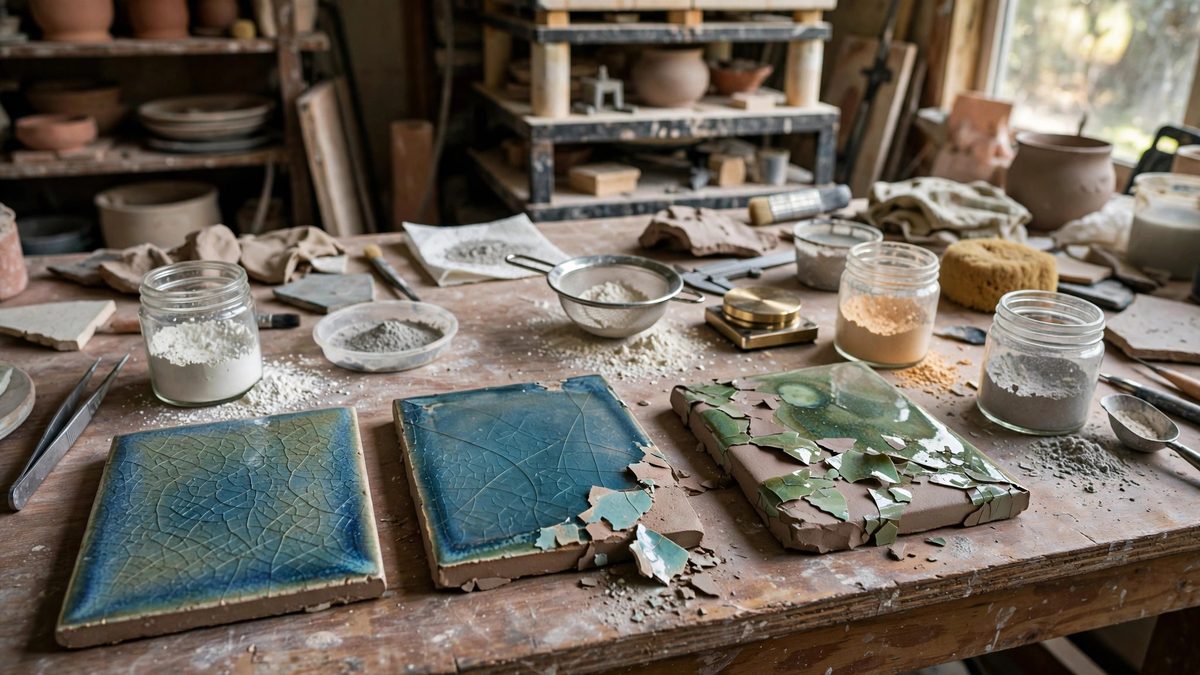
Glaze and clay shrink together as the kiln cools, but they shrink at different rates. If the glaze contracts more than the body, it goes into tension and crazes, the network of fine cracks; if it contracts less, it goes into compression, which is generally safer up to the point where the glaze shivers off edges and rims. The difference that matters is small: a mismatch of even a fraction of a percent in thermal expansion coefficient produces stresses that exceed the glaze's strength. Frits contribute heavily to the glaze's expansion because they are mostly alkali and alkaline-earth fluxes, and alkalis, especially sodium and potassium, have very high expansion coefficients. Knowing your frit's expansion contribution is therefore knowing most of your glaze's fit behavior.
Expansion Coefficients of Common Frits
Every commercial frit has a published coefficient of thermal expansion, usually expressed over a standard temperature range. High-alkali frits expand more; high-calcium, high-boron, or high-silica frits expand less. When formulating, multiply each frit's coefficient by its proportion in the recipe to get its contribution, and sum the contributions of all materials for the glaze's total. This is the same calculation glaze chemistry software performs, and doing it by hand for a simple recipe builds the intuition the software later speeds up. The absolute numbers matter less than the comparisons: substituting a high-expansion frit for a low-expansion one at the same percentage moves the whole glaze's expansion predictably.
Setting Expansion Limits for High Fire
At high fire temperatures, the glaze is more fluid and the body is denser, which changes the fit equation slightly compared to low fire, but the principle holds: aim the glaze's expansion slightly below the body's so the glaze sits in gentle compression. The practical limit is set by testing, not by calculation alone. Calculate the recipe's expansion, fire test tiles on the actual clay body, and inspect for crazing under magnification after a thermal shock test, like pouring boiling water into the cooled test piece. If the glaze crazes, reduce the high-expansion frits or add low-expansion materials like silica; if it shivers, go the other way. Change one material at a time and recalculate, so you learn each material's effect.
Adjusting Recipes Within the Limits
Once you know a frit's expansion contribution, you can make informed substitutions. Replacing part of a high-sodium frit with a calcium-boron frit lowers expansion while keeping the glaze melted; adding silica lowers expansion and adds durability but raises the melting temperature, which matters at the top of the high fire range. Keep the silica-to-alumina ratio in a sane range while adjusting, since that ratio governs the glaze's working properties. Document every test with the calculated expansion alongside the fired result; over time this builds a personal reference of what calculated numbers mean on your clay in your kiln. Two potters with the same recipe can get different fit results from different firing cycles, so your own data beats generic tables.
Testing Fit Reliably
The standard fit tests are simple and revealing. The crazing test: thermal-shock the glazed test piece and examine it with a magnifier or dye penetrant for fine cracks. The shivering test: check rims and edges for flakes of glaze lifting, and tap the piece to listen for the dull sound of delamination. A less common but useful test is the ring test on a thin glazed bar, which reveals stress direction. Fire test tiles in the same kiln load position as production ware, since temperature variations across the kiln affect fit. A glaze that passes fit tests on your body in your firing is a glaze you can trust; a glaze that only calculates correctly is a hypothesis.
Calculate each frit's expansion contribution, aim the total slightly below the body's expansion, adjust with informed substitutions, and prove the fit with thermal shock tests on your own clay. The math predicts; the test tile decides.
Related Guides
- Controlling Crazing in High Alkaline Glazes: Crazing, that fine web of cracks across a glaze surface, is a fit problem between glaze and clay body. In high alkaline glazes, the ones built on
- Specific Gravity Hydrometer Readings for Glazes: A glaze bucket looks the same whether it is mixed correctly or not, which is why glaze results drift mysteriously between sessions: the same recipe
- Specific Gravity Tuning in Raw Ash Celadon Glazes: A raw ash celadon is a glaze mixed from wood ash with minimal processing, and its behavior in the bucket changes with every variable: the ash source