
A glaze bucket looks the same whether it is mixed correctly or not, which is why glaze results drift mysteriously between sessions: the same recipe, the same clay, different results. The hidden variable is usually the glaze's thickness, which changes as water evaporates between uses. A hydrometer reading, measuring the glaze slurry's specific gravity, turns that hidden variable into a number you can control. It is the simplest quality control in the glaze room, and it separates consistent results from hopeful ones.
What specific gravity tells you
Specific gravity compares the glaze slurry's density to water's: a reading of 1.45 means the slurry is 45 percent denser than water. That density reflects the ratio of solid glaze materials to water, which is what determines how thick the glaze applies. A glaze that has lost water to evaporation reads high; it will apply thick, run in the kiln, and crawl. A glaze over-thinned with water reads low; it will apply thin, pinhole, and look underfired. The hydrometer does not care about your recipe or your memory of how the glaze looked last time; it reports the current physical state of the slurry. Record the specific gravity when a glaze is working well, and you have a target to return to forever after, immune to evaporation, splashing, and the gradual water loss of a busy studio.
Taking an accurate reading
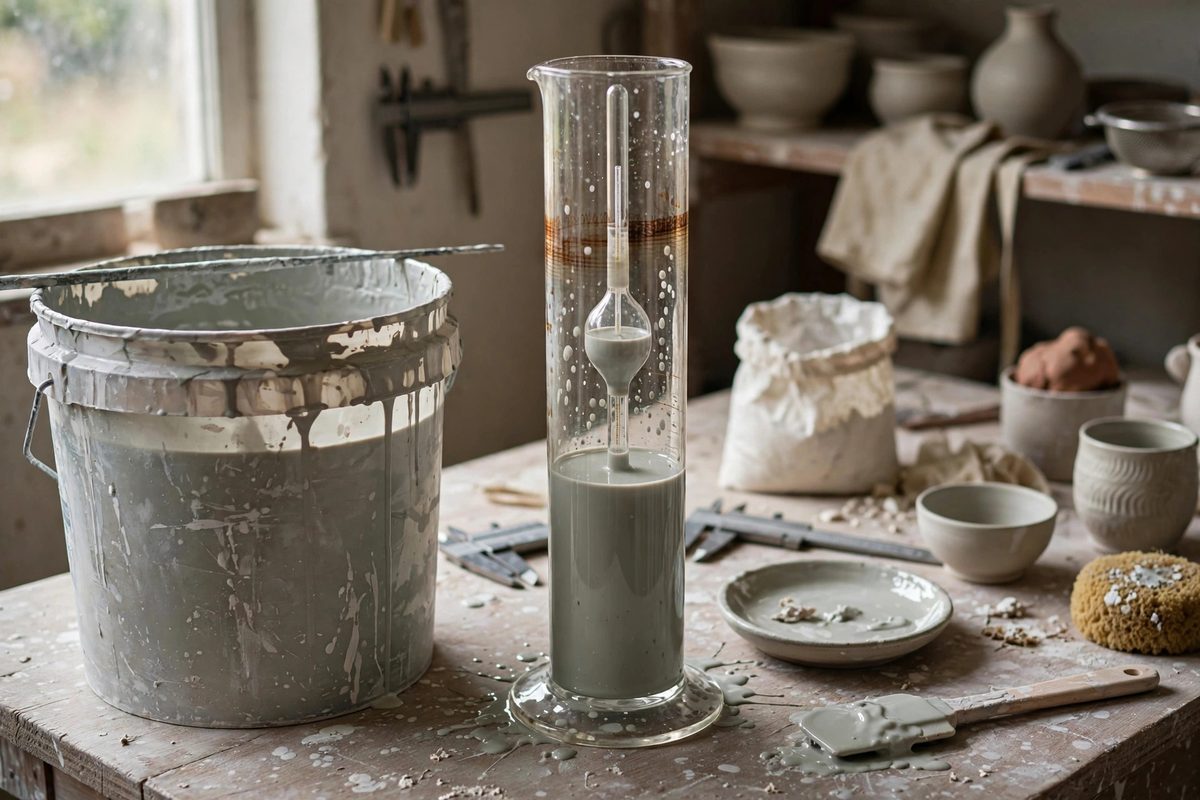
Stir the glaze thoroughly first; settled glaze reads wrong because the hydrometer samples the top of the bucket. Pour a sample into a tall, narrow container, a graduated cylinder is ideal, deep enough for the hydrometer to float freely without touching bottom or sides. Lower the hydrometer gently into the slurry and let it settle, then read the scale at the liquid's surface, at eye level to avoid parallax error. Temperature affects the reading slightly, so take readings at roughly consistent room temperature and do not obsess over tiny variations; you are managing a working range, not calibrating a laboratory. Rinse the hydrometer immediately after use, because dried glaze on the glass changes its buoyancy and ruins future readings. The whole procedure takes two minutes, which is why there is no excuse for skipping it.
Target ranges and adjusting
Most brushing and dipping glazes work well in a specific gravity range around 1.4 to 1.5, with thinner liner glazes sometimes lower and thick specialty glazes higher; your recorded number for each glaze, taken when it performed well, is the real target. If the reading is high, add water in small increments, stirring thoroughly and re-reading after each addition, because it is easy to overshoot. If the reading is low, let the glaze settle and decant some clear water off the top, or add a little dry glaze mix if you keep it on hand. Adjust gradually and re-measure; the hydrometer makes this a controlled process instead of a guessing game. Note that some glazes need flocculation or deflocculation adjustments that change viscosity without much changing specific gravity; the hydrometer measures density, not flow behavior, so use it alongside your eye for how the glaze moves, not as a replacement for it.
Consistency across the studio
The hydrometer's real power shows in shared studios and production work, where multiple people use the same glaze buckets. A posted target specific gravity on each bucket lets anyone check and correct the glaze before using it, eliminating the most common source of inconsistent results. Log readings alongside firing results; over time, the log reveals each glaze's working window and how quickly each bucket drifts. This is quality control at its simplest and most effective: a number, a target, and a two-minute check. Potters who adopt it wonder how they ever glazed without it; potters who do not keep blaming the kiln for what the bucket did.
Safety in the glaze room
Glaze materials demand standard ceramics safety: mix dry materials with a respirator rated for fine dust, since many glaze ingredients contain silica, and work in ventilated air. Wet glaze slurry is far safer than dry powder, which is another argument for keeping buckets at their proper consistency rather than letting them dry out. Wash hands after handling glaze materials, keep food and drink out of the glaze area, and label everything. The hydrometer itself is fragile glass; store it protected. None of this is onerous, and it keeps the most creative room in the studio a safe one.
Stir, float the hydrometer, read at eye level, and adjust to your recorded target. Two minutes of measurement buys consistency that no amount of recipe fidelity can provide on its own.
Related Guides
- Specific Gravity Tuning in Raw Ash Celadon Glazes: A raw ash celadon is a glaze mixed from wood ash with minimal processing, and its behavior in the bucket changes with every variable: the ash source
- Controlling Crazing in High Alkaline Glazes: Crazing, that fine web of cracks across a glaze surface, is a fit problem between glaze and clay body. In high alkaline glazes, the ones built on
- Calculating Frit Expansion Limits for High Fire Glazes: A glaze that does not fit the clay body crazes, shivers, or peels, no matter how beautiful the color. Frits, the pre-melted glass powders that supply