
A faucet that used to glide now grinds, sticks, or needs real muscle to turn. If the faucet uses a ceramic disc cartridge, the culprit is usually not the handle or the seals: it is mineral deposits from hard water turning the polished ceramic faces into a grinding paste. Ceramic discs are among the most reliable valve designs ever made, but they depend on two impossibly smooth surfaces sliding past each other, and hard water is nature's sandpaper.
How Ceramic Disc Cartridges Work
Inside the cartridge, two flat ceramic discs sit face to face, each pierced with matching ports. Turning the handle rotates the top disc, aligning or misaligning the ports to control flow, and the temperature comes from blending the hot and cold sides. The discs are lapped almost perfectly flat and polished, so they seal against each other without washers to wear out. That is the whole magic of the design: instead of a rubber washer being crushed and deformed thousands of times, you get two hard, smooth surfaces sliding, which is why a good cartridge can last decades in clean water. The flip side is that anything harder than the lubricant film between those faces, and mineral scale qualifies, gets trapped and drags.
What Mineral Water Does to the Discs
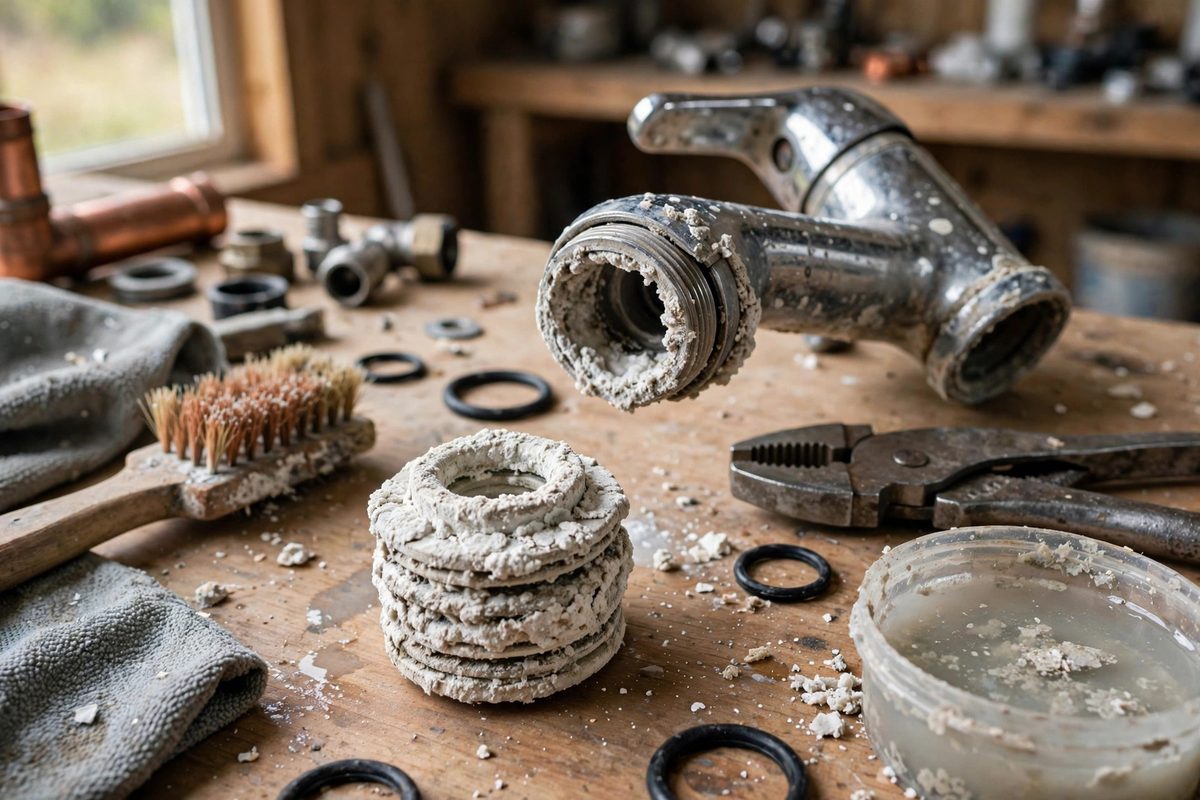
Hard water carries dissolved calcium and magnesium that drop out of solution as scale wherever water sits, heats, or evaporates. Inside a faucet, scale forms a crusty, crystalline film on the disc faces and, worse, loose grit that gets caught between the discs like sand in a hinge. The result is the classic symptom progression: the handle feels stiff first, then gritty, then it may stick at certain points of the turn. Scale also builds up in the cartridge housing and around the seals, which adds drag even when the discs themselves are still in decent shape. Because the deposits are literally minerals, they are abrasive enough to scratch the polished ceramic if they get worked in long enough, which turns a cleaning job into a replacement job.
Diagnosing Stiff Handle Feel
Before blaming the cartridge, rule out the easy stuff. Shut off the supply valves, relieve the pressure, and pull the handle and retaining nut to reach the cartridge. Check whether the handle mechanism itself is corroded or packed with scale; sometimes the stiffness is in the bonnet or the handle spline, not the discs. If the cartridge turns stiffly by itself once removed, the problem is inside it. Look for white crusty buildup around the cartridge body and the seals. A cartridge that feels gritty when you rotate the stem by hand almost certainly has scale between the discs or damage to the polished faces.
Cleaning and Descaling a Cartridge
A scaled but undamaged cartridge can often be saved. Soak the cartridge in plain white vinegar long enough for the scale to dissolve, typically an hour or more, and work the stem gently as it soaks to help the acid reach the disc faces. A soft brush or toothbrush clears crust from the housing and seals; never use anything metal or abrasive on the ceramic faces themselves, because a scratch you add is permanent. Rinse thoroughly, and reassemble with a thin film of silicone plumber's grease on the seals and O-rings (not on the disc faces, which must stay clean to seal). Reinstall, turn the water back on slowly, and check for drips. If the handle still grinds after a good soak, the discs are scored and the cartridge needs replacement.
When Replacement Is the Right Call
Scored discs do not heal. If vinegar and gentle working leave the stem stiff or gritty, or if the faucet drips with the handle fully closed, the polished faces are damaged and no cleaning will restore them. Replacement cartridges are widely available; take the old one with you to match it, since cartridges look similar but differ in spline count, length, and port layout. Before installing the new cartridge, flush the supply lines by briefly opening the shutoff valves with the cartridge out, catching the water in a bucket: this blows out the sediment and scale chunks sitting in the lines, which would otherwise go straight into your brand-new cartridge on day one.
Preventing the Problem Upstream
The real fix for hard-water friction is treating the water, not the faucet. A whole-house softener or at least a sediment filter reduces the mineral load reaching every fixture, and fixtures on softened lines need cartridge service far less often. If a softener is not in the cards, make cartridge inspection part of your periodic maintenance: pulling and rinsing cartridges before they grind gives them a much longer life than waiting for stiffness to force the issue. And when a cartridge does fail, replace it promptly, because a scored disc that leaks can drip enough to stain a sink or damage a cabinet floor long before anyone notices.
Ceramic disc cartridges are a brilliant design fighting a losing battle against mineral scale. Keep the discs clean, flush lines before installing replacements, and treat the water if you can. A faucet that turns with two fingers is not a luxury: it is what the design delivers when the water stops working against it.
Related Guides
- Pressure Balanced Cartridge Spool Valve Friction Limits: The pressure-balanced cartridge is the heart of the modern shower valve: a spool that slides to keep the hot-cold mix constant when someone flushes a
- Water Hammer Arrestor Sizing for Fast Valves: Water hammer is the bang that shudders pipes when a fast-closing valve, a dishwasher solenoid, a washing machine valve, a single-lever faucet snapped
- Thermostatic Mixing Valve Flow Balancing for Showers: A shower that swings hot and cold when a toilet flushes is not just annoying; it is a failure of the mixing valve to do its job. Thermostatic mixing
- Dynamic Pressure Balancing in Dual Shower Valve Loops: A dual shower setup, two heads or a head plus a handheld on one valve loop, has a failure mode that shows up the moment someone flushes a toilet: one