
The pressure-balanced cartridge is the heart of the modern shower valve: a spool that slides to keep the hot-cold mix constant when someone flushes a toilet and the cold pressure drops. It does this with no electronics, just fluid pressure acting on the spool's balanced areas. But the spool must slide freely, and friction is its enemy. When friction in the cartridge exceeds the pressure forces available to move the spool, the valve stops compensating: the shower goes scalding or freezing with every pressure fluctuation, and the "pressure balanced" label becomes decorative. Understanding the friction limits explains both the failure and the fix.
How the Spool Balances Pressure
The spool is a small piston with carefully equalized areas exposed to hot and cold inlet pressures. When both pressures are equal, the forces balance and the spool sits centered, passing the set mix. When cold pressure drops, the hot pressure pushes the spool toward the cold side, throttling the hot inlet until the forces rebalance at a reduced but still proportioned flow. The brilliance is that the balancing force comes from the water itself: no spring to fatigue, no calibration to drift. But the available balancing force is only the pressure difference times the spool's area, which is small: residential pressure fluctuations of a few psi acting on a spool a fraction of an inch across produce forces measured in ounces, not pounds. The spool's friction must stay well below those ounces, or the physics cannot work.
Sources of Spool Friction
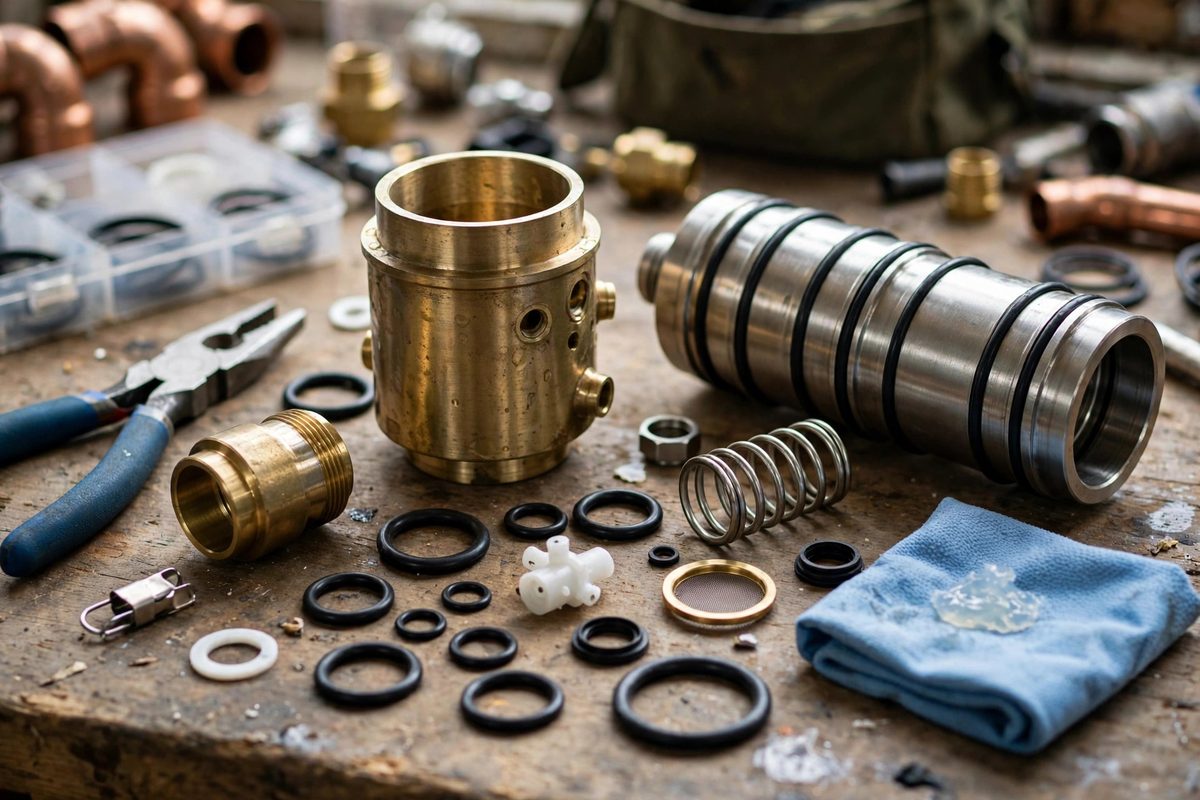
Friction in the cartridge comes from several places, and they accumulate. The O-rings and seals that keep hot and cold separated drag on the spool as it slides; their friction depends on the seal material, the squeeze, and the lubrication. Mineral deposits from hard water build up on the spool and bore, turning a smooth sliding fit into a gritty one; this is the most common cause of gradual balancing failure in service. Corrosion products do the same in aggressive water. The spool-to-bore clearance itself matters: too tight and any deposit seizes it, too loose and the valve leaks internally, bypassing the balance. Lubricant washout over years of service leaves the seals dragging dry. Each source alone might stay within the friction budget, but together they cross the line where the pressure forces can no longer reliably move the spool, and the failure is often intermittent at first: the valve compensates sluggishly, then not at all.
The Friction Budget Concept
Think of the cartridge as having a friction budget: the maximum drag the spool can tolerate while still responding to the smallest pressure fluctuation the valve is meant to correct. The budget is set by the minimum meaningful pressure difference, the spool area, and a safety factor for reliable operation across temperature and age. Manufacturers design to this budget with seal selection, surface finishes, and clearances, but the budget erodes in service as deposits accumulate and lubricant depletes. This is why a valve that worked perfectly for five years gradually stops compensating: nothing broke, but the friction crept past the budget. The design implication for the rare cases where you specify cartridges is to favor designs with generous spool areas and low-friction seal systems; the maintenance implication for everyone else is that declining balance performance is a service signal, not a mystery.
Servicing a Sticking Spool
When a pressure-balance valve stops compensating, the cartridge is the service item: most are designed to be pulled and replaced or rebuilt without touching the valve body in the wall. Before replacing, try cleaning: remove the cartridge, soak it in a descaling solution to dissolve mineral deposits, rinse thoroughly, and relubricate the seals with a silicone-based plumber's grease rated for potable water. Work the spool gently by hand to feel whether it moves freely; it should slide with light finger pressure. If the spool is scored, the bore is damaged, or cleaning does not restore free movement, replace the cartridge: the friction budget cannot be restored to a damaged surface. When replacing, match the cartridge exactly to the valve model; pressure-balance cartridges are not interchangeable between manufacturers, and a wrong cartridge may fit physically while balancing incorrectly or not at all.
Water Quality and Prevention
The friction that kills cartridges comes mostly from the water, so water quality is the long-term lever. Hard water deposits scale on the spool; sediment abrades the seals and bore; aggressive water corrodes. A whole-house sediment filter protects every valve in the building from particulate wear. Water softening reduces scaling dramatically in hard-water regions, extending cartridge life severalfold. These are plumbing-system decisions, not fixture decisions, but they determine whether cartridges last a decade or need service every couple of years. For the fixture itself, exercising the valve periodically, running it through its full temperature range, keeps the spool moving and prevents deposits from cementing it in one position during long idle periods, as in guest bathrooms.
The pressure-balance spool is a precision instrument running on ounces of force, and friction is its constant adversary. Respect the friction budget in design, service the cartridge when balance fades, and treat the water to slow the deposits. The shower will stay at the set temperature no matter who flushes, which is the entire promise of the valve.
Related Guides
- Ceramic Disc Cartridge Friction in High-Mineral Water: A faucet that used to glide now grinds, sticks, or needs real muscle to turn. If the faucet uses a ceramic disc cartridge, the culprit is usually not
- Dynamic Pressure Balancing in Dual Shower Valve Loops: A dual shower setup, two heads or a head plus a handheld on one valve loop, has a failure mode that shows up the moment someone flushes a toilet: one
- Thermostatic Mixing Valve Flow Balancing for Showers: A shower that swings hot and cold when a toilet flushes is not just annoying; it is a failure of the mixing valve to do its job. Thermostatic mixing
- Water Hammer Arrestor Sizing for Fast Valves: Water hammer is the bang that shudders pipes when a fast-closing valve, a dishwasher solenoid, a washing machine valve, a single-lever faucet snapped