
Flux makes solder flow, and flux residue makes solder joints corrode. The same chemistry that cleans metal oxides during soldering keeps working afterward, and if it is left on the finished piece, it eats into the solder, dulls the finish, and eventually grows the white crusty bloom that ruins stained glass work. Neutralization, washing the flux residue off and deactivating what remains, is not optional cleanup; it is the last real step of the soldering process. A piece that is not neutralized is not finished.
What Flux Leaves Behind
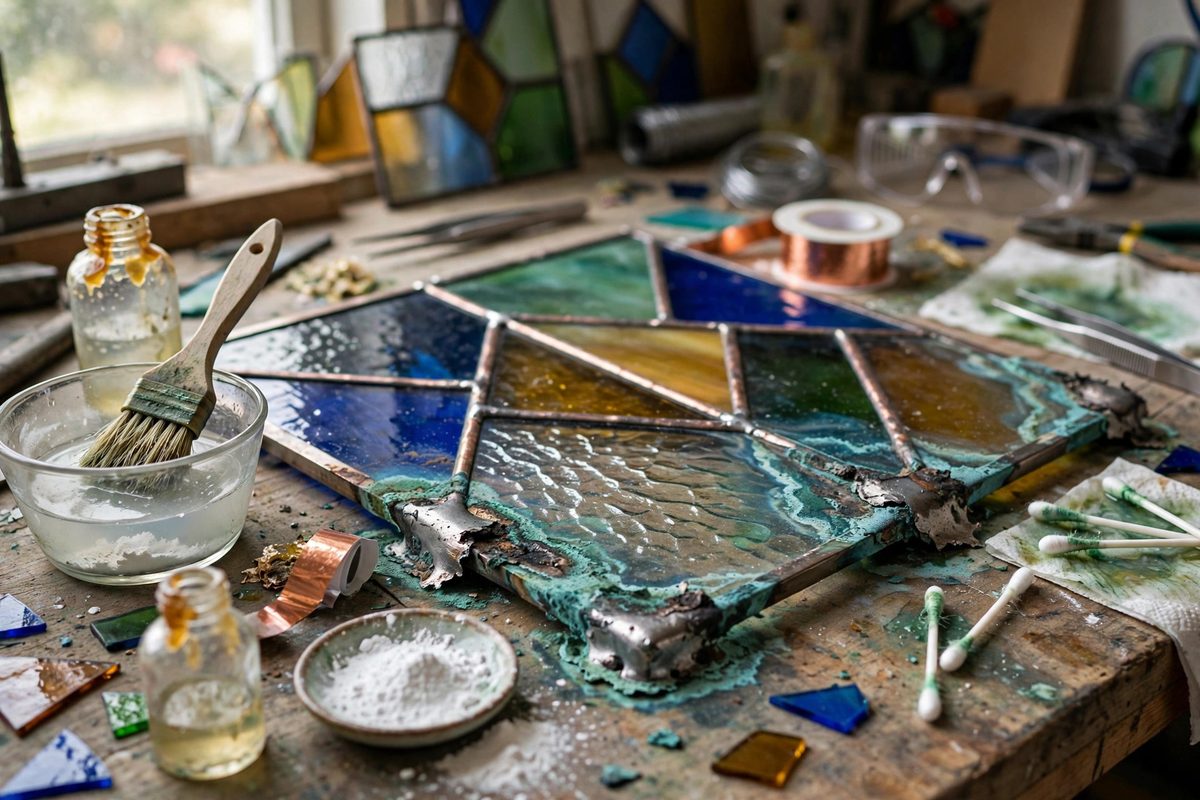
Soldering flux is acidic by design. It strips oxides from copper foil and lead came so the solder can wet the metal, and that acid does not politely stop working when you put the iron down. Residue trapped in textured glass, under foil edges, and in the crevices of decorative soldering keeps attacking the solder joint, turning bright lead-tin into dull gray and eventually pitting it.
The visible symptom is the white powdery residue that appears days after soldering, sometimes called flux bloom. It is the flux's salts crystallizing as moisture reaches them. Once it appears, it means the residue was never fully removed, and the corrosion underneath has a head start. Prevention at the wash stage beats scrubbing later.
The Wash Sequence
Wash the piece promptly after soldering, while the residue is still soluble. Start with warm water and a soft brush, working the whole surface including the edges and any textured areas where flux hides. A mild detergent or a dedicated flux neutralizer goes in the wash water; the surfactant lifts the residue out of crevices that plain water cannot reach.
Scrub gently but thoroughly. A soft nylon brush or an old toothbrush gets into foil seams and decorative solder texture without scratching the glass. Rinse with clean water until the rinse runs clear and the glass squeaks slightly under your fingers, which is the feel of truly clean glass. Then dry the piece completely; water left sitting in came channels re-dissolves any trace residue and restarts the corrosion cycle.
Neutralizers and How They Work
A neutralizer is typically a mildly alkaline solution that reacts with the acidic flux residue and converts it to inert salts that rinse away. Baking soda dissolved in water is the traditional home-shop version; commercial neutralizers add surfactants and chelating agents that do the same job more thoroughly. Either way, the chemistry is simple: base meets acid, residue becomes harmless.
- Mix baking soda solutions fresh; they lose effectiveness sitting around.
- Apply the neutralizer after the first wash, not instead of it; it deactivates residue, it does not dissolve grime.
- Rinse thoroughly after neutralizing; the resulting salts still need to leave the piece.
- Dry immediately and completely, including the came channels, with a soft cloth or gentle compressed air.
Problem Areas That Trap Flux
Textured and rippled glass is the worst offender: flux wicks into every valley of the texture and laughs at a quick rinse. These pieces need longer soaking and more brushing, and the neutralizer needs dwell time to reach into the texture. Lead came channels are the second trap; flux runs down into the channel during soldering and hides there, so flood the channels during washing and dry them deliberately.
Decorative soldering with lots of nooks, wire work, and applied elements creates dozens of tiny hiding places. Wash these pieces like you are cleaning jewelry, because at that scale, you are. A residue you cannot see is still corroding.
Patina and Finishing After Neutralization
Patina goes on after the piece is neutralized and dry, never before. Patina chemicals react with the solder surface, and flux residue interferes with that reaction, producing blotchy, uneven color. Worse, patina over unneutralized flux seals the acid under the finish, where it keeps corroding invisibly.
After patina, wash and dry once more, then apply a finishing compound or wax. The wax is not just cosmetic; it seals the solder against moisture and air, which are the two things that let any trace residue resume its work. A finished, waxed piece with neutralized joints will hold its look for years.
Wash it, neutralize it, dry it, then finish it. Flux is a tool that does its job during soldering and becomes the enemy the moment soldering ends. Treat the cleanup as part of the solder joint, not as housekeeping, and the work will outlast the maker.
Related Guides
- Reinforced Zinc Came Framing for Large Stained Windows: Large stained glass windows carry real weight, and the zinc came framework that holds the glass must be engineered, not just assembled. Unreinforced
- Copper Foil Width Selection for Hand Rolled Glass: Copper foil stained glass joins pieces by wrapping each edge in adhesive copper tape and soldering the foiled edges together. The foil's width
- Lead Came Flange Burnishing for Weatherproof Panels: A stained glass panel's weatherproofing lives in the lead came: the flanges must lie tight against the glass on both faces, with no gaps for water to