
Forge welding joins iron to iron with heat and pressure alone, no filler metal, but the weld only takes if the mating surfaces are clean at the moment of contact. At welding heat, iron oxidizes instantly, and that oxide layer prevents bonding. Flux is the chemical cleaner: applied at the right time in the right amount, it dissolves the oxide and shields the metal until the hammer falls. Getting the flux ratio right, how much and when, is a core blacksmithing skill.
What flux does in the weld
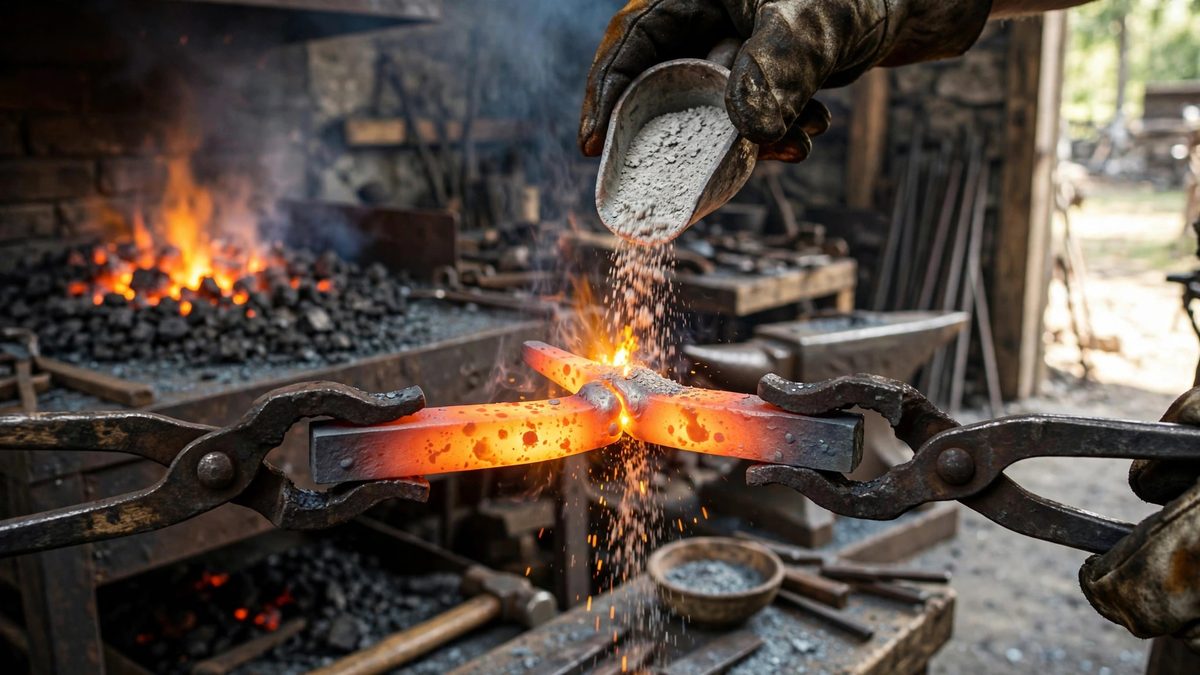
At forge-welding temperature (a bright yellow-white heat for mild steel), the flux melts into a liquid glass that flows over the metal surfaces. It dissolves iron oxide chemically and forms a protective coating that excludes oxygen during the brief transfer from forge to anvil. When the hammer strikes, the liquid flux squeezes out of the joint, carrying the dissolved oxides with it, and clean metal meets clean metal under pressure, forming the solid-state bond. Too little flux leaves oxide in the joint (a cold shut, a weak weld that later fails); too much is merely wasteful and messy, though excessive flux can also cool the work.
Flux types and their behavior
Borax is the traditional flux: cheap, effective, and forgiving. Anhydrous borax works better than the laundry-grade decahydrate, which foams and spits as its water boils off, though both weld. Commercial welding fluxes add ingredients like iron filings, which help fill small gaps, or fluorides, which clean more aggressively but demand ventilation. For mild iron bars, plain borax is entirely adequate; fancy fluxes solve problems mild steel does not have. Whatever the flux, it must be dry: damp flux clumps, spits, and cools the work.
How much and when
Apply flux when the metal reaches a dull red heat, before the final push to welding temperature: the flux melts, flows, and begins cleaning as the heat rises. Use enough to coat the joint surfaces visibly, a generous sprinkle, not a drift; the joint needs a continuous liquid film, and skimping is the classic beginner error. Reflux between heats if the weld needs multiple passes: each trip from forge to anvil exposes fresh metal to air, and the second heat needs fresh flux. For a scarfed joint on mild iron bar, flux both scarfs before bringing them together.
Reading the weld heat with flux present
The flux changes how the heat looks: borax at welding temperature is a shimmering liquid, and the metal beneath shows through it. Learn to read the metal's color through the flux film rather than the flux's own appearance. The weld is ready when the metal reaches a full welding heat, nearly white, with the flux fluid and the surface looking wet; a heat that is merely bright orange will not weld no matter how much flux is present. Flux enables the weld; only sufficient heat makes it.
Safety and cleanup
Flux at welding heat spits and pops, throwing tiny droplets of molten glass; wear eye protection always and keep skin covered. Some fluxes contain fluorides that produce hazardous fumes: know your flux's composition and ventilate accordingly, or stick to plain borax. After welding, the flux residue forms a glassy scale that must be wire-brushed off while hot or chipped off cold; left on, it traps moisture against the steel. A welded joint cleaned promptly is a joint ready for finishing.
Flux at dull red, generously but not buried, reflux between heats, weld at full heat, and protect your eyes. The bond forms in the hammer blow, but the flux makes it possible.
Related Guides
- Fluxless Forge Welding in Propane Muffle Forges: Forge welding without flux sounds like a contradiction; flux exists to dissolve the scale that prevents welds. But in a propane muffle forge, the
- Fire Weld Heat Boundaries for Slender Iron Scrolls: Fire welding slender scrollwork is a study in heat control. The pieces are thin, they heat fast, and the difference between a weld that takes and a
- Drawing Tapers and Bending Scrolling Leaves: The tapered bar and the scrolled leaf are the alphabet of decorative ironwork: nearly every gate, railing, and bracket ever forged combines drawn