
A bare LED panel throws light everywhere, spilling onto backgrounds and flags and generally making a mess. A Fresnel lens in front of the source collimates the output into a controllable beam, and a collimated key light is what gives studio work its clean, deliberate look. Understanding how the lens shapes the beam lets you place the light with intention instead of fighting spill.
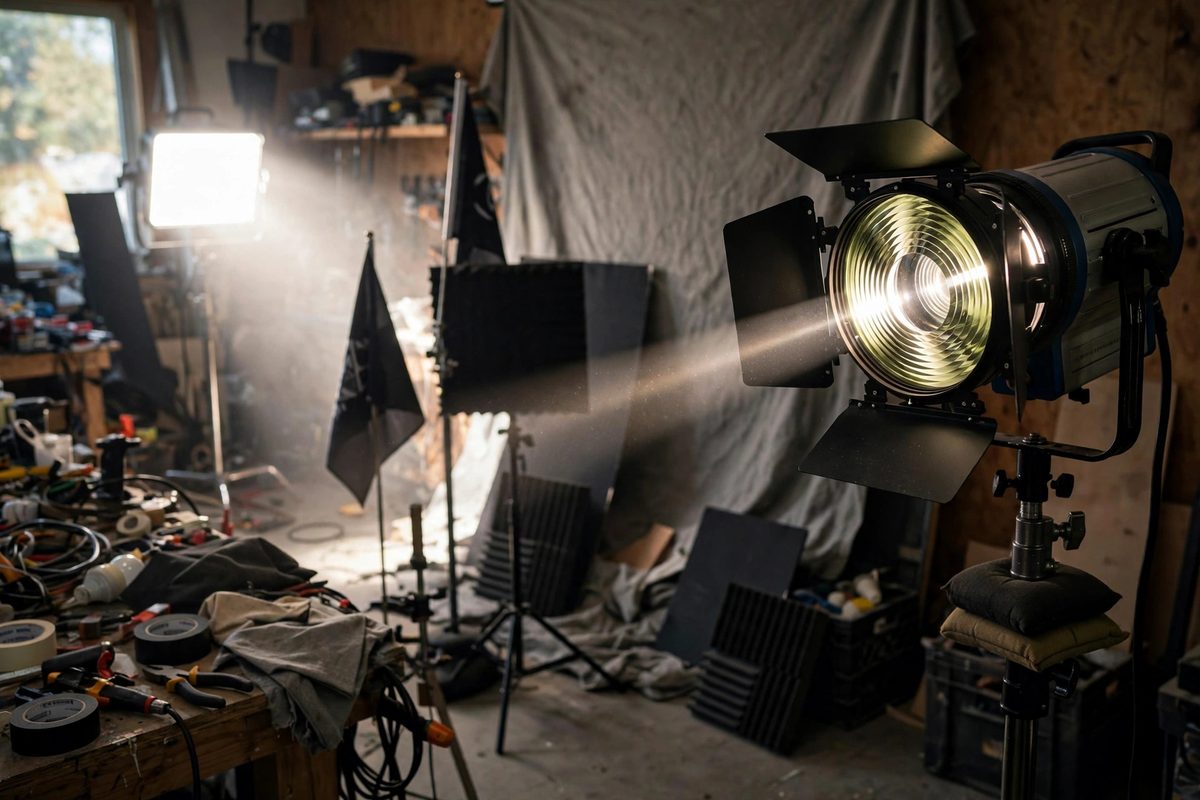
What Collimation Does
Light from a source spreads in all directions, and the Fresnel lens bends those diverging rays toward parallel. The result is a beam that holds its shape over distance instead of blooming outward. Move the source closer to or farther from the lens and the beam goes from a tight spot to a wide flood; this focus adjustment is the Fresnel's signature control. A well-collimated spot throws far with minimal falloff across the beam, which is why Fresnels are the tool for lighting a subject from across the studio without lighting everything between.
Positioning the Key Light
The classic key position is roughly forty-five degrees off the camera axis and elevated above the subject's eye line, which models the face with pleasing shadow falloff on the far side. With a collimated Fresnel, you can hold that position from further back than with a soft source, keeping the light out of the frame and out of the talent's eyes. The beam's edge is the creative tool: feather the edge of the beam across the subject so the light falls off naturally, rather than centering the hot spot on the face. A collimated beam has a defined edge, and placing that edge deliberately is what separates lit from merely illuminated.
Controlling Spill and Contrast
Even a collimated beam spills a little, and in a small studio that spill lands on the background. Barn doors on the Fresnel trim the beam edges precisely; flags and cutters placed between the light and the set shape it further. Because the beam is directional, a flag placed close to the light casts a hard-edged shadow, while the same flag near the subject softens. Use this to keep the key off the background entirely, which lets you light the background separately for full control of the subject-to-background contrast ratio.
Beam Quality and Lens Condition
A Fresnel lens with dust, scratches, or haze scatters light and degrades the beam, adding a soft halo around the spot and reducing throw. Keep the lens clean with appropriate methods for the lens material; glass and plastic Fresnels want different care. Check the beam on a wall periodically: a clean lens produces an even field with a defined edge, while a damaged one shows hot spots and streaks. The lens is the optic doing the work, so treat it like one, not like a piece of hardware.
Mixing With Fill and Background Lights
The key light sets the exposure and the mood; everything else supports it. Fill from the camera side at a lower intensity to control shadow density without creating a second set of shadows. Light the background independently to separate the subject tonally, using the collimated key's lack of spill to keep the two zones distinct. When the key is a hard collimated source, a soft fill balances the contrast into something flattering; when you want drama, let the fill fall away and embrace the shadows the Fresnel carves.
A collimated Fresnel key gives you a beam you can aim, shape, and keep off everything it should not touch. Focus it for the throw you need, feather the edge across the subject, flag the spill, and the studio starts looking like a studio instead of a bright room.
Related Guides
- High CRI LED Diffusion Scrim Spacing for Key Lights: A key light shapes the face, and its quality decides whether skin looks alive or waxy. High-CRI LED panels give accurate color, but bare LEDs are
- Diffusion Scrim Spacing Ratios for Soft Key Light: Soft, flattering key light is the foundation of good-looking video, and diffusion scrims, translucent fabrics stretched on frames, are how you make a
- High CRI LED Strip Color Rendering on Studio Walls: LED strips have become the default accent and fill lighting for video studios: cheap, flexible, dimmable, and available in every color temperature
- Parabolic Softbox Efficiency Limits for Rim Lighting: Parabolic softboxes promise focused, punchy light with softbox quality, and they deliver it, within limits. Used as a rim light, a parabolic modifier