
Parabolic softboxes promise focused, punchy light with softbox quality, and they deliver it, within limits. Used as a rim light, a parabolic modifier can carve a subject out of a dark background beautifully. But the efficiency claims around deep parabolic designs deserve a clear-eyed look, because the physics of the shape sets hard limits on what you gain and what you lose.
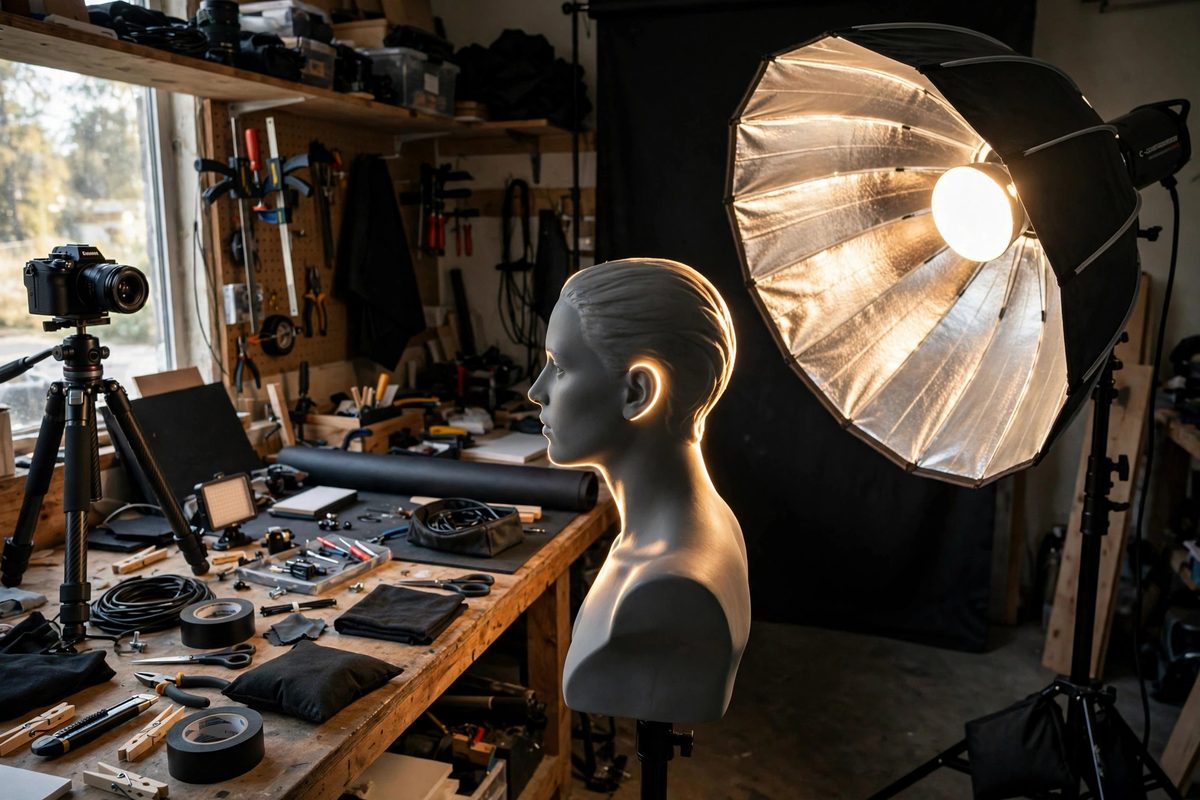
What the Parabolic Shape Actually Does
A true parabolic reflector takes light from a point source at its focal point and reflects it into parallel rays. Deep parabolic softboxes approximate this: the long, narrow shape with the light head positioned partway down the modifier throws a more directional, less spread beam than a shallow softbox. That directionality is the point. More of the light goes forward toward the subject and less spills sideways, which reads as efficiency. The catch is that a softbox is not a polished mirror; its interior is a diffusing surface, and diffusion scatters light in all directions regardless of the reflector shape. The parabolic geometry still helps by aiming the bulk of the output forward, but it cannot achieve the laser-like collimation of a true mirrored parabola.
Efficiency Limits in Practice
Every bounce and every layer of diffusion costs light. A deep parabolic softbox typically has the light head firing into the modifier, bouncing off the interior, and passing through one or two layers of diffusion fabric. Each of those steps absorbs and scatters a fraction of the output. Compared to a bare reflector or a simple beauty dish, a deep parabolic softbox with full diffusion can easily deliver half or less of the fixture's raw output to the subject. That is not a defect; it is the price of the soft quality. The practical consequence is that rim lighting a subject from a distance with a big parabolic softbox demands a powerful fixture. If the light is underpowered, the temptation is to move it closer, which changes the character of the rim from a crisp edge to a broad wash. Match the fixture to the modifier and the distance before the shoot, not during.
Why Rim Light Is a Demanding Application
Rim lighting needs contrast: a bright, defined edge against a darker background. A parabolic softbox used as a rim from behind and to the side gives a pleasing gradient along the subject's edge, which is why portrait and product shooters love it. But the same directionality that makes the rim punchy also makes the falloff fast, so small changes in subject position change the rim intensity noticeably. For video, where the subject moves, that can mean a rim that breathes in and out. A shallower modifier or a slightly larger source gives a more forgiving rim at the cost of some punch. Also consider spill: the focused beam of a deep parabola is easier to keep off the background, which is an advantage when you want the background to fall dark, but it means the rim disappears entirely if the subject steps out of the beam.
Diffusion Choices and Their Costs
Most parabolic softboxes ship with an inner baffle and an outer diffusion panel, and each can be used or omitted. Running without the outer diffusion gives the hardest, most efficient output, closest to the parabolic ideal, with a more specular rim that shows texture. Adding the outer diffusion softens the edge and costs output, sometimes a stop or more. There is no universally right choice; the decision is about the look. For a crisp rim on textured subjects like fabric or hair, less diffusion usually wins. For a gentle glow on skin, more diffusion is kinder. Test both on a stand-in at the actual working distance, because the character of the light changes with distance in ways that are hard to predict from specs.
Working Within the Limits
Treat the parabolic softbox as a specialty tool with known trade-offs rather than a magic efficiency upgrade. Give it enough fixture power, position it with intention, and choose the diffusion to taste. Keep spare diffusion panels clean, since dirty fabric costs output and shifts color. And remember that the deepest, most dramatic parabolic look comes with the narrowest beam and the fastest falloff, which demands the most precise subject blocking. Used with those limits in mind, a parabolic rim light produces some of the most beautiful edge light available to a small crew.
The parabolic shape focuses the beam but cannot defeat the losses of diffusion, and rim lighting magnifies both the strengths and the demands of that beam. Size the fixture generously, test at working distance, and let the modifier's directionality do the carving.
Related Guides
- High CRI LED Strip Color Rendering on Studio Walls: LED strips have become the default accent and fill lighting for video studios: cheap, flexible, dimmable, and available in every color temperature
- Diffusion Scrim Spacing Ratios for Soft Key Light: Soft, flattering key light is the foundation of good-looking video, and diffusion scrims, translucent fabrics stretched on frames, are how you make a
- Fresnel Lens Collimation for Clean Studio Key Lights: A bare LED panel throws light everywhere, spilling onto backgrounds and flags and generally making a mess. A Fresnel lens in front of the source
- High CRI LED Diffusion Scrim Spacing for Key Lights: A key light shapes the face, and its quality decides whether skin looks alive or waxy. High-CRI LED panels give accurate color, but bare LEDs are