
Large macrame wall hangings are deceptively heavy. A piece that looks like airy knotted cotton can weigh fifteen or twenty pounds once the dowel, the dense knotwork, and absorbed humidity are counted. Hanging that weight from a wall for years demands hardware rated for the job, and the French cleat, a beveled strip that interlocks with a matching strip on the wall, is the maker's best answer. Here is how to rate, size, and install cleats for big textile pieces.
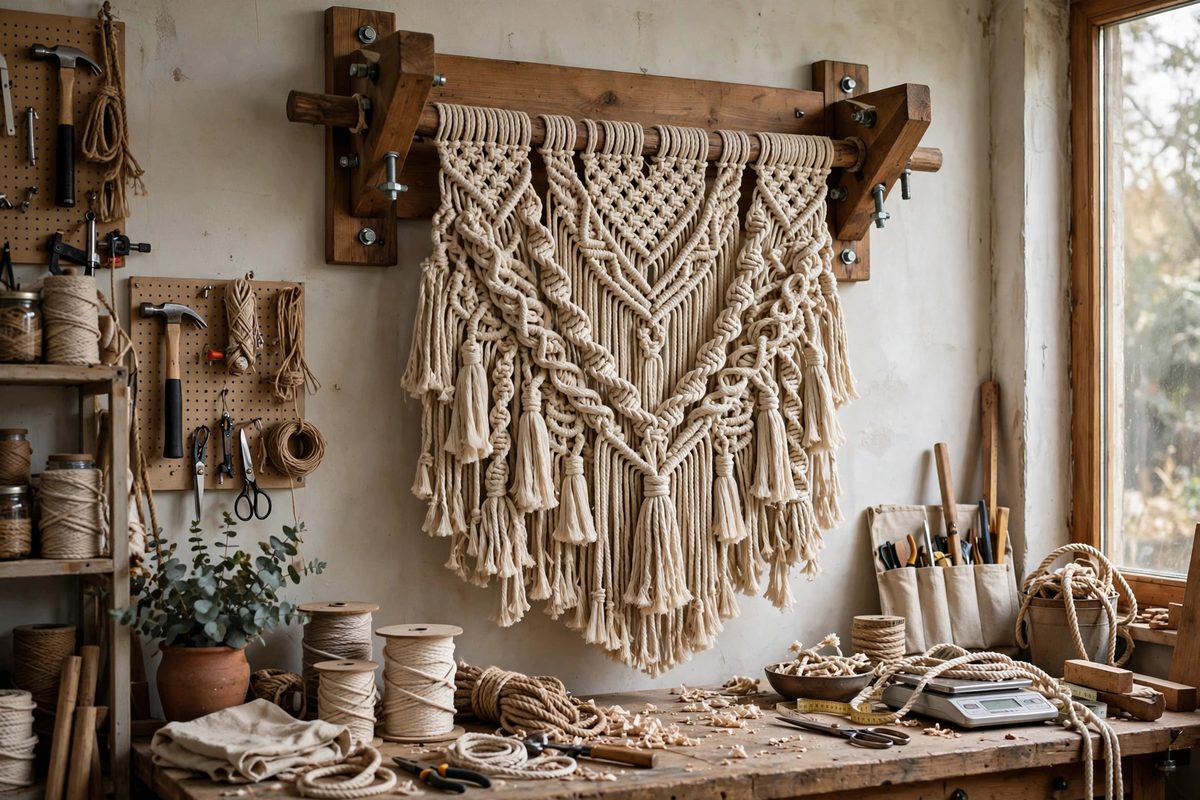
Why cleats beat wire and hooks for textiles
Wire hangers concentrate the entire load on two small points, which is fine for a framed picture but punishing for a textile: the hanging's own weight pulls unevenly, the top edge sags between the points, and the piece slowly distorts. A cleat spreads the load across the full width of the hanging, supporting the top edge evenly so the knotwork below hangs true. The interlocking bevel also locks the piece against the wall, preventing the forward tilt that wire hangers allow. For anything wider than about two feet, the cleat is structurally the right call.
Weighing the piece honestly
Before choosing hardware, weigh the finished hanging with its dowel or mounting bar, using a bathroom scale. Then add a margin: textiles absorb moisture from the air, and a piece in a humid room can gain ten percent or more over its dry weight. Multiply the measured weight by at least two for your hardware rating; a factor of three is better for pieces that will hang for years. The cleat itself should be sized to the width: a cleat spanning at least two-thirds of the hanging's width distributes load properly, while a short cleat centered under a wide piece recreates the point-loading problem you were trying to avoid.
Cleat materials and sizing
Hardwood cleats, oak, maple, or birch plywood, are the standard for heavy textiles. A cleat strip roughly three-quarters of an inch thick and two to three inches tall, beveled at 45 degrees along its length, handles substantial loads when properly anchored. Softwood works for lighter pieces but can crush or split under sustained heavy load at the bevel. Attach the mating strip to the hanging's dowel or to a fabric sleeve sewn across the top back of the piece; lashing the strip directly to the dowel with cord keeps the textile's top edge straight and supported.
Anchoring to the wall
The cleat is only as strong as its wall anchors, and this is where most failures happen. Whenever possible, drive the wall-side cleat into studs with screws long enough to bite at least an inch and a half into solid wood. On masonry, use proper masonry anchors rated for the load. Drywall anchors alone, even the heavy-duty toggle kind, are a gamble for anything over about ten pounds of sustained load; if you must use them, use several and keep the rated load well above the piece's weight. Level the wall cleat carefully before final tightening: an unlevel cleat makes the hanging sit crooked, and shimming it afterward is awkward.
Installation and long-term checks
Mount the wall cleat first, then lower the hanging's cleat onto it from above; the bevels wedge together and gravity does the rest. The joint should seat fully along its length with no rocking. Give the installed piece a firm downward tug to confirm engagement. Check the installation annually: look for the cleat pulling away from the wall, the bevel crushing, or the textile's attachment sleeve stretching. Textiles move with the seasons, and a hanging that was true in winter may need its sleeve stitching reinforced by summer.
Rate for double the weight, anchor into structure, and spread the load across the width. A well-cleated textile hangs flat, safe, and undistorted for as long as you want to look at it.
Related Guides
- Anchor Cleat Spacing to Stop Sagging in Textile Hangings: A textile wall hanging that sags between its mounting points looks tired and homemade in the wrong way. The fabric stretches, the weight pulls, and
- Hanging Dowel Bending Stress Calculations for Weaves: A macrame wall hanging starts with a dowel: the horizontal bar from which every cord hangs and around which the whole piece is built. It looks like a
- Mounting Dowel Deflection Limits in Wide Macrame: A wide macrame wall hanging puts a real structural demand on its mounting dowel: the full weight of cords and knots pulls down along its length, and
- Calculating Branch Deflection in Driftwood Wall Art: Driftwood wall hangings balance rustic beauty against quiet structural risk. A handsome branch mounted horizontally, hung with macrame, beads, or