
Hard ground, the waxy resist that protects the copper plate where you do not want the acid to bite, is traditionally hardened by baking: gentle heat melts the ground into a thin, even, durable film. Asphaltum-based hard grounds bake into a particularly tough resist, but the baking has limits. Too little heat and the ground stays soft, lifting in the acid; too much and it burns, becoming brittle, discolored, and prone to cracking off the plate. The baking window is narrow, and the plate's condition depends on hitting it.
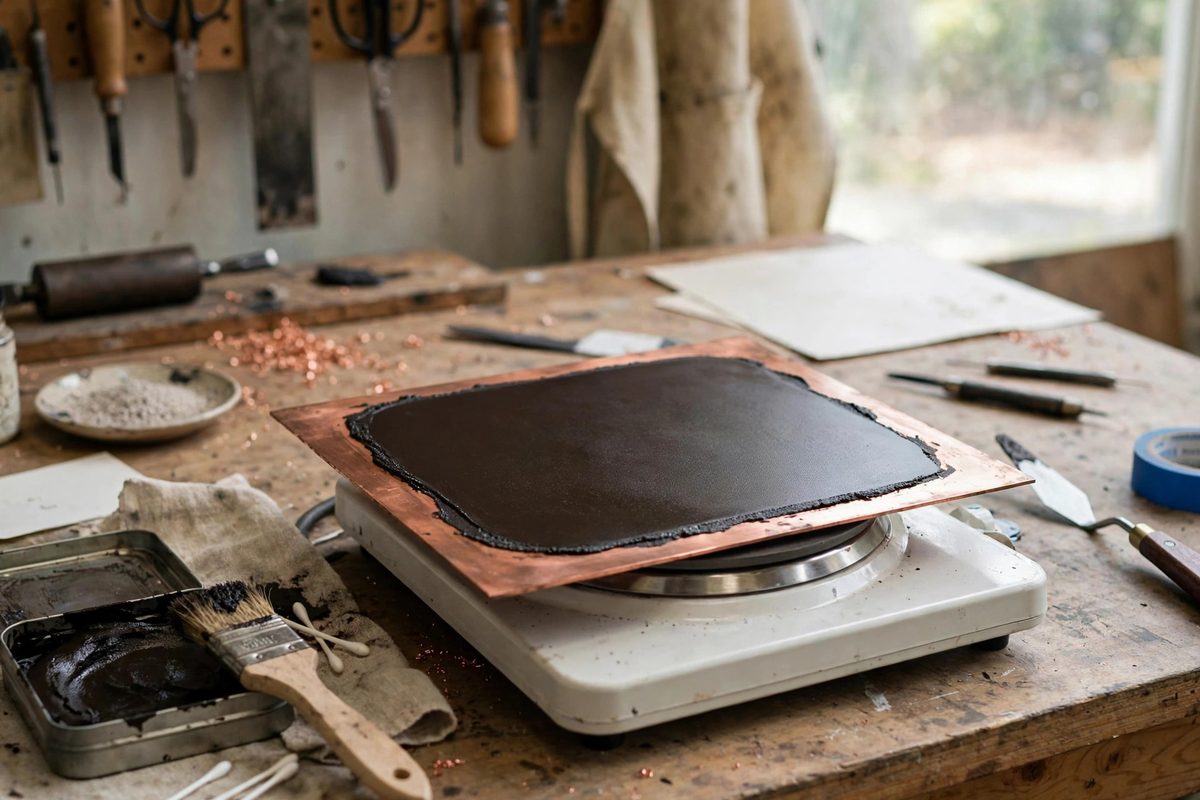
What Baking Does to the Ground
Applied hard ground goes on as a relatively thick, soft layer, often dabbed on with a dabber in a stippled texture. Baking melts it: the waxes and asphaltum flow together into a smooth, thin, continuous film bonded to the copper. This flowed film is dramatically more acid-resistant than the unbaked dabber texture, because the acid cannot find the pinholes and thin spots that the melting eliminates.
The heat also drives off the volatile components, leaving a harder, more stable resist. An unbaked ground may survive a short, shallow bite; a properly baked ground survives deep, extended bites and multiple acid sessions. Baking is what makes hard ground hard.
The Temperature Window
The ground needs enough heat to flow fully, which for asphaltum grounds means the plate must reach the point where the ground visibly melts and levels, then a bit beyond to set it. In practice, this is a gentle, even heat, the plate warm enough that the ground flows like warm honey, held until the smoking stops and the film sets. A hot plate or an oven gives more even heat than a handheld heat source, and evenness matters: hot spots overbake while cool spots underbake.
The upper limit announces itself: the ground begins to smoke heavily, darken excessively, or develop a scorched smell, and the film, instead of flowing smooth, starts to look dry and crazed. Overbaked ground loses its adhesion and its flexibility; it cracks under the etching needle instead of parting cleanly, and it can flake off in the acid bath, exposing the plate to foul biting.
Reading the Plate During Baking
Watch the ground, not the thermometer. The visual sequence is: stippled dabber texture, then softening and gloss as melting begins, then a smooth, even, slightly glossy film as the flow completes, then the first wisps of smoke as volatiles leave. The target is the smooth film stage, held briefly; the danger zone is prolonged smoking and darkening past that point.
- Heat the plate evenly; move a handheld heat source constantly, or use an oven or hot plate.
- Bake in a ventilated area; the fumes from heated asphaltum are unpleasant and unhealthy.
- Let the plate cool fully before drawing; drawing on warm ground drags and tears.
- If the ground looks scorched, strip it and start over; overbaked ground cannot be rescued.
Copper's Role in the Process
The copper plate itself affects the baking. A clean, degreased plate bonds the ground well; any residual grease or oxidation creates weak spots where the ground lifts regardless of baking quality. Polish and degrease before grounding, and handle the plate by the edges afterward. Fingerprints under the ground become pinholes in the resist.
Plate thickness matters for heat handling: thin plates heat fast and unevenly, overshooting the window before you react; thick plates heat slowly and evenly, forgiving imprecise timing. If you work with thin plates, use lower heat and more patience; the window is the same, but the transit through it is faster.
Testing the Baked Ground
Before committing to a long bite, test the ground's integrity. Draw a few test lines, then give the plate a short acid exposure and inspect: the lines should bite cleanly with no foul biting (unwanted acid attack) in the supposedly protected areas. Pinholes or lifting at this stage mean the ground needs stripping and re-baking, not a longer acid bath hoping for the best.
A well-baked asphaltum ground has a distinctive look: smooth, dark, with a slight sheen, adhering so well that the etching needle parts it with a clean, crisp line. Learn that look, and the baking becomes a visual skill rather than a timed procedure.
Flow it smooth, hold it briefly, stop before the scorch, and test before the deep bite. Baking hard ground is heat applied with attention, and the plate rewards the patient eye with a resist that holds through the longest etching.
Related Guides
- Nitric Acid Bath Timing on Polished Copper Plates: Etching a copper plate in nitric acid is a timed chemical conversation: the acid bites the exposed lines while you watch the clock, and the
- Soft Ground Etching Textures With Botanical Pressed Leaves: Soft ground etching captures texture by letting objects press into a tacky etching ground, and pressed botanical leaves are among the most rewarding
- Rosin Dust Box Grain Density for Fine Aquatints: Aquatint's smooth tonal areas come from rosin dust melted onto the plate, and the density of that dust grain determines everything about the tone