
Etching a copper plate in nitric acid is a timed chemical conversation: the acid bites the exposed lines while you watch the clock, and the difference between a crisp line and a mushy one is often a matter of minutes. Polished copper, the smooth, mirror-finish plates favored for fine line work, bites faster and more evenly than rougher plates, which means the timing windows are tighter and the stakes of misjudgment are higher. Understanding what the bath is doing at each stage lets you etch by intention rather than by guesswork.
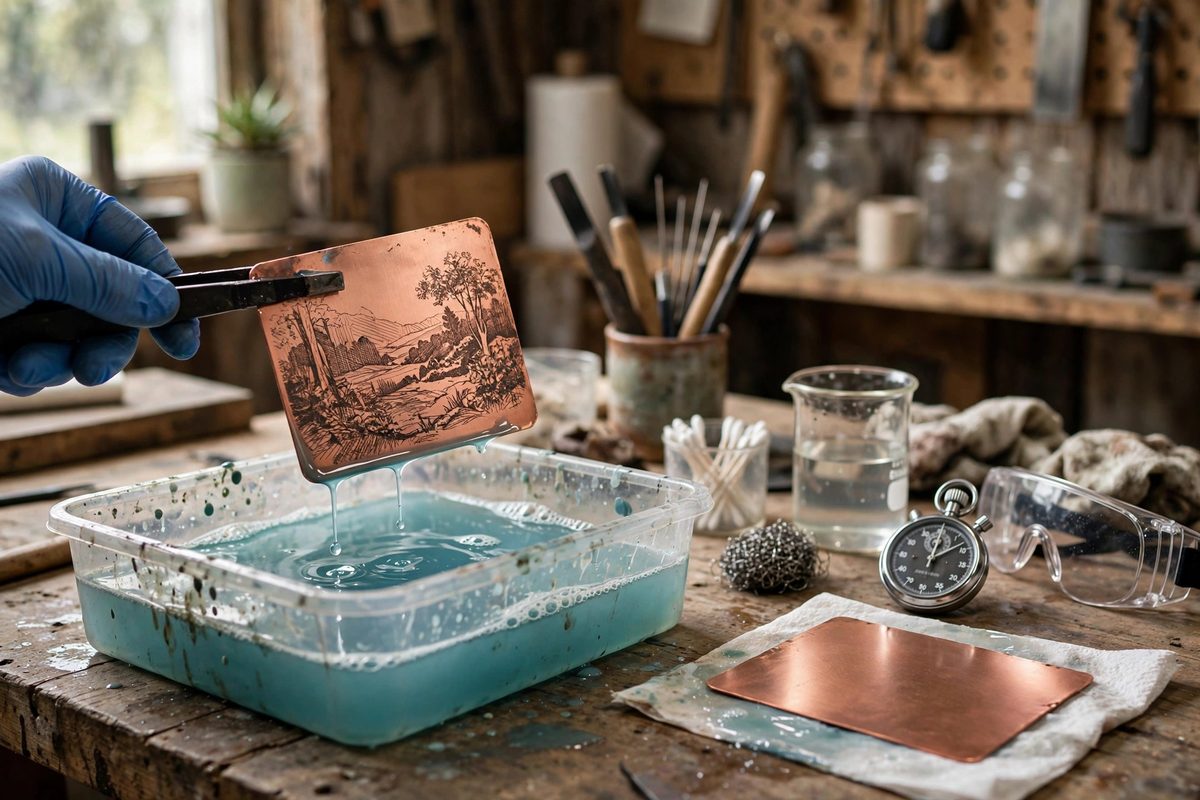
How Nitric Acid Bites Copper
Nitric acid dissolves copper through an oxidizing reaction that produces copper nitrate and nitrogen dioxide, the familiar brown fumes. On a polished plate, the acid attacks the exposed metal uniformly because there are no pits, scratches, or oxide patches to bite preferentially. This uniformity is a blessing for even line work and a curse for timing: the bite depth increases steadily with time, so there is no natural slowdown to save you from over-etching. The reaction also accelerates as it proceeds, because the dissolved copper in the bath and the warming of the solution both speed the attack. A bath that bites gently in the first five minutes can be noticeably more aggressive at minute fifteen. Fresh acid bites faster than used acid; warm acid bites faster than cool acid. Treat every timing as approximate and watch the plate, not just the clock.
Setting Up a Controlled Bath
Control starts with dilution and temperature. A common working strength is roughly one part concentrated acid to three or four parts water, always adding acid to water, never the reverse. Weaker baths give longer, more forgiving timing windows at the cost of slower progress; stronger baths are faster but punish hesitation. Keep the bath at a stable room temperature: a bath that worked in a cool morning studio will bite faster on a warm afternoon. Use a tray only slightly larger than the plate so the acid volume stays manageable, and rock the tray gently at intervals to sweep away the bubbles and sludge that cling to the bitten lines. Gas clinging to a line shields it from fresh acid, producing an uneven, pitted bite.
Timing Windows for Line Depths
On polished copper at a moderate bath strength, useful timing landmarks run roughly as follows. A light, delicate line, the kind that prints as a fine gray, needs only a few minutes. A solid drawing line that prints a clean black takes noticeably longer, on the order of ten to twenty minutes depending on bath strength. Deep, rich lines for dark accents can require thirty minutes or more, often built in multiple immersions with stopping out between them. These are starting estimates, not recipes: your acid strength, temperature, and the exact polish of the plate all shift them. Use a test strip: etch a small scrap of the same polished copper alongside the plate, pulling it at intervals, then match the plate's immersion to the results. A test strip costs minutes and saves plates.
Staging Bites With Stop-Out
Most etchings need lines of different depths on one plate, which means the plate goes into the bath multiple times with the finished lines protected between immersions. The procedure: etch the lightest lines first, remove the plate, rinse, dry, and paint stop-out varnish over those lines; then re-immerse for the next depth. Each cycle adds depth only to the still-exposed lines. The discipline that matters is complete drying before applying stop-out: varnish over damp lines traps moisture and lifts, exposing lines you meant to protect. Also keep track of cumulative time per line group; it is easy to lose count across three or four immersions. A simple written log protects against the most common staging error: over-biting the deep lines because you forgot their accumulated time.
Reading the Plate During the Bite
The clock gets you close; your eyes get you exact. Lift the plate periodically and examine the lines under a raking light. Freshly bitten lines look bright and sharp-edged; as the bite deepens, the line walls develop a slightly rounded profile and the line appears wider. Undercutting shows as ragged, widening lines with a frosted look: stop immediately, because undercut lines print as fuzzy, broken marks. Ground lifting at line edges means acid is getting under the resist: pull the plate, rinse thoroughly, and assess before continuing. A plate pulled slightly early can always go back in; a plate pulled late cannot be unbitten.
Safety and Rinse Discipline
Nitric acid demands respect: it burns skin, destroys clothing, and its fumes irritate lungs and corrode studio equipment. Work with ventilation, wear acid-resistant gloves and eye protection, and keep a neutralizing rinse, a weak baking soda solution, within reach. Rinse the plate thoroughly under running water the moment it leaves the bath; residual acid keeps biting in the rinse tray and on the drying rack. Dispose of spent acid according to local hazardous waste rules, never down a household drain.
Etching polished copper is timing plus observation. Set a controlled bath, calibrate with a test strip, stage your depths with stop-out, and read the lines under raking light as the bite progresses. The clock tells you when to look; the plate tells you when to stop.
Related Guides
- Hard Ground Asphaltum Baking Limits on Copper: Hard ground, the waxy resist that protects the copper plate where you do not want the acid to bite, is traditionally hardened by baking: gentle heat
- Rosin Dust Box Grain Density for Fine Aquatints: Aquatint's smooth tonal areas come from rosin dust melted onto the plate, and the density of that dust grain determines everything about the tone
- Soft Ground Etching Textures With Botanical Pressed Leaves: Soft ground etching captures texture by letting objects press into a tacky etching ground, and pressed botanical leaves are among the most rewarding