
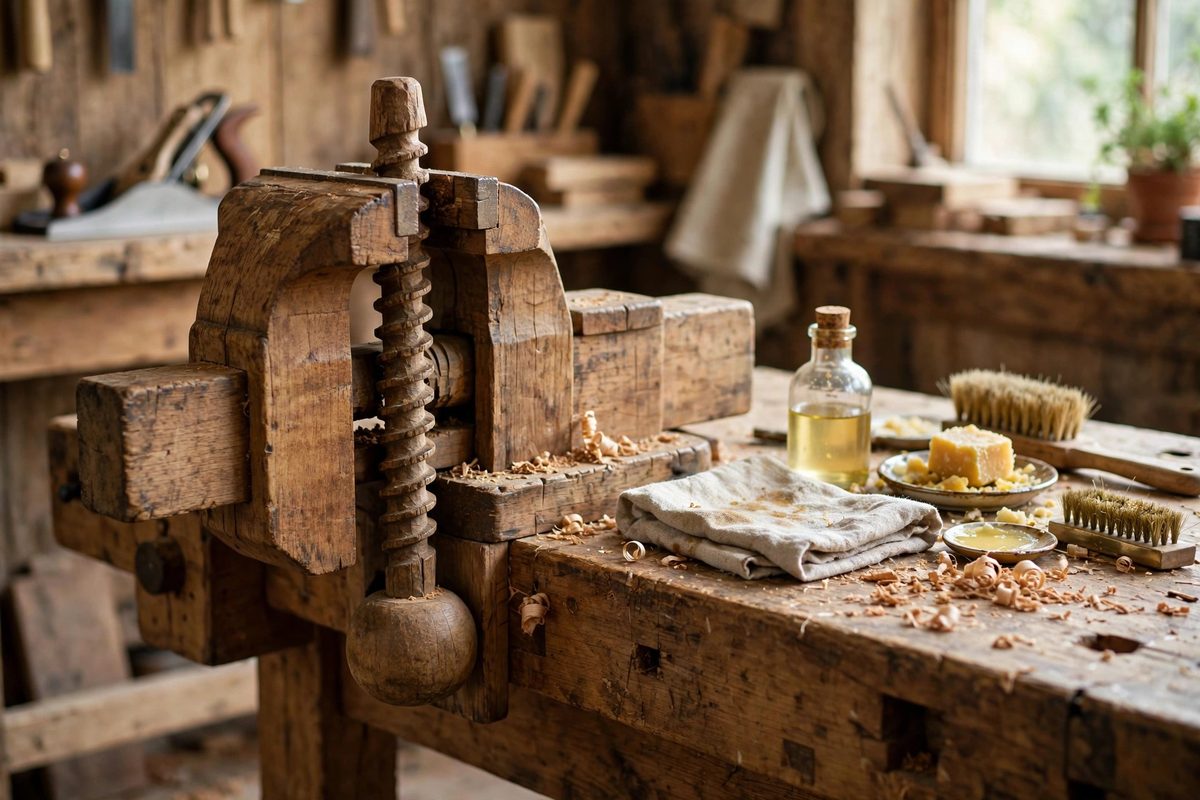
The wooden bench clamp, whether a leg vise with its massive wooden screw, a shoulder vise, or a traditional hand screw, is one of the oldest workholding devices in the craft, and one of the most pleasant to use. Wood on wood moves smoothly, grips without marring, and gives tactile feedback no metal vise matches. But wooden threads and wooden jaws are living materials: they respond to humidity, wear with use, and suffer from neglect. A maintenance routine measured in minutes per season keeps these tools working sweetly for generations, which is exactly what they were built for.
How wooden screws work and wear
A wooden vise screw is a large thread cut in dense hardwood, running in a matching wooden nut. The thread flanks carry the clamping load, and the fit between screw and nut determines the feel: too tight and the vise binds, too loose and it wobbles. Wear happens slowly on the thread flanks, accelerated by grit, by forcing a dry screw, and by racking the vise (clamping off-center so the screw bends). Humidity cycles cause the wood to swell and shrink, tightening the fit in damp weather and loosening it in dry. Understanding this explains the entire maintenance program: keep the threads clean and lubricated, protect the wood from extreme humidity swings, and avoid the abuses that accelerate wear. A well-kept wooden screw lasts a century; a neglected one can be ruined in a few damp years.
Cleaning and lubricating the threads
Once or twice a year, run the vise through its full travel and brush the exposed screw threads clean with a stiff brush, removing dust, shavings, and any grit that has settled into the threads. Grit in wooden threads acts as a lap, grinding away the flanks with every turn. After cleaning, lubricate with a traditional thread lubricant: paste wax, beeswax, or a purpose-made wooden-thread wax. Apply it to the screw threads and run the vise through its travel several times to distribute it into the nut. The wax does three jobs: it lubricates the sliding flanks, it seals the wood against moisture cycling, and it fills tiny surface imperfections for a smoother feel. Avoid petroleum oils and greases, which can soften some woods over time and attract dust; wax is the traditional choice because it works. If the screw feels gritty after cleaning and waxing, something is embedded in the threads and deserves a closer look, not more force.
Jaws, guide bars, and alignment
The wooden jaws take the abuse of daily clamping: dents from workpieces, glue squeeze-out, and the occasional errant saw cut. Keep the jaw faces true by planing or sanding them flat when they get chewed up; jaws that are not flat do not hold flat work. Replaceable jaw liners, sacrificial wooden faces screwed to the main jaws, are traditional precisely because they take this wear; renew them when they get tired rather than letting damage reach the vise itself. Check the guide bars or parallel linkage that keeps the moving jaw aligned: these must slide freely and stay parallel, since a jaw that racks under load bends the screw and wears the threads unevenly. Clean and wax the guide bars as you do the screw. Tighten any loose joinery in the vise assembly promptly; a vise that wobbles wears itself out.
Humidity and storage
Wooden vises live best in the same stable conditions as the rest of the shop's woodworking: moderate, consistent humidity. Extreme dryness shrinks the nut and loosens the fit; extreme dampness swells everything and can seize a screw that fit perfectly last month. If the shop sees big seasonal swings, the wax coating on the threads is your main defense, supplemented by keeping the vise out of direct weather and off damp floors. A vise that seizes in humid weather usually frees itself as conditions normalize; resist the urge to force it, which can crack the nut or strip the threads. Patience and a little heat from a lamp to drive off surface moisture resolve most seasonal tightness without drama.
Repairs worth making
When maintenance is not enough, wooden vises are eminently repairable, which is part of their charm. A worn screw can sometimes be built back up with careful application of epoxy and re-cutting, though replacement screws are available from specialty makers for common vise types. Cracked nuts can be reinforced with glued and wedged repairs or replaced. Worn jaw faces get new liners. The philosophy of the wooden vise is the philosophy of all traditional tools: maintain it regularly, repair it thoughtfully when it needs it, and it will outlast you. That continuity, a vise that has held work for a hundred years and will hold it for a hundred more, is worth the few minutes of seasonal care.
Brush the threads clean, wax them, keep the jaws true, and respect the humidity. The wooden bench clamp asks little and gives back a lifetime of sweet, silent workholding.
Related Guides
- Scraping and Truing Traditional Wooden Hand Screws: The wooden hand screw, the classic parallel-jaw clamp with two wooden screws, is one of the most useful clamps ever designed, and vintage ones often
- Build a Table Saw Crosscut Sled: Why Every Woodworker Needs a Crosscut Sled A crosscut sled is one of the most valuable jigs you can build for your table saw. Think of it as a
- Tuning Box Joint Finger Spacing on Table Saws: Box joints, the square-fingered cousins of dovetails, are cut on the table saw with a jig and a dado stack, and their quality lives entirely in the
- Dado Blade Wobble Elimination With Ground Shims: A dado stack that wobbles cuts a dado wider than intended, with ragged shoulders and a bottom that is not flat. The wobble often comes not from a bad