
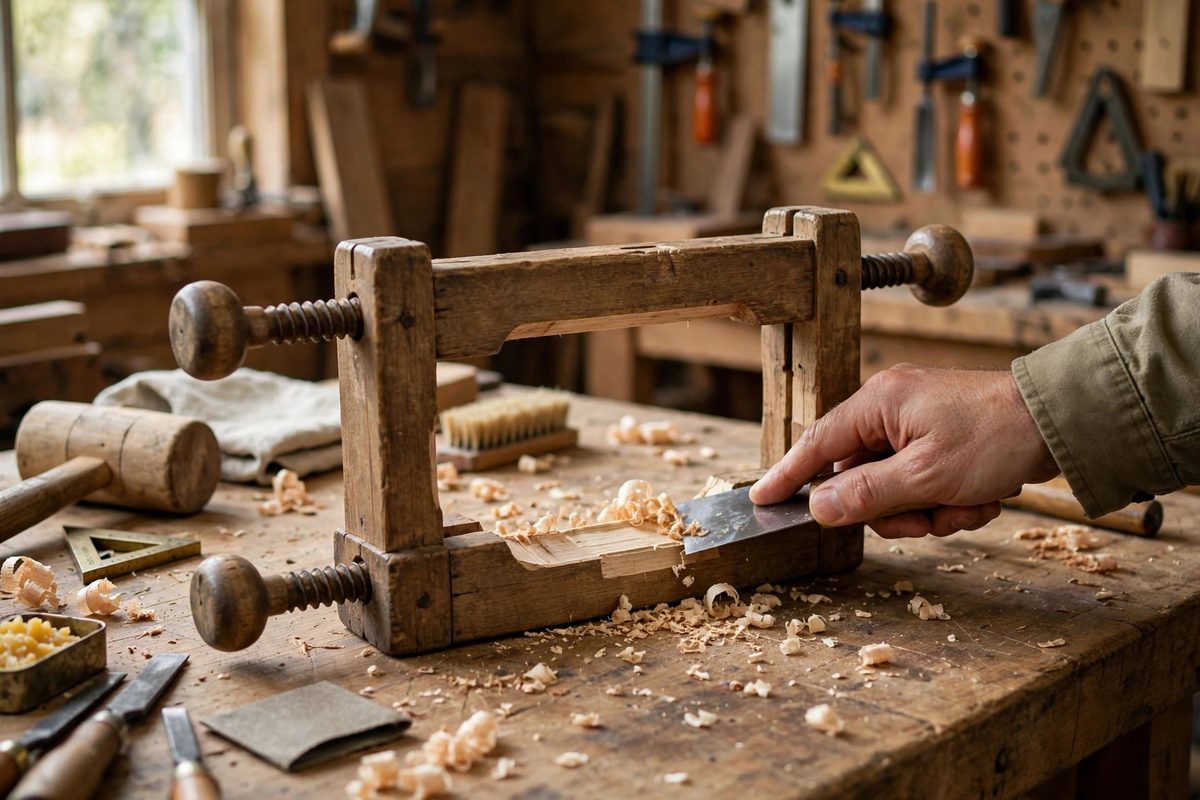
The wooden hand screw, the classic parallel-jaw clamp with two wooden screws, is one of the most useful clamps ever designed, and vintage ones often arrive with jaws that no longer meet true. Scraping and truing the jaws restores the clamp's defining feature: jaws that close parallel and grip along their full length. It is quiet, meditative work that pays off every time the clamp is used.
Why Hand Screw Jaws Go Out of True
Wooden hand screws live hard lives. The jaws get dented by workpieces, the screws wear, and the wood moves with humidity changes over decades. A jaw that is hollow in the middle grips only at its ends; a jaw that is bellied grips only in the middle; twisted jaws grip at diagonal corners. Any of these conditions lets workpieces pivot or slip under pressure, which defeats the clamp's purpose. The screws themselves can also wear: the wooden threads get sloppy, or the handles loosen. But the jaws are the usual culprit, and they are the easiest to fix. Before scraping, check that the screws turn freely and the jaws move through their range; truing jaws on a clamp with seized screws is wasted effort.
Scraping Versus Planing
A cabinet scraper or a sharp hand plane both remove wood, but the scraper is the better tool for truing jaws. The scraper takes fine, controllable shavings and does not tear the grain on the way out of a cut, which matters on old, sometimes brittle wood. It also lets you work locally: taking down a high corner without disturbing the surrounding surface. Mark the jaw faces with pencil scribbles or chalk; the marks disappear first from the high spots, showing exactly where to work. Scrape the high areas, re-mark, and check again. The process is iterative and unhurried. A plane is faster for gross correction on a badly damaged jaw, but finish with the scraper for control.
Truing the Jaws Parallel
The goal is jaws that meet evenly along their full length when closed, and stay parallel as they open. Close the clamp and check the jaw faces against each other with a straightedge, or hold them up to a light to see where they touch. Scrape the high spots on each jaw, working both jaws equally so you do not chase the error from one side to the other. Then open the clamp partway and check parallelism with a caliper or by clamping a straight board and checking that it is gripped along the full jaw length. The classic test: clamp a piece of paper at various points along the jaws; it should be held firmly everywhere, not just at the ends or middle. Adjust the two screws independently to fine-tune, since the hand screw's design allows angling the jaws slightly.
Dealing With the Screws and Handles
While the jaws are apart, inspect the wooden screws. Clean the threads with a stiff brush; old wax and grime make them stiff. Lubricate with paste wax or a dry lubricant, never oil, which attracts dust and gums up. If a handle is loose on its screw, re-glue it; a spinning handle makes the clamp unusable. Check the metal pins or plates where the screws bear on the jaws; worn bearing surfaces let the screws wobble. Minor thread wear is acceptable in a working clamp; the screws do not need to feel like new, they need to turn smoothly and hold pressure. If the threads are stripped, the clamp becomes a parts donor, since re-cutting wooden threads is rarely worth the effort on a common hand screw.
Protecting the Restored Jaws
Once true, protect the jaw faces. Many woodworkers glue on leather or cork jaw pads, which grip better and prevent marring workpieces; the pads also forgive tiny remaining irregularities. If you prefer bare wood, wax the jaw faces lightly to resist glue squeeze-out, which otherwise bonds the workpiece to the clamp. Store hand screws with the jaws slightly open and the screws relaxed, not cranked tight, to avoid compressing the wood over time. A trued hand screw is a pleasure to use: it grips parallel, holds firmly, and releases cleanly. That is the whole point of the design, restored.
Scrape the high spots, check against the light, work both jaws equally, and test with paper along the full length. Truing a wooden hand screw is simple work with outsized rewards: a clamp that actually clamps.
Related Guides
- Maintaining Traditional Wooden Bench Clamps: The wooden bench clamp, whether a leg vise with its massive wooden screw, a shoulder vise, or a traditional hand screw, is one of the oldest
- Build a Table Saw Crosscut Sled: Why Every Woodworker Needs a Crosscut Sled A crosscut sled is one of the most valuable jigs you can build for your table saw. Think of it as a
- Tuning Box Joint Finger Spacing on Table Saws: Box joints, the square-fingered cousins of dovetails, are cut on the table saw with a jig and a dado stack, and their quality lives entirely in the
- Dado Blade Wobble Elimination With Ground Shims: A dado stack that wobbles cuts a dado wider than intended, with ragged shoulders and a bottom that is not flat. The wobble often comes not from a bad