
Glazing in acrylics means building color in thin transparent layers, and the medium-to-paint ratio decides whether the glaze is luminous or muddy. Matte medium is the workhorse for this: it extends the paint, keeps the film flexible and archival, and dries to a non-reflective surface that lets layered color read clearly. Get the ratio right and each glaze adds depth without obscuring what is beneath; get it wrong and the layers turn milky or refuse to bond.
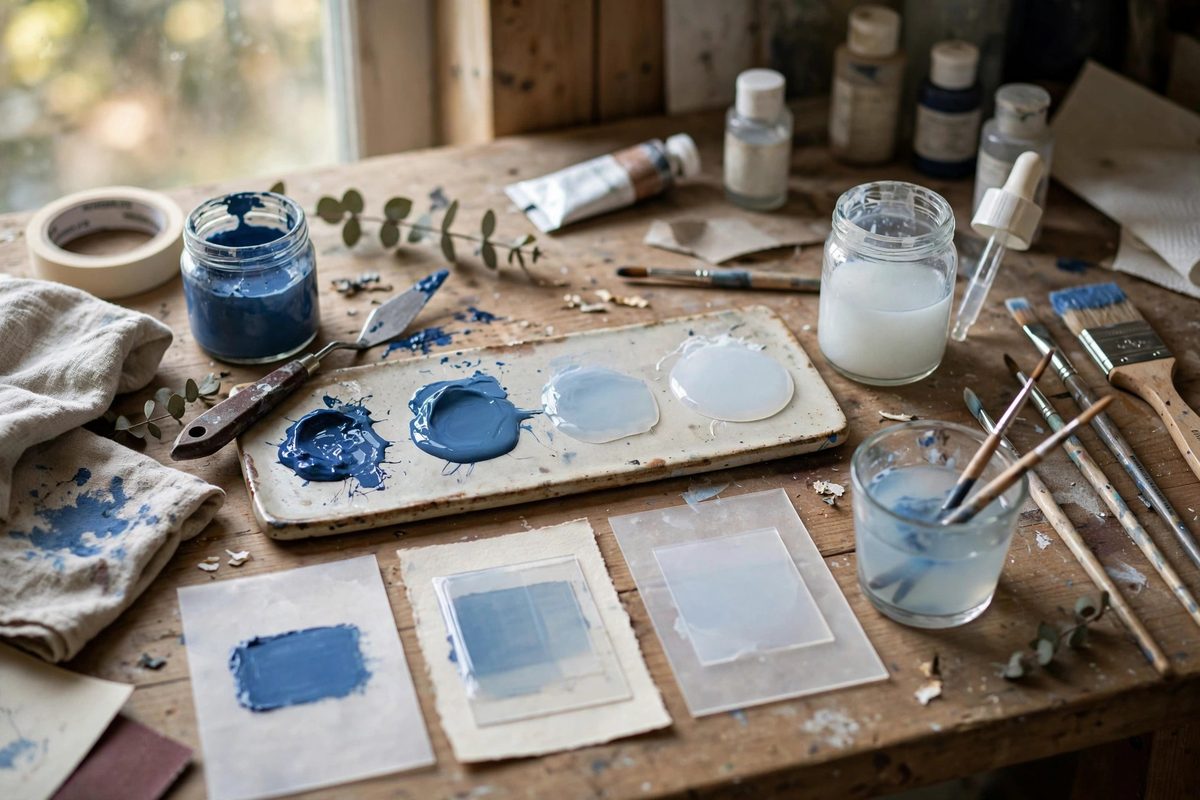
Why matte medium instead of water
Thinning acrylic paint with water is tempting and, past a point, destructive. Water breaks the acrylic emulsion; once the paint is more than roughly a third water, the binder is too diluted to form a continuous film, and the dried paint becomes fragile, powdery, and prone to lifting when overpainted. Acrylic medium contains the same binder as the paint, so it thins the color while keeping the film intact no matter how far you extend it.
Matte medium specifically contains matting agents that knock back the natural satin sheen of acrylic. For glazing this is an advantage: glossy glazes reflect light at the surface and hide the color interaction happening in the layers below, while matte glazes let the eye travel into the layer stack. If the final piece needs a unified sheen, that is what varnish is for.
Ratio ranges and what they do
Think of the ratio as a spectrum rather than a single recipe. At one part paint to one part matte medium, you get a translucent veil: color clearly present, underlayers clearly visible, good for unifying passages and shifting temperature. At one part paint to three or four parts medium, the glaze becomes a whisper, useful for the slow accumulation of depth over many layers. Beyond about one to five, the color contribution per layer gets so faint that you are mostly laying down clear film, which has uses (isolation coats between stages) but stops being a glaze in any practical sense.
Start every new color mixture at the richer end and test it. A glaze always looks stronger wet than dry, and acrylics dry darker and less transparent than they appear in the palette. Paint a test strip over the actual underpainting, let it dry fully, and judge the ratio from the dry result before committing to the piece.
Application technique for even glazes
The ratio only works if the application is even. Load a soft brush, lay the glaze down in one smooth pass, and resist reworking it. Acrylic glazes begin setting within minutes, and brushing back into a partially set glaze tears the film and leaves streaks that no subsequent layer will hide. Work in sections sized to what you can cover before the edge starts to tack.
Keep the brush damp but not wet, and use the medium-rich mixture's own flow rather than pressure to level the layer. If the glaze beads or resists, the surface underneath may be too glossy or contaminated; a thin isolation coat of matte medium, fully dried, gives subsequent glazes a consistent tooth to grip.
Layer count and the milkiness limit
Matte medium's matting agents scatter light, which is why it looks matte. Stack enough layers and that scattering accumulates into a milky haze that dulls the color beneath. In practice this becomes noticeable after many layers, roughly a dozen or more depending on the ratio, but it is cumulative and irreversible. Plan the layer sequence so the deepest, most numerous glazes go down first and the final adjustments are few.
Where maximum clarity matters, consider switching to a gloss medium for the middle layers and reserving matte medium for the layers where you need its working properties. The final varnish will unify the sheen either way, and the gloss layers in the middle will keep the light path cleaner.
Drying and bonding between layers
Each glaze must be fully dry before the next goes on. Touch-dry is not enough; the film needs to have coalesced, which takes longer in humid conditions or with heavy applications. Painting a fresh glaze over a tacky one reactivates the layer below and drags its color into the new layer, which is the fastest route to mud.
When in doubt, wait. Acrylic's fast drying is usually an asset, but glazing is the one technique where patience is structural. A glaze schedule that respects drying times builds depth that looks like it goes a mile deep; one that does not builds a cloudy skin on the surface.
Ratio sets the transparency, technique sets the evenness, and drying discipline sets the clarity. Master those three and matte medium becomes the most controllable glazing vehicle in the acrylic studio.
Related Guides
- High Solids Flow Improver Ratios in Matte Pouring: Matte acrylic pouring promises soft, velvety color fields without the plastic glare of gloss pours, but matte paints are thicker, less fluid, and
- Retarder Ratios for Extended Acrylic Blend Times: Acrylic paint's fast drying is its signature and its curse. On the palette, speed is convenient. On the canvas, it means a blended gradient can lock
- Open Gel Medium Gloss Level Tuning for Glazes: Acrylic glazes, thin transparent color layers that modify what lies beneath, depend on their medium as much as on their pigment. Open gel medium, the