
Acrylic glazes, thin transparent color layers that modify what lies beneath, depend on their medium as much as on their pigment. Open gel medium, the slow-drying acrylic gel, gives the extended working time that glazing often needs. But the gel's gloss level changes the glaze's behavior and appearance: gloss, satin, and matte gels each produce a different surface, a different depth of color, and a different interaction with subsequent layers. Tuning the gloss level to the painting's needs is a deliberate choice, not a default.
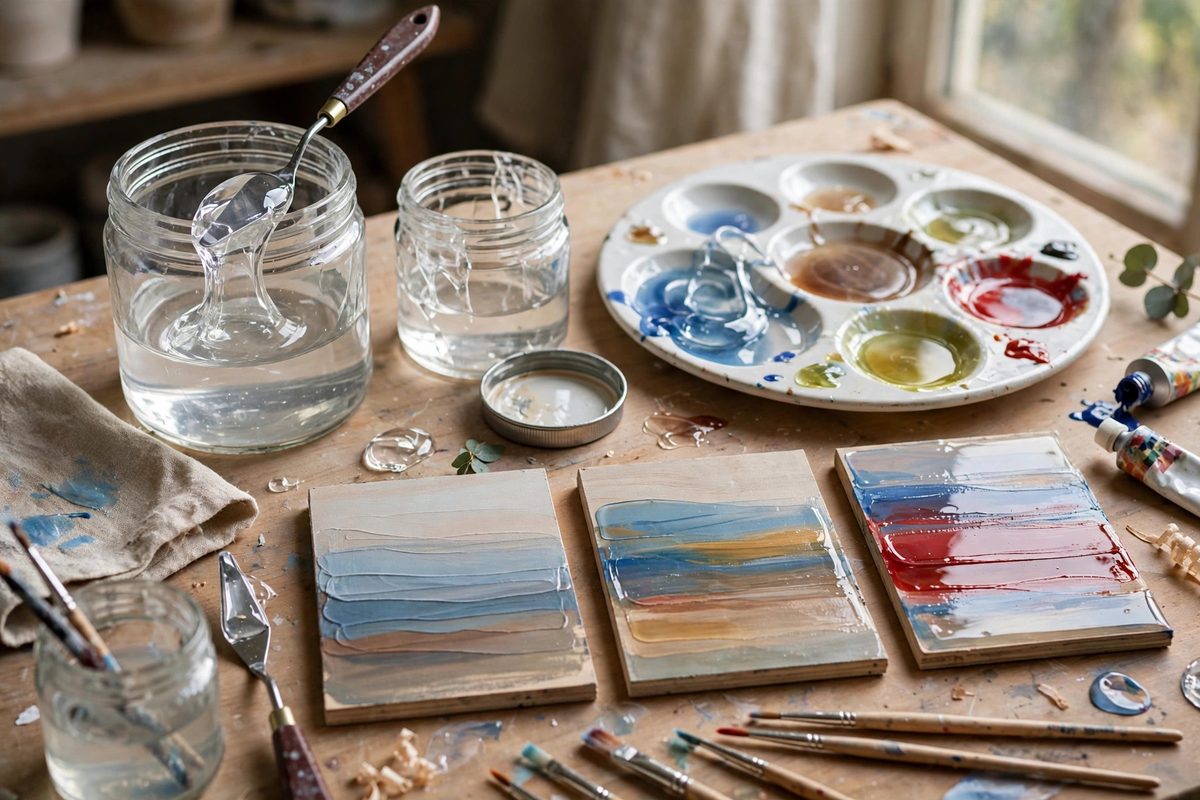
How Gloss Level Changes a Glaze
Gloss in acrylic medium comes from the smoothness of the dried film: a smooth film reflects light coherently and looks glossy, while a film with microscopic texture scatters light and looks matte. That same surface character affects the glaze's color: gloss films look deeper and more saturated because light penetrates the transparent color layer, reflects off the underpainting, and returns through the color; matte films scatter some of that light at the surface, which lightens and slightly clouds the color.
This means the same pigment glazed in gloss medium versus matte medium produces visibly different color, with the gloss version reading richer and darker. When a glaze does not match the color you mixed, the medium's gloss level is a prime suspect before the pigment is.
Choosing Gloss for the Painting's Needs
Gloss gel suits glazes where depth and luminosity matter: the transparent shadows in a portrait, the deep water in a landscape, any passage where you want the viewer to look into the color. Satin gel is the versatile middle, giving moderate depth without a conspicuous shine, and it layers well under subsequent work. Matte gel suits passages meant to recede or to match an overall matte surface, though it slightly mutes glaze color.
Consider the final varnish too. A painting varnished overall in gloss will unify mixed gel gloss levels beneath it, but the color differences established during glazing remain: a matte-glazed passage under gloss varnish looks deeper than before, yet still lighter than its gloss-glazed neighbor. The varnish unifies the surface, not the history.
Mixing and Layering Behavior
Open gel's extended open time, often several times that of standard medium, lets glazes be worked, softened, and blended on the surface, which is its great virtue for glazing. The gloss level does not much change the working time, but it changes the feel: gloss gels tend to feel slicker and more fluid, matte gels slightly draggy. Neither is better; they are different tools for different passages.
- Mix glaze color thoroughly into the gel; unmixed streaks of medium dry as visible clear patches.
- Keep glaze layers thin; thick gel layers can dry cloudy, especially in matte formulations.
- Let each glaze layer cure before overpainting; open gels stay workable long but also take longer to fully cure.
- Label mixed glazes with their gel gloss level; the mixtures look identical wet.
Tuning by Mixing Gloss Levels
You are not limited to the manufactured gloss levels. Mixing gloss and matte open gels produces intermediate satins, and the ratio tunes the result: more gloss gel moves toward depth and shine, more matte toward softness. This is useful when the painting needs a specific surface character that no single product provides, or when you want the glaze's color depth tuned finely between the standard options.
Mix the gels first, then add pigment, so the gloss level is uniform before color enters. Record the ratio that works; "a bit of matte in the gloss" is not reproducible next session, but a measured ratio is.
Troubleshooting Glaze Problems
Cloudy glazes usually mean the layer was too thick or the matte gel's matting agents pooled; thin the application and stir the gel before use. Glazes that bead or crawl on the underpainting indicate a surface tension mismatch, often over a slick gloss layer; a thin intermediate layer of the same gel without pigment can bridge the surfaces. Tacky glazes that never quite cure were applied too thickly for the open formulation; thin coats cure, thick ones sulk.
When a glazed passage looks wrong, diagnose before overpainting: check the gloss level against your intention, check the thickness, and check the cure. Most glaze failures are medium failures, not color failures, and the fix is in the gel, not the pigment.
Pick the gloss for the depth you want, mix deliberately when the standards do not fit, glaze thin, and let each layer cure. The gel is the glaze's body and its surface; tune it with the same care you give the color.
Related Guides
- Matte Acrylic Medium Ratios for Translucent Glazing: Glazing in acrylics means building color in thin transparent layers, and the medium-to-paint ratio decides whether the glaze is luminous or muddy
- Retarder Ratios for Extended Acrylic Blend Times: Acrylic paint's fast drying is its signature and its curse. On the palette, speed is convenient. On the canvas, it means a blended gradient can lock
- High Solids Flow Improver Ratios in Matte Pouring: Matte acrylic pouring promises soft, velvety color fields without the plastic glare of gloss pours, but matte paints are thicker, less fluid, and