
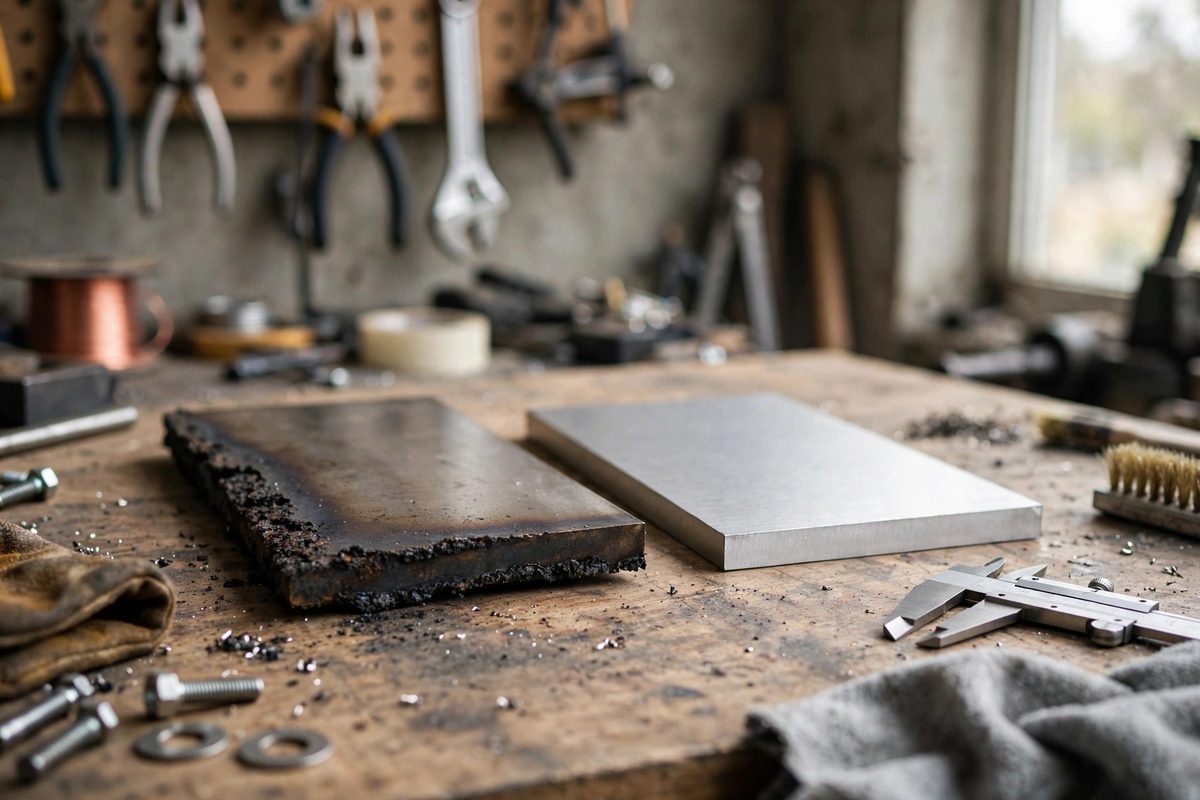
Stainless steel cut with oxygen assist comes out with a dark, oxidized edge that needs cleanup; cut with nitrogen, it comes out bright, clean, and ready to weld or finish. Nitrogen assist gas shields the cut from oxidation, but only when the pressure is right. Too little pressure and the edge oxidizes anyway; too much wastes gas and can degrade the cut. Dialing in the pressure is the key to stainless results worth showing.
Why Nitrogen for Stainless
Oxygen assist gas contributes to the cutting by burning the material exothermically, which is fast and effective on mild steel but oxidizes the cut edge. On stainless, that oxide layer is discolored, rough, and must be removed before welding, since weld quality depends on a clean edge. Nitrogen is inert in the cut: it does not burn, so the laser does all the melting, and the nitrogen jet blows the molten metal out of the kerf while shielding the fresh edge from atmospheric oxygen. The result is the characteristic bright, straw-free stainless edge. The trade-off is speed and power: nitrogen cutting needs more laser power than oxygen cutting for the same thickness, since there is no exothermic boost. That is the price of the clean edge.
What Assist Pressure Does
The assist gas has two jobs: eject the molten material from the kerf and shield the cut zone from air. Pressure drives both. Insufficient pressure leaves molten metal clinging to the kerf walls, producing dross on the bottom edge and allowing air to reach the hot metal, which oxidizes despite the nitrogen. Excessive pressure causes turbulence in the kerf that disrupts the melt ejection, can cool the cut zone enough to degrade cutting, and wastes expensive nitrogen. The correct pressure balances ejection against stability: enough to clear the kerf completely and maintain the inert shroud, not so much that the gas flow itself becomes the problem. Thicker material needs higher pressure, since the kerf is deeper and the molten volume larger.
Finding the Right Pressure
Start from the laser manufacturer's recommended pressure for the material thickness and nozzle size, then tune by cut quality. The diagnostic is the edge: a clean nitrogen cut shows a bright, smooth edge with fine, even striations and no dross on the bottom. Dross, the re-solidified beads along the bottom edge, means the pressure is too low to eject the melt, or the feed rate is too slow; increase pressure first. A rough, turbulent-looking edge with inconsistent striations suggests too much pressure disrupting the cut; back it off. Discoloration on an ostensibly nitrogen cut means air is reaching the edge, which can be low pressure, a damaged nozzle disrupting the gas flow, or a leak admitting air. Change one variable at a time and keep a settings log by thickness; stainless settings are worth recording because they are expensive to rediscover.
Nozzle Condition and Standoff
The nozzle shapes the gas jet, and a damaged nozzle ruins the pressure's effect no matter how well it is set. Inspect the nozzle orifice regularly for spatter buildup, dents, or ovality; a compromised orifice produces an asymmetric jet that shields one side of the kerf and not the other. Nozzle standoff distance, the gap between the nozzle tip and the material, affects the gas dynamics at the cut; follow the manufacturer's standoff for the nozzle type, since too close disrupts the flow and too far dissipates it. Keep the nozzle clean; stainless cutting with nitrogen is less forgiving of nozzle condition than oxygen cutting of mild steel, because there is no exothermic reaction to cover for poor gas dynamics. Consumables are part of the cut quality.
Gas Purity and Cost Discipline
Assist nitrogen must be dry and clean; moisture or oil in the gas contaminates the cut edge and can damage the laser's optics if it backstreams. Use nitrogen of appropriate purity for laser work, with proper filtration and drying on the supply. Nitrogen is the major consumable cost in stainless cutting, so pressure discipline is also cost discipline: running higher pressure than the cut needs burns money on every part. Size the gas supply to the workload, and fix leaks promptly; a hissing fitting is profit evaporating. The clean stainless edge is worth the nitrogen, but only the nitrogen the cut actually needs.
Nitrogen assist gives stainless its bright, weld-ready edge when the pressure ejects the melt and shields the kerf without turbulence: start from the recommended pressure, tune by edge quality, maintain the nozzle, and keep the gas clean. The edge tells you everything.
Related Guides
- Air Assist Pressure Tuning on Acrylic Cuts: Air assist, the jet of air blown through the nozzle along the beam path, is the difference between a flame-polished acrylic edge and a sooty melted
- Nitrogen Assist Pressure Settings for Thin Delrin: Delrin, the acetal homopolymer sold under that trade name, cuts beautifully on a laser and punishes sloppy assist gas settings without mercy. Thin
- Dual Laser Pulse Frequency for Delrin Gears: Delrin, the acetal homopolymer prized for gears, cuts on a laser with a personality: it machines beautifully but melts readily, and the line between
- Focal Length Lens Selection for Thin Wood Piercing: Laser piercing of thin wood, cutting delicate fretwork, inlays, and fine details in material a few millimeters thick, is a focus problem before it is