
Planned obsolescence is the deliberate design of products to fail, become unusable, or fall out of fashion before their physical potential is exhausted. In domestic appliances, it is not a conspiracy theory but a set of observable engineering and business choices: components specified below the product's plausible lifespan, repair made impractical, and software that ages the product out. Understanding the mechanics, how obsolescence is actually built in, matters for makers because it informs what to buy, what to repair, and what the alternative looks like.
The Engineering Levers
Obsolescence is engineered through specific, identifiable decisions. Component under-specification: a capacitor rated for a few thousand hours in a product expected to run daily for a decade, a plastic gear where a metal one would last the product's life, a heating element sized with no thermal margin. These are not accidents; the cost difference between the adequate and the inadequate component is often pennies, which reveals the intent. Design for non-serviceability: glued assemblies where screws would do, proprietary fasteners, parts welded into subassemblies so one failed component condemns the whole module. Software gating: features disabled by updates, calibration locked behind service tools, or "smart" features that require cloud servers the manufacturer later shuts down. Each lever is individually defensible as cost optimization; together, in patterns repeated across product lines, they constitute a design philosophy aimed at replacement rather than longevity.
The Business Logic
The logic is straightforward and worth stating without moralizing: a manufacturer that sells a washing machine lasting thirty years sells one machine per customer per generation; one selling a machine lasting seven years sells four. In saturated markets where every household already owns the appliance, growth comes from replacement, and replacement comes from failure. This creates a structural incentive against durability that no individual engineer's good intentions can overcome: the engineer specifying the longer-lived capacitor is arguing against the product's business model. Warranties calibrate the system: the product is engineered to survive the warranty period reliably, because warranty claims cost money, and to fail sometime after, because replacements earn money. The warranty length is therefore informative: it marks the boundary between the manufacturer's cost and the manufacturer's profit.
Recognizing the Patterns
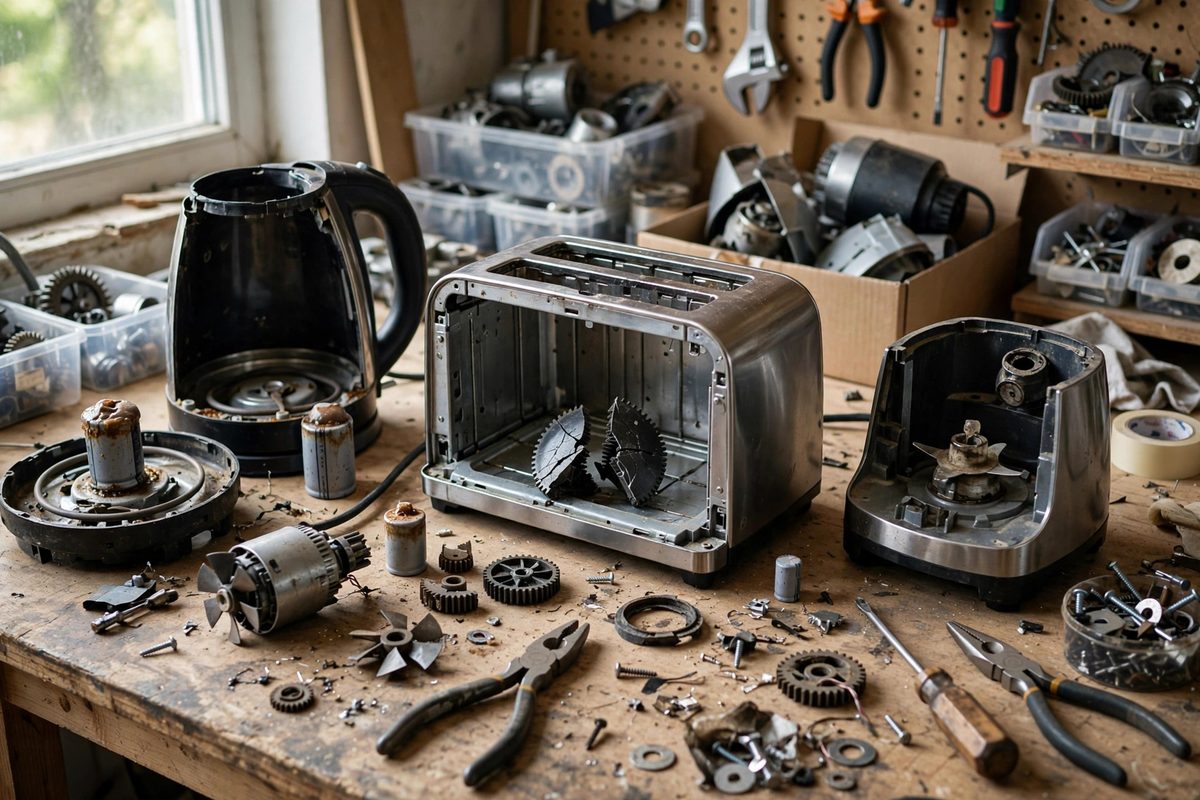
Several patterns signal obsolescence-oriented design to the observant buyer or repairer. Unavailable spare parts for products only a few years old, or parts priced near the cost of a new product, which makes repair economically irrational by design. Failure clusters: a particular component failing across many units at similar ages, indicating a specified life rather than random failure. Cosmetic model churn with incompatible parts, where the new model's trivial changes exist to obsolete the old model's spares. Sealed software: appliances that brick or lose function without connectivity, or that refuse third-party parts through digital locks. The maker's diagnostic advantage is teardown literacy: opening a failed appliance and reading its design choices, the capacitor ratings, the fastener types, the modularity or lack of it, reveals whether the product was built to last or built to be replaced. That literacy also guides purchasing: the products worth buying are often identifiable by their serviceability before they ever fail.
The Maker's Counter-Practice
Makers occupy a unique position against obsolescence because repair is their native activity. The counter-practice has layers. Repair and life extension: replacing the under-specified capacitor with a properly rated one, rebuilding the plastic gear in metal, bypassing the software lock, each repair is a small refusal of the replacement cycle and usually produces a better product than the original. Buying for repairability: choosing products with screws instead of glue, available parts, and documented service procedures, which rewards the manufacturers who build durably and starves the obsolescence model of revenue. Designing alternatives: the maker movement's open-hardware appliances and repair-friendly designs demonstrate that the engineering for longevity exists; what is missing is the business will. And knowledge sharing: repair guides, teardown documentation, and parts cross-references turn individual repairs into collective capability, which is why manufacturers invested in obsolescence find repair communities so threatening.
What Changes the Incentive
Individual repair, however satisfying, does not change the structural incentive; policy and market structure do. Right-to-repair legislation attacks the serviceability levers directly: parts availability, documentation, and the defeat of software locks. Durability labeling and minimum-lifespan standards would attack the under-specification lever by making the designed life visible and enforceable. Extended producer responsibility, making manufacturers bear the disposal cost, internalizes the waste their short-lived products create. These are political projects, slow and contested, but the maker's role in them is concrete: teardowns provide the evidence, repair communities provide the constituency, and working long-lived alternatives provide the proof that durability is a choice. The appliance that lasts is not a technological mystery; it is a product whose maker's incentives aligned with the owner's.
Planned obsolescence is not a feeling about modern products; it is a set of engineering choices, business incentives, and recognizable patterns. Learn to read them in a teardown, repair against them where you can, buy against them always, and support the structural changes that would make durability the profitable choice. The best appliance is the one you never have to replace.
Related Guides
- Planned Obsolescence in Household Digital Appliances: Your grandmother's toaster lasted thirty years. Yours lasted four, and the replacement has a touchscreen that stopped getting updates after two. This
- The Sociology of Planned Redundancy in Modern Tools: Somewhere along the way, tools stopped being built to last and started being built to be replaced. The drill your grandfather handed down still runs
- Demystifying Repair Culture in the Open Source Era: Repair culture, the practice and ethic of fixing things rather than replacing them, has found a powerful ally in open source: shared schematics
- Scaffolding Bloom Taxonomy in Maker Work: Bloom's taxonomy, the classic ladder from remembering through creating, is usually discussed in classrooms. But it maps beautifully onto how makers
- Right to Repair Policies and Embedded Firmware Locks: The modern repair fight is not really about screws and service manuals. It is about firmware. A growing share of everyday devices, from tractors to