
Somewhere along the way, tools stopped being built to last and started being built to be replaced. The drill your grandfather handed down still runs; the drill you bought five years ago has a trigger that costs more than the tool did new. Planned redundancy, the quiet design of limited lifespan, has reshaped what it means to own a tool, and makers feel the change in their hands every day.
How redundancy got designed in
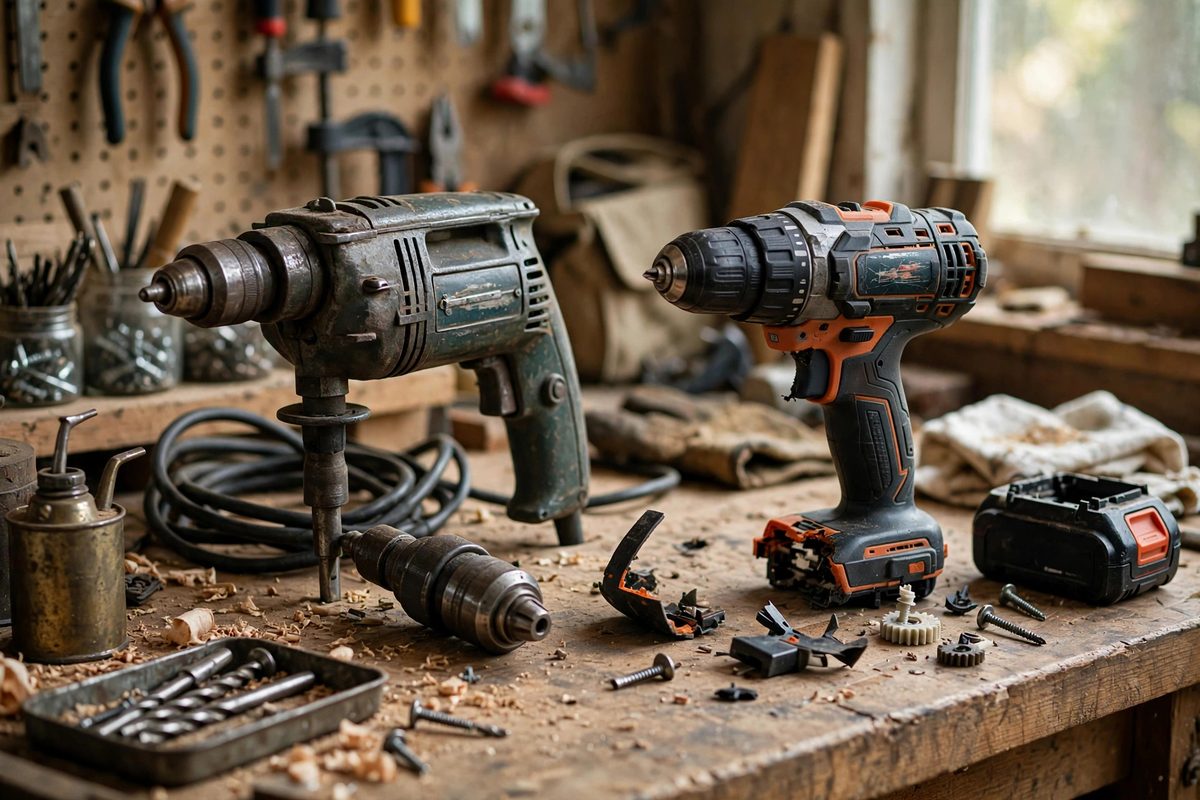
Planned redundancy is rarely a memo that says "make it fail." It arrives as a hundred small decisions: a plastic gear where a metal one fit, a sealed housing that cannot be opened, a proprietary battery that stops being made. Each decision is defensible on its own, cost, weight, safety, but the pattern across a product line is unmistakable. The tool is engineered for a service life that ends conveniently near the warranty, and the parts and knowledge needed to exceed that life are simply not offered.
The social contract it breaks
A tool used to be a relationship. You bought it, maintained it, repaired it, and eventually handed it to someone who would do the same. That relationship carried a social meaning: competence, self-reliance, continuity. Disposable tools break the contract. When repair is impossible or uneconomical, ownership becomes a subscription to replacements, and the maker becomes a consumer of tools rather than a custodian of them. The loss is not just money; it is the slow erosion of the identity that came with keeping things running.
Who benefits from the short life
The beneficiaries are not mysterious. Manufacturers sell more units when tools die young, retailers sell the replacements, and the whole chain of planned turnover keeps revenue flowing. The costs land elsewhere: on the buyer's wallet, on the repair shops that starved when nothing became fixable, and on the waste stream that absorbs millions of dead tools a year. It is a transfer of value from the people who use tools to the people who sell them, dressed up as progress.
The maker's quiet resistance
Makers resist this system almost by reflex. They buy the older tool at the estate sale because it can be opened. They hoard the discontinued model with the metal gearbox. They learn to rewind motors, re-cell battery packs, and machine the part that is no longer sold. This is not nostalgia; it is rational behavior by people who need tools to work. The repair culture that grows around old tools is also a social culture: forums, swap meets, and shop talk where knowledge of the fixable is the currency.
What buying for life looks like now
Buying against redundancy is a discipline. It means researching whether a tool can be disassembled before buying it, choosing the model with standard fasteners and available parts, and sometimes paying more for the version built to be serviced. It means valuing the used market, where the tools that survived decades have already proven their design. And it means teaching the next maker that the right question is not "what does it cost" but "can I keep it running," because that question is the one the disposable economy hopes you never ask.
Planned redundancy is a social arrangement, not a law of nature, and it only works if buyers accept it. The maker with a forty-year-old drill that still runs is not behind the times. They are the times, holding the line.
Related Guides
- Planned Obsolescence in Household Digital Appliances: Your grandmother's toaster lasted thirty years. Yours lasted four, and the replacement has a touchscreen that stopped getting updates after two. This
- Planned Obsolescence Mechanics in Domestic Appliances: Planned obsolescence is the deliberate design of products to fail, become unusable, or fall out of fashion before their physical potential is
- Demystifying Repair Culture in the Open Source Era: Repair culture, the practice and ethic of fixing things rather than replacing them, has found a powerful ally in open source: shared schematics
- Scaffolding Bloom Taxonomy in Maker Work: Bloom's taxonomy, the classic ladder from remembering through creating, is usually discussed in classrooms. But it maps beautifully onto how makers
- Right to Repair Policies and Embedded Firmware Locks: The modern repair fight is not really about screws and service manuals. It is about firmware. A growing share of everyday devices, from tractors to