
A drip run climbing a slope delivers uneven water: the emitters at the bottom drown and the emitters at the top barely drip. Pressure-compensating valves fix this by throttling themselves where pressure is high and opening up where it is low. Understanding when a run needs them and how to size them turns an irrigation headache into a set-and-forget system.
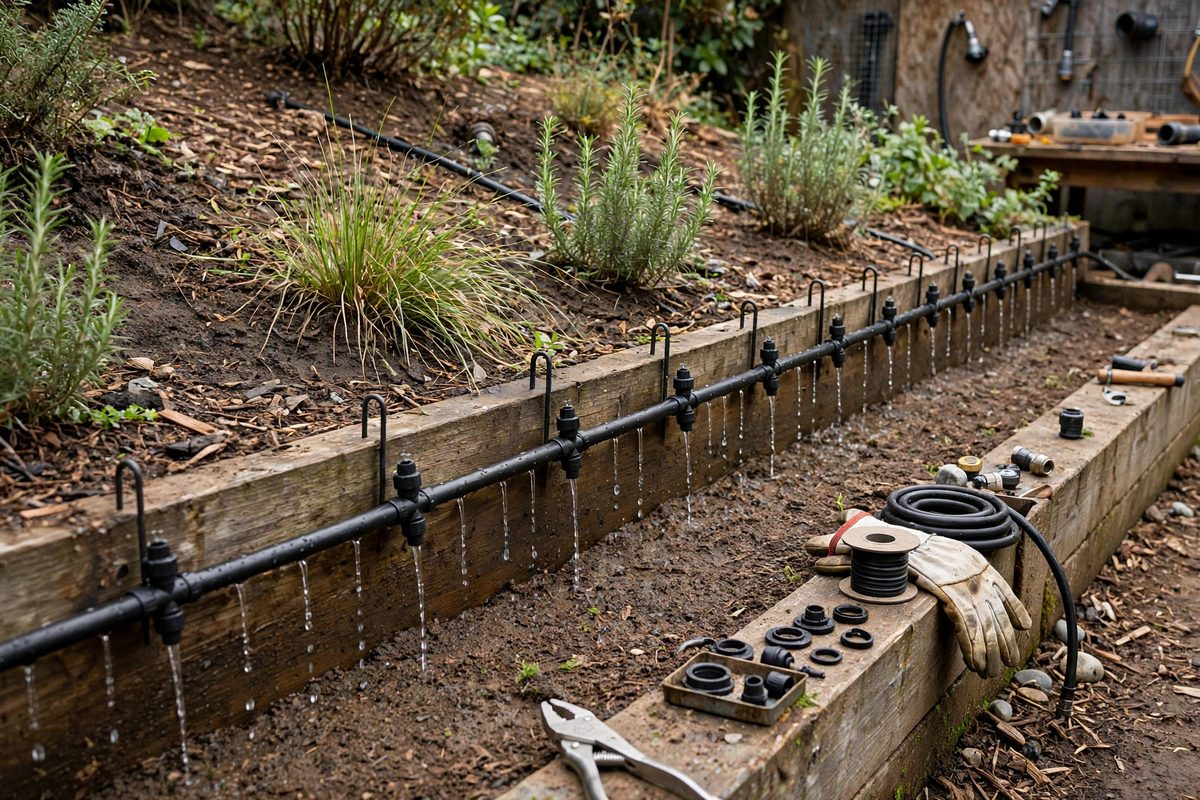
Where the Pressure Goes on a Slope
Water gains roughly half a PSI of pressure for every foot it descends, and loses the same climbing. A drip lateral running down a twenty-foot grade sees about ten PSI more at its bottom than at its top. Standard drip emitters flow more at higher pressure, so the bottom of the run over-waters while the top under-waters, and the difference gets worse the longer the run. Friction inside the tubing adds its own pressure loss along the length, which partly offsets the slope effect on downhill runs and doubles the problem on uphill ones. The combination of slope and friction is what you are designing against, not either one alone.
What Compensating Valves Actually Do
A pressure-compensating emitter or valve contains a flexible diaphragm that deforms under pressure, narrowing the water path as pressure rises and widening it as pressure falls. Within its working range, output stays nearly constant regardless of inlet pressure. The working range matters: below the minimum pressure the valve cannot compensate and behaves like a plain emitter, and above the maximum it can lock up or leak. Match the valve range to the actual pressure spread along your run, measuring or calculating both ends, rather than buying the first compensating emitter on the shelf.
Sizing Valves for the Run
Start by estimating the pressure at each end of the run. Add the elevation change to the source pressure for the low end, subtract friction losses along the tubing for the far end. The valve's compensating range must cover that whole span. Then check the flow rate: each valve must pass enough water for the plants it serves within the compensating range, not just at one happy pressure. Oversized runs with generous tubing reduce friction loss and make the valve's job easier, so upsizing the lateral is often cheaper than buying premium valves. Where slopes are extreme, break the run into zones with a regulator at each zone entry instead of asking one set of valves to span an impossible range.
Placement and Installation Details
Place compensating emitters where the pressure actually varies, which is along the full length of a sloped run, not just at the bottom. Every emitter in the run should be the same compensating type; mixing compensating and standard emitters in one zone produces patchy watering that defeats the design. Install a filter upstream of the whole zone, because the diaphragm mechanisms inside compensating valves are sensitive to grit, and a clogged valve sticks at whatever position it clogged in. Add a pressure regulator at the zone valve so supply pressure spikes never exceed the valves' maximum rating.
Diagnosing Uneven Watering After Install
If the top of the run still runs dry, the usual suspects are pressure below the compensating range (source pressure too low or friction losses too high), clogged valves (grit past the filter), or valves installed upside down or backward (flow direction matters on some designs). If the bottom still floods, the pressure at the bottom likely exceeds the valve maximum, and a zone regulator or shorter run is the fix, not more valves. Measure pressure at both ends with a gauge before changing anything; guessing at pressure problems burns more time than the measurement costs.
Compensating valves earn their keep wherever elevation or long runs make pressure unequal. Size the range to the real pressure spread, keep every emitter in the zone the same type, filter the water, and the top of the hill will water exactly like the bottom.
Related Guides
- Pressure Drop Calculation in Sub-Surface Drip Lines: Sub-surface drip lines water from below, putting moisture at the root zone with almost no evaporation loss. But buried emitters cannot be watched, so
- Pressure Compensating Emitter Spacing for Terraces: Terraced gardens defeat ordinary drip irrigation: water pressure changes with elevation, so emitters at the bottom of a slope deliver far more water
- Sizing Siphon Relief Valves in Gravity Drip Systems: Gravity drip systems are beautifully simple: an elevated tank, some tubing, and emitters, with no pump. But gravity creates a siphon problem: when
- Drying Sub-Surface Fire Logs to Prevent Flare-Ups: Burying wood in garden beds, the practice behind hugelkultur mounds and woody sub-surface layers, builds long-term fertility as the logs slowly