
Gravity drip systems are beautifully simple: an elevated tank, some tubing, and emitters, with no pump. But gravity creates a siphon problem: when the system's high points drain, they can pull air into the lines or, worse, siphon the tank dry through a low emitter. Siphon relief valves, the air vents of the irrigation world, prevent both, and sizing them right keeps the system behaving.
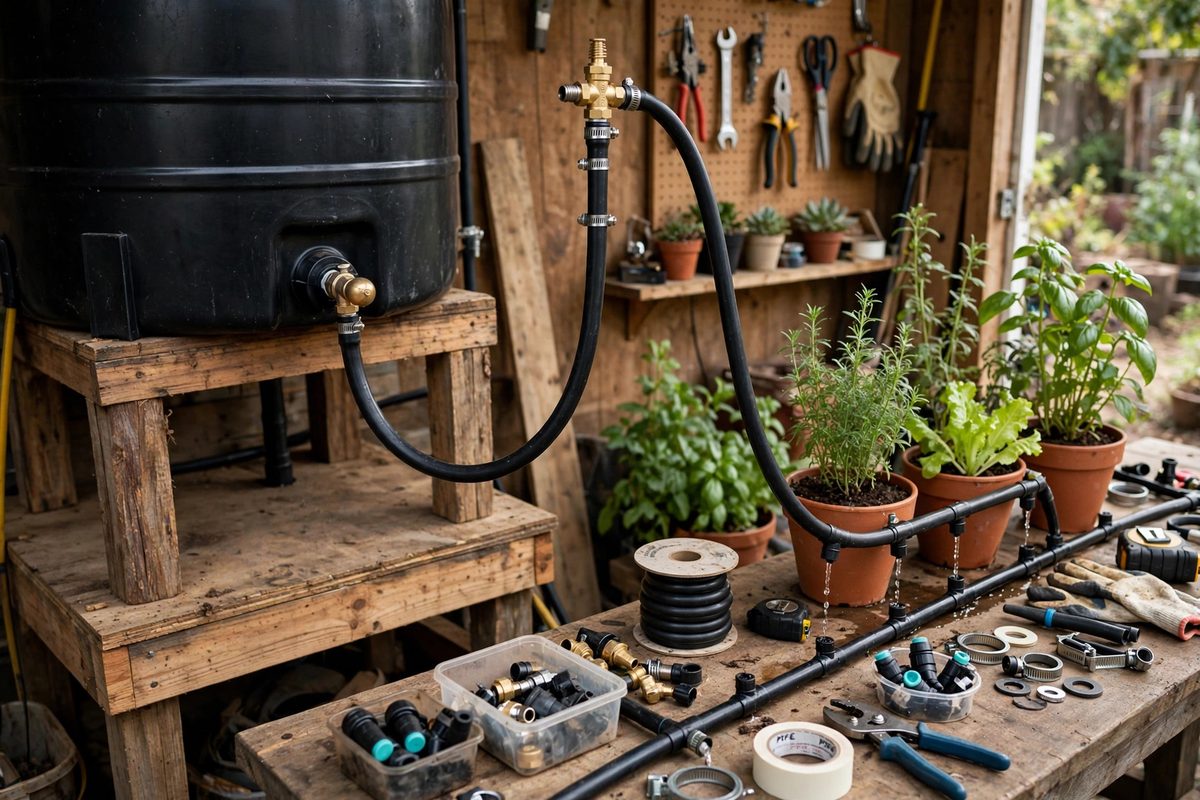
The siphon problem in gravity systems
When water flows downhill through tubing that rises and falls, the downhill sections can siphon: once flow starts, atmospheric pressure keeps it going even past the intended shutoff. In a gravity drip system, this means emitters below the tank keep running after the valve closes, draining the tank, or air gets sucked into high points when flow stops, creating air locks that block the next watering. The siphon relief valve, installed at the system's high points, lets air in to break the siphon and lets air out to prevent locks. It is a small part that prevents large misbehavior.
Where the valves go
Install a relief valve at every high point in the system: the top of each rise, the high end of each zone, and anywhere the tubing crests above the emitters it feeds. The valve must be at the true high point; a valve installed slightly downhill of the crest does not see the siphon and cannot break it. On long runs with multiple undulations, each crest needs its own valve. Walk the installed tubing and verify every high point has one; the system's topography is the installation map.
Sizing the valve
The valve must pass enough air to break the siphon quickly and to vent air during filling, without being so large it admits debris or lets water spray. For typical small gravity drip systems, a modest valve, roughly in the half-inch range for the main high points, suffices; the air volumes involved are small. The key sizing consideration is the system's flow rate: the valve's air capacity should comfortably exceed the water flow it must replace when the siphon breaks. Oversizing slightly is harmless; undersizing leaves the siphon unbroken. When in doubt, go one size up.
Valve types
The common choice is a simple air vent valve: a float or diaphragm that opens to air when the line pressure drops and seals when water arrives. For gravity systems with very low pressure, choose a valve designed to operate at low pressure; standard irrigation air vents meant for pressurized systems may not open reliably under gravity heads. Keep the valve's mechanism simple; in a system chosen for simplicity, the valve should match. A valve with a screen or cap keeps insects and debris out of the opening.
Protecting the valves
Relief valves at high points are exposed: to sun, to freezing, to physical damage. Shield them from direct impact, and in freezing climates, drain the system or protect the valves; a frozen valve is a failed valve. Check them periodically by listening: a valve that hisses during filling and then seals is working, while one that leaks continuously or never opens needs service. The valves are maintenance items, not install-and-forget parts.
System design that minimizes the problem
The best siphon relief strategy starts with layout: minimize the number of high points by running tubing with a consistent gentle fall from the tank. Every unnecessary rise is a valve you must install and maintain. Keep the tank's outlet above the highest emitter so gravity always works with you, and install a proper shutoff valve at the tank so the system can be positively closed. Good topography reduces the valves to a safety net rather than a crutch.
Put a right-sized, low-pressure air vent at every true high point, protect them, and lay out the tubing to minimize crests. The gravity system will start and stop cleanly, which is all the sophistication it needs.
Related Guides
- Pressure Drop Compensating Valves in Raised Drip Runs: A drip run climbing a slope delivers uneven water: the emitters at the bottom drown and the emitters at the top barely drip. Pressure-compensating
- Pressure Drop Calculation in Sub-Surface Drip Lines: Sub-surface drip lines water from below, putting moisture at the root zone with almost no evaporation loss. But buried emitters cannot be watched, so
- Drying Sub-Surface Fire Logs to Prevent Flare-Ups: Burying wood in garden beds, the practice behind hugelkultur mounds and woody sub-surface layers, builds long-term fertility as the logs slowly
- Pressure Compensating Emitter Spacing for Terraces: Terraced gardens defeat ordinary drip irrigation: water pressure changes with elevation, so emitters at the bottom of a slope deliver far more water