
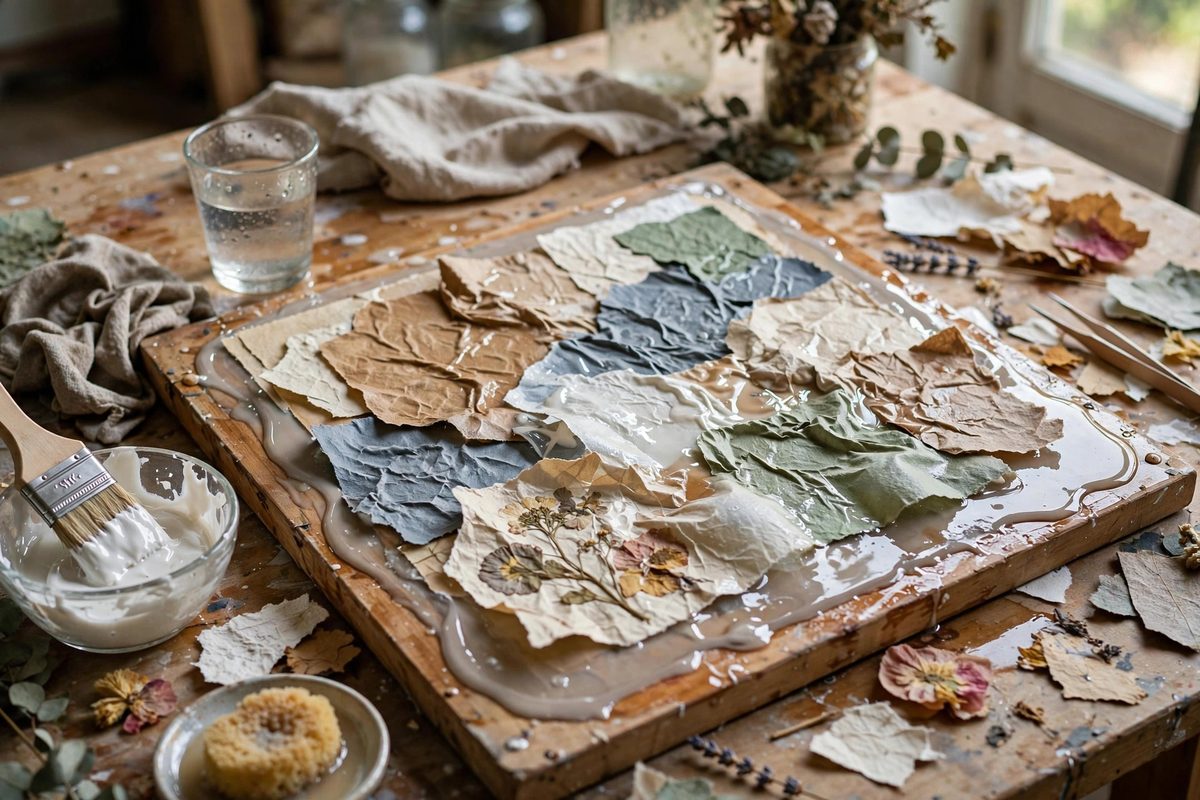
Wet collage, laying paper elements into a bed of wet medium or adhesive, produces beautiful integrated surfaces where the papers seem to grow out of the ground. It also produces wrinkling, the bane of the technique: paper absorbs moisture unevenly, expands, and buckles into ridges that dry permanently into the work. Preventing wrinkles is not about luck; it is about understanding why paper wrinkles and managing moisture, adhesion, and drying so the paper stays flat while the bed cures around it.
Why Paper Wrinkles in Wet Beds
Paper is a mat of cellulose fibers that swell when wet and shrink when dry. In a wet collage bed, the paper's underside absorbs moisture from the medium while its top stays drier; the underside expands, the top does not, and the sheet buckles upward into wrinkles. Thinner papers wrinkle more dramatically because they have less stiffness to resist the differential expansion; heavily sized papers resist longer but eventually succumb.
The wrinkle sets permanently because the medium cures while the paper is buckled, locking the deformation in place. Prevention has to happen during the wet stage; once the bed cures around a wrinkle, no amount of pressing will flatten it.
Pre-Wetting and Pre-Sizing Papers
The most effective prevention is to wet the paper before it meets the bed. Pre-wetted paper has already expanded; when it goes into the wet medium, there is no differential left to cause buckling. Mist or sponge both sides of the paper element evenly, let it relax and expand for a minute, then lay it into the bed. The paper and the bed then dry together, shrinking as a unit.
For papers too delicate to pre-wet, a light pre-sizing with diluted medium on the back seals the fibers and slows moisture uptake, reducing the differential. This is a compromise: it helps, but not as completely as full pre-wetting. Reserve it for tissue-thin or water-sensitive elements.
Bed Consistency and Application
The bed itself matters. A bed that is too wet floods the paper with excess moisture, maximizing the expansion differential; a bed at a workable, creamy consistency provides adhesion with minimum free water. Apply the bed evenly: puddles of medium under the paper become wrinkle epicenters, while thin spots let the paper lift and buckle.
- Roll or brush the bed to a uniform thickness before laying any paper.
- Lay each element from one edge, smoothing outward to push air and excess medium ahead of the contact line.
- Use a soft brayer or a bone folder through a protective sheet to press elements flat without tearing.
- Work in sections on large pieces; a bed that skins over before the paper is laid bonds poorly.
Drying Under Control
How the piece dries determines whether prevented wrinkles stay prevented. Rapid, uneven drying reintroduces differential shrinkage: the top dries and contracts while the bottom is still wet and expanded, buckling the paper late in the process. Slow, even drying lets the whole sandwich contract together.
Cover the finished collage loosely with a breathable material, wax paper or a light cloth, to slow evaporation and even it out. Weight the piece lightly if the substrate allows it; gentle, even pressure during drying discourages any buckling tendency. Avoid heat and direct airflow on the wet work; they dry the top aggressively and are wrinkle factories.
Choosing Papers for Wet Beds
Some papers simply behave better wet. Heavier papers resist wrinkling through stiffness; long-fibered papers (kozo, mulberry) expand more uniformly and resist buckling; papers with internal sizing absorb moisture slowly, buying working time. Building a wet collage from the most cooperative papers available stacks the odds before the first brushstroke.
Test unfamiliar papers as single elements on a scrap bed before committing them to the real piece. A paper's wet behavior is not predictable from its dry feel, and a test takes minutes while a ruined collage takes hours to redo.
Pre-wet the papers, keep the bed lean and even, smooth from the center out, and dry slowly under cover. Wrinkling is moisture physics, not bad luck, and physics managed deliberately stays flat.
Related Guides
- Matte Medium Viscosity for Bubble-Free Collage: Bubbles under collage papers are trapped air, and trapped air is a viscosity problem. Acrylic matte medium is the standard collage adhesive, but it
- Wax Medium Buffing Sheen on Collage Surfaces: Cold wax medium gives collage surfaces a luminous, encaustic-like depth, and buffing is what brings out its signature sheen. The difference between a
- Tension Flattening for Buckled Rice Paper Collages: Rice paper buckles when it gets wet, and collage gets it wet. Every layer of paste or medium swells the fibers, and as the piece dries the fibers