
Cold wax medium gives collage surfaces a luminous, encaustic-like depth, and buffing is what brings out its signature sheen. The difference between a dull, chalky wax surface and one that glows is entirely in the application and buffing technique. Understanding how the wax film forms and how buffing transforms it puts that glow under your control.
What Cold Wax Medium Does
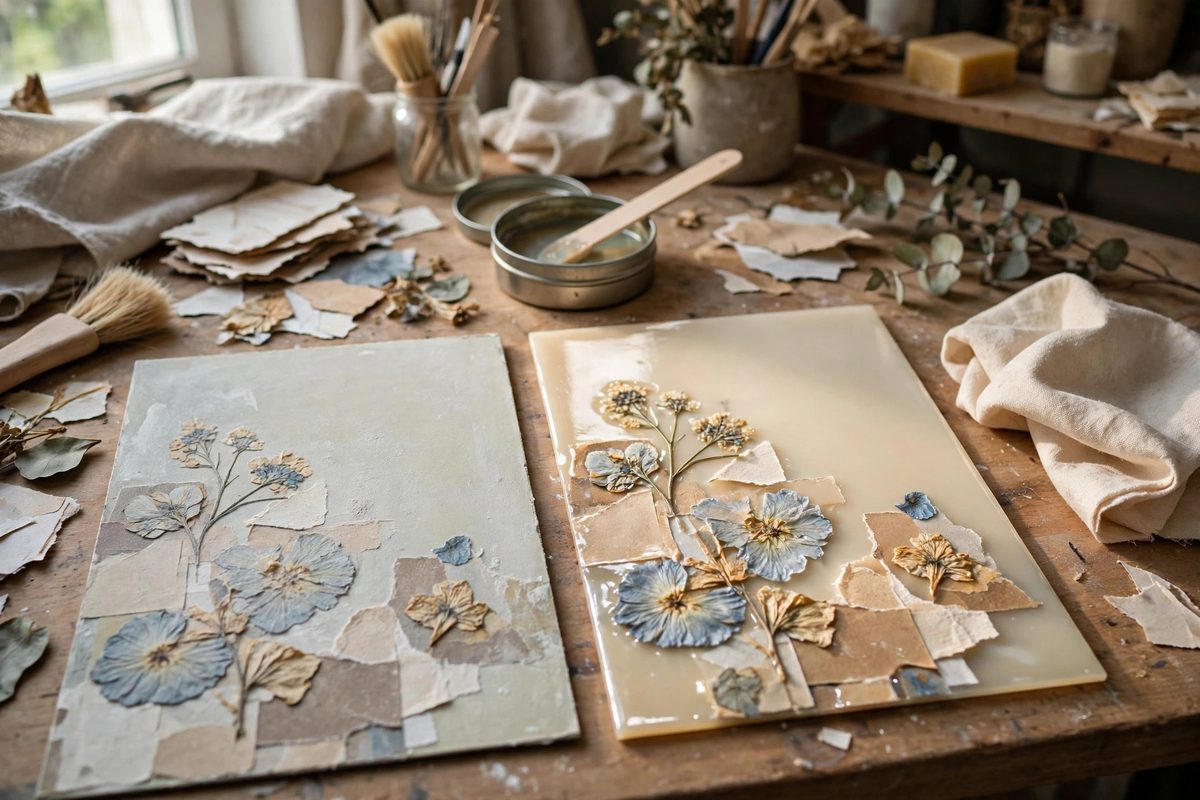
Cold wax medium is beeswax blended with solvent and often a small amount of resin, formulated to be workable at room temperature. Applied over collage, it unifies disparate papers and materials under a single translucent film, deepens colors, and adds a tactile, velvety surface. Unlike hot encaustic, it needs no heat to apply; the solvent evaporates and the wax film remains. The as-applied surface is matte and slightly cloudy. Buffing, rubbing the cured film with a soft cloth, compresses and polishes the wax surface into a soft sheen. That transformation from matte to glow is the whole aesthetic payoff of the medium.
Applying an Even Wax Film
The sheen can only be as good as the film underneath. Apply the wax medium in thin, even layers with a brush, palette knife, or brayer, working it into the collage surface so it bonds with the papers rather than sitting on top. Thin layers cure faster and buff better than thick ones; two thin coats beat one thick coat. Let each layer dry to the touch before adding the next, and let the final layer cure fully, which can take a day or more depending on thickness and ventilation. Buffing uncured wax just moves it around and creates streaks. Test cure by pressing a knuckle to an inconspicuous area: it should feel dry and firm, not tacky or soft.
The Buffing Technique
Buff with a soft, lint-free cloth, an old cotton T-shirt or muslin works well, using firm circular motions with moderate pressure. The friction generates slight warmth that helps the wax surface flow and level microscopically; that is what creates the sheen. Work in sections, and check your progress in raking light: the sheen appears as a soft, even glow, not a glossy shine. If the surface stays dull, it may need more curing time, or the film may be too thin in spots; apply another thin coat, cure, and buff again. Avoid over-buffing one area, which can burnish through to the collage beneath, especially on raised elements. The sheen should be uniform across the piece, which means uniform pressure and uniform coverage.
Sheen Level as a Creative Choice
The amount of buffing controls the final sheen, from a soft satin glow to a higher polish. Light buffing gives a gentle luminosity that suits subtle, muted collages; vigorous buffing produces a more pronounced sheen that makes colors pop. You can also vary the sheen within a piece: buff the focal areas more and leave the background matte, creating a hierarchy of surface that guides the eye. Mask areas you want to keep matte while buffing adjacent sections. Remember that the sheen deepens colors slightly, so a heavily buffed area will read richer than the same collage left matte; account for this when planning the composition's color balance.
Protecting the Finished Surface
Cured and buffed cold wax is reasonably durable but not invincible. It can scratch, and it softens with heat, so frame collages under glass or acrylic if they will be handled, or hang them away from direct sun and heat sources. Dust the surface with a soft dry cloth; avoid water and solvents, which cloud the wax. If the sheen dulls over time, it can usually be revived with a light re-buffing. Sign and date the back, and note the materials used, since future conservators will want to know the surface is wax. A well-applied, well-buffed wax surface has a quiet glow that makes collage look like it is lit from within.
Cold wax medium's sheen comes from thin, fully cured films transformed by firm, even buffing: apply thin, cure completely, buff in sections, and choose the sheen level deliberately. The glow is not in the jar; it is in the cloth work.
Related Guides
- Matte Medium Viscosity for Bubble-Free Collage: Bubbles under collage papers are trapped air, and trapped air is a viscosity problem. Acrylic matte medium is the standard collage adhesive, but it
- Preventing Paper Wrinkling in Wet Collage Beds: Wet collage, laying paper elements into a bed of wet medium or adhesive, produces beautiful integrated surfaces where the papers seem to grow out of
- Tension Flattening for Buckled Rice Paper Collages: Rice paper buckles when it gets wet, and collage gets it wet. Every layer of paste or medium swells the fibers, and as the piece dries the fibers