
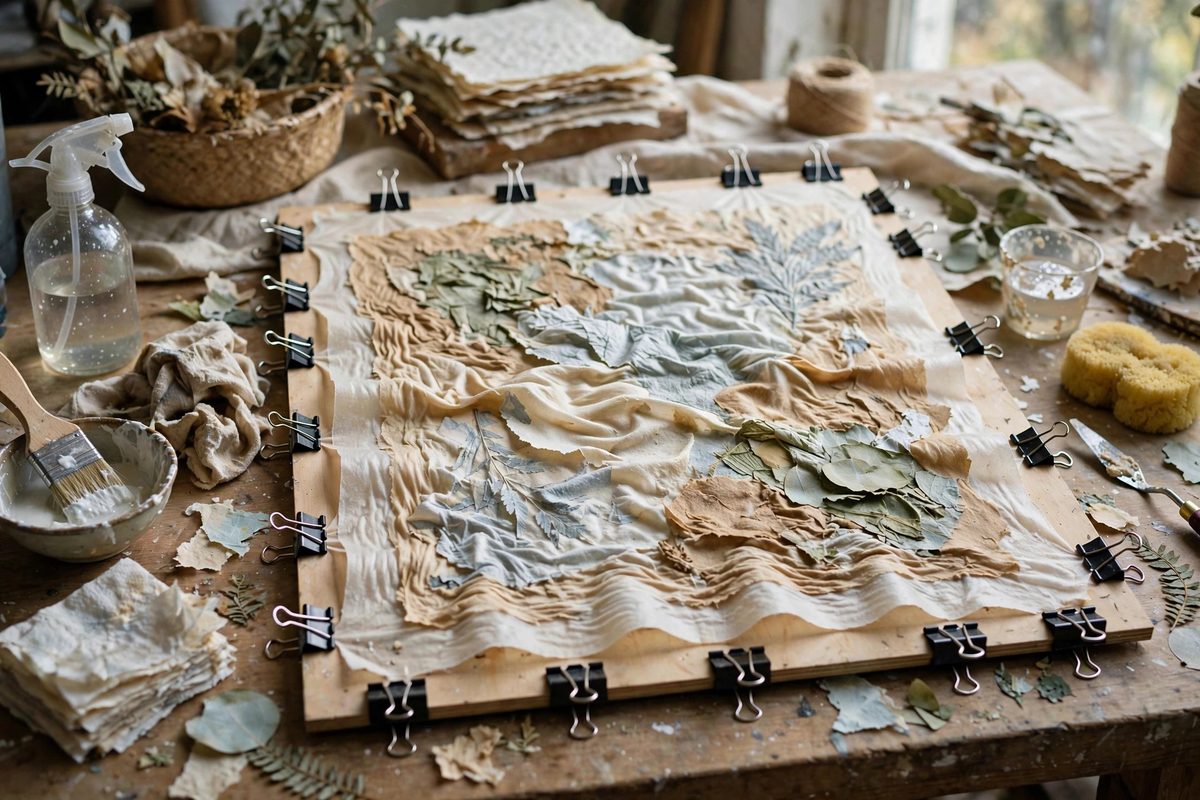
Rice paper buckles when it gets wet, and collage gets it wet. Every layer of paste or medium swells the fibers, and as the piece dries the fibers shrink unevenly, pulling the sheet into cockles and waves. Tension flattening is the traditional paper conservator's answer: hold the sheet under even tension while it dries so the fibers set flat instead of setting buckled. It works on finished collages as well as single sheets, as long as the media on the piece can tolerate moisture.
Why rice paper buckles worse than other papers
Rice paper, usually made from mulberry or similar long plant fibers, is thin, absorbent, and minimally sized. That combination means water moves through it fast and the fibers swell dramatically. Western watercolor papers carry internal and surface sizing that resists this swelling; rice paper has little of that protection. The long fibers are a strength for tear resistance but a weakness for flatness, because once long fibers cockle, they hold the distortion stubbornly.
Collage multiplies the problem. Each pasted element wets the sheet locally, so the paper experiences dozens of small wet-dry cycles in different spots at different times. The result is not a gentle overall wave but a lumpy terrain of competing distortions. Flattening has to address the whole sheet at once, not spot by spot.
The tension drying setup
The basic method: dampen the collage evenly, lay it face down on a clean smooth surface, and attach the edges under light tension so the sheet cannot shrink as it dries. Conservators use a Karibari board, a wooden panel with the paper's edges pasted down with strips of paper, but a simpler studio version works: a sheet of acrylic or sealed plywood, the dampened collage, and strips of water-activated paper tape or gummed kraft tape anchoring all four edges to the board.
Dampen with a fine mist, not a soak. The collage is already carrying whatever moisture the collage process introduced; you are adding just enough to relax the fibers uniformly. Mist the back of the sheet lightly, let it rest a minute so the moisture equalizes, then tape the edges. Pull the tape snug but not straining: the goal is to prevent shrinkage, not to stretch the paper, and over-tensioning will tear wet rice paper at the tape line.
Drying under tension
Let the taped sheet dry slowly at room temperature, away from direct heat and sunlight. As the fibers dry, they try to shrink, and the taped edges hold them out, so the sheet sets flat. This takes hours, typically overnight. Do not rush it with a hair dryer; fast drying sets up internal stresses that re-buckle the sheet the next time humidity changes.
Check the tape adhesion as it dries. If an edge releases early, the freed section will shrink and buckle while the rest stays flat, leaving a worse distortion than you started with. Press down any lifting tape and, if needed, add a second strip. The whole edge must stay anchored for the whole drying time.
When the collage cannot get wet
Some collage media will not survive dampening: water-soluble inks, unfixed pastels, certain dyes, and some adhesives. For these, use dry tension methods. One approach is to place the collage between blotters under even weight, changing the blotters as they pick up moisture, over several days. It is slower and less effective than wet tensioning, but it is safe for fragile media.
Another option is humidification without wetting: tent the collage over damp blotters in a closed chamber so it picks up moisture from the air gradually, then press it flat between dry blotters under weight. This relaxes the fibers with minimal liquid water contact. Test any method on a sacrificial piece with the same media first.
Preventing the next buckle
Flattening fixes the current distortion; prevention reduces the next one. Paste collage elements with the minimum effective amount of adhesive, work on a sheet that is lightly pre-dampened so all areas expand together, and let the piece dry under weight or light restraint from the start. Heavier rice papers buckle less than tissue-thin ones, so match the paper weight to the wetness of your process.
Buckling is the paper telling you the fibers moved unevenly. Tension flattening gives them a chance to set evenly, and a little process discipline keeps them from needing it again.
Related Guides
- Preventing Paper Wrinkling in Wet Collage Beds: Wet collage, laying paper elements into a bed of wet medium or adhesive, produces beautiful integrated surfaces where the papers seem to grow out of
- Matte Medium Viscosity for Bubble-Free Collage: Bubbles under collage papers are trapped air, and trapped air is a viscosity problem. Acrylic matte medium is the standard collage adhesive, but it
- Wax Medium Buffing Sheen on Collage Surfaces: Cold wax medium gives collage surfaces a luminous, encaustic-like depth, and buffing is what brings out its signature sheen. The difference between a