
Amigurumi worked in a spiral has no seam, which is its charm and its trap. Without a joining round to reset the alignment, stitches drift: the spiral creeps, increases stack up, and the tube twists or leans. Preventing that distortion is a matter of technique choices that keep the spiral honest.
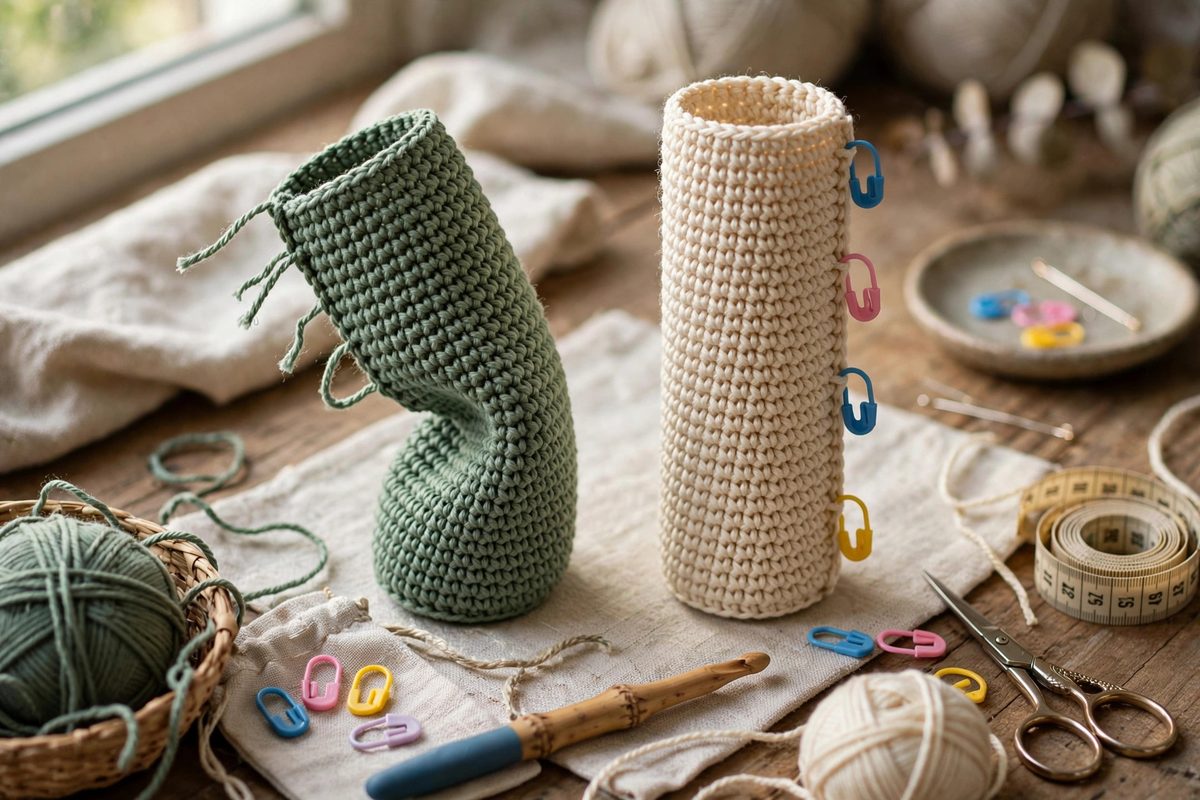
Why spirals distort
In spiral crochet, each round starts where the last one ended, so the beginning-of-round marker migrates steadily around the tube. Increases placed at the same relative position every round stack vertically, creating a visible ridge and pulling the tube off-axis. Uneven tension does the rest: a tight section and a loose section in the same tube make it lean. The distortion is cumulative, which is why a tube that looks fine at round ten can be visibly crooked at round forty.
Staggering the increases
The single most effective fix is to stagger increase positions from round to round. Instead of placing the increase at the same point in every increase round, shift it by a few stitches each time, or follow the pattern's alternate increase placements if provided. Staggering distributes the extra fabric evenly around the tube so no ridge forms. If you are writing your own shaping, plan the increase positions on paper first; a minute of planning beats an hour of frogging a leaning tube.
Marker discipline
Move the stitch marker at the start of every round, without exception. The marker is your only fixed reference in a spiral, and losing track of the round start means losing track of the increase placement. Use a locking marker that cannot slide out, and develop the habit of moving it before working the first stitch of the new round. When the shaping gets complex, add a second marker at a fixed anatomical point, like the center front, so you can verify the spiral has not drifted even when the round marker has migrated.
Tension consistency through the tube
Even tension is the quiet foundation. Check your gauge periodically against the start of the tube; hands tighten up as a session goes on, and the later rounds come out denser than the earlier ones. If you put the work down and pick it up later, work a few stitches and compare before continuing. Stuffing as you go helps too: a tube stuffed to its final firmness reveals distortion early, while an unstuffed tube hides it until the end. Firm, even stuffing also supports the stitches and resists the lean.
Choosing the right stitch and hook
A smaller hook than the yarn label suggests gives the tight fabric amigurumi needs; loose stitches show stuffing and distort more easily. The standard single crochet worked through both loops is the most stable choice for tubes. Some crocheters use the yarn-under variation for a tighter, more upright stitch that resists the spiral lean. Whatever you choose, be consistent through the whole piece; switching stitch style mid-tube changes the fabric density and the distortion pattern with it.
Blocking and correction
Minor distortion can be corrected after the fact. Steam blocking or careful shaping while the piece dries can straighten a slight lean. For a persistent twist, check whether the increases are the cause before reaching for the steam; blocking masks the symptom without fixing the technique. Keep notes on what worked for each pattern, because the same shaping challenge recurs across projects and the solution transfers.
Stagger the increases, mind the marker, keep the tension even, and stuff as you go. The spiral stays true, the tube stands straight, and the amigurumi looks like the pattern promised.
Related Guides
- Invisible Decrease Tension in Dense Amigurumi: Amigurumi, the Japanese art of crocheted stuffed creatures, lives or dies on its fabric density: the stitches must be tight enough that stuffing
- Seamless Color Changes in Continuous Spiral Crochets: Amigurumi and other spiral-crocheted pieces grow in a continuous helix with no joining seam, which is wonderful until you need to change color: the
- Yarn Under Single Crochet Stitches in Tight Toys: Amigurumi, the Japanese art of crocheted stuffed toys, demands a fabric with no visible holes: the stuffing must stay invisible no matter how the toy
- Yarn Over vs Yarn Under Tension in Miniature Toys: Amigurumi, the Japanese art of crocheting miniature toys, lives or dies on stitch tension. The difference between a toy with a smooth, firm surface