
Two-part polyurethane lays down a hard, chemical-resistant film that furniture makers love, but it only sprays well within a narrow viscosity window. Too thick and it orange-peels, spits, and refuses to level; too thin and it runs, sags, and builds no film. Tuning the viscosity, with the correct reducer, measured properly, and adjusted for the day's conditions, is the skill that separates a glass-smooth polyurethane finish from a textured disappointment.
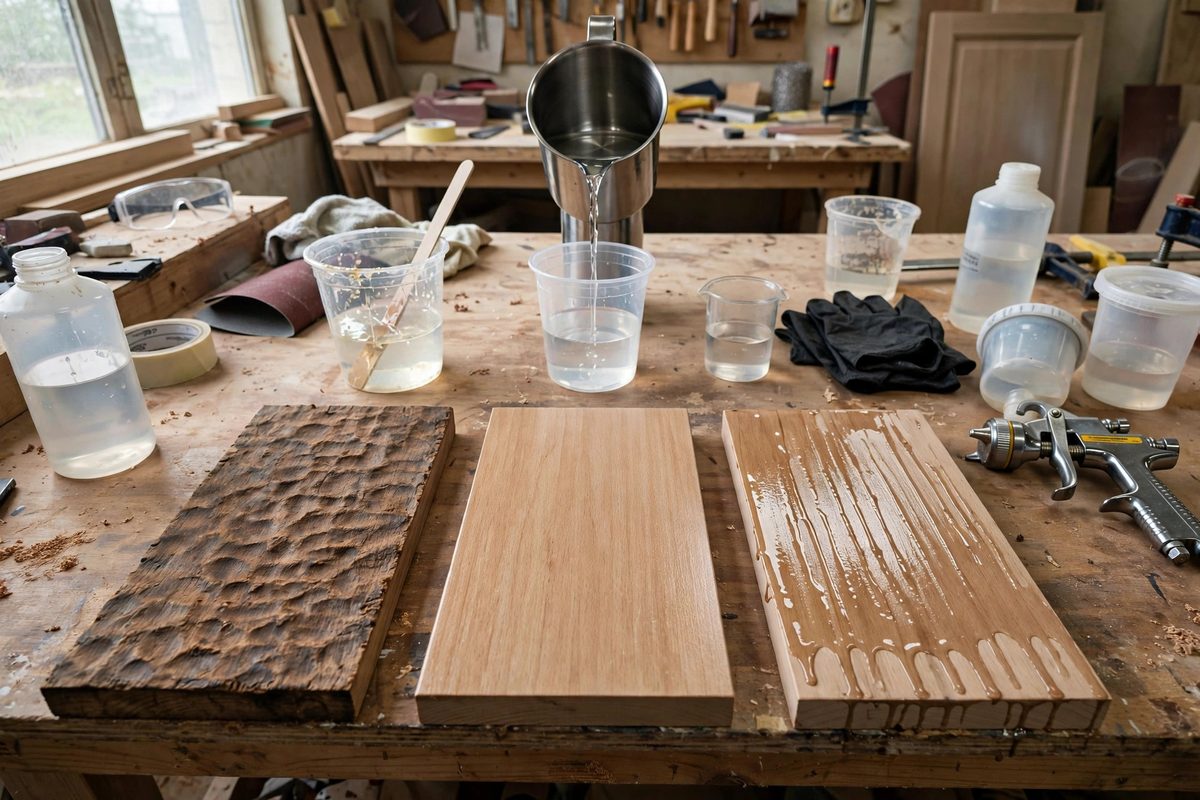
Why viscosity governs the spray
A spray gun atomizes the finish into droplets, and the droplet size is set largely by the fluid's viscosity at the gun's air pressure. High viscosity makes large droplets that land as distinct bumps: orange peel. Low viscosity makes fine droplets that flow together easily but also flow downhill readily: runs and sags. The target viscosity produces droplets fine enough to level into a smooth film but heavy enough to stay where they land on vertical surfaces.
Two-part polyurethane complicates this because the clock is running: once the hardener is mixed in, the viscosity climbs steadily as the crosslinking reaction proceeds. The viscosity you measure at mixing is not the viscosity you spray twenty minutes later. Tuning is therefore a moving target, and the working window, the pot life, sets how long you have to spray at acceptable viscosity.
Measuring viscosity properly
Use a viscosity cup, the Ford or Zahn type specified by the finish manufacturer, and measure the drain time in seconds. The product data sheet gives the target range; mix the components in the exact specified ratio first, then reduce toward the target, adding reducer in small increments and re-measuring. Record how much reducer it took, because the next batch on a similar day will need nearly the same amount.
Measure at the temperature you will spray at. Viscosity is strongly temperature-dependent: finish mixed in a cool shop measures thicker than the same mixture in a warm one, and the gun, the hose air, and the workpiece temperature all play in. If the shop temperature changes significantly between mixing and spraying, re-measure before spraying.
Reducer selection and the pot-life tradeoff
Use the reducer the manufacturer specifies for the product and the conditions. Reducers come in different evaporation rates for different temperatures: fast for cool conditions, slow for warm ones. The wrong reducer causes its own defects: too fast and the finish dries before it levels, too slow and it stays wet, attracting dust and sagging.
Every addition of reducer extends the flow and leveling but also thins the film build per coat and, past a point, can affect the cure chemistry. Stay within the manufacturer's maximum reduction; exceeding it to chase an easier spray produces a film that never fully hardens. If the finish will not spray acceptably within the allowed reduction, the problem is temperature, gun setup, or technique, not insufficient thinner.
Gun setup to match the viscosity
Set the gun up for the measured viscosity: fluid needle and nozzle sized for the material, air pressure at the manufacturer's recommendation, fan pattern adjusted to the workpiece. A gun set up for thin lacquer will struggle with polyurethane even at correct viscosity; the fluid passages must suit the material. Test the pattern on cardboard or masking paper before committing to the workpiece: the pattern should be even, with soft edges and no heavy center or dry edges.
Spray technique completes the system: consistent gun distance, steady speed, fifty percent overlap on each pass, and coats thin enough to flow out without running. Two medium coats beat one heavy coat every time, with two-part polyurethane especially, since a heavy coat sags while its surface skins.
Health and safety
Two-part polyurethane hardeners contain isocyanates, which are serious respiratory sensitizers: exposure can trigger asthma-like reactions, and sensitization is permanent. Spray only with proper respiratory protection, a supplied-air respirator or a properly fitted respirator rated for isocyanates, in a ventilated spray area, and wear skin and eye protection. This is not a finish to spray casually with a dust mask. Read the safety data sheet before opening the cans, and treat its warnings as instructions.
Measure the viscosity, reduce within limits, match the gun to the material, spray thin coats, and protect your lungs. Tuned right, two-part polyurethane gives a finish that looks poured and withstands a lifetime of use.
Related Guides
- Buffing Polyurethane Coats With Pumice and Rottenstone: Brushed polyurethane almost never dries into the flawless surface you want. There are always brush marks, dust nibs, and orange peel to deal with
- Hardwax Oil Penetration on Dense Hardwoods: Hardwax oils promise the best of both worlds: the natural look and repairability of an oil with the protection of a wax film. On dense hardwoods like
- Film Thickness Control in Sprayed Conversion Varnish: Conversion varnish, the catalyzed finish of professional cabinetry, earns its reputation for hardness and chemical resistance only when applied at
- Wet Sanding Pre-Catalyzed Lacquer to Mirror Luster: Pre-catalyzed lacquer is the finish of choice when you want durability with a fast build, but straight off the gun it usually carries a fine