
Cut stringers are the backbone of most exterior stairs, and the weakest point of every cut stringer is the throat: the thinnest section of wood left between the notches. Get the throat depth wrong and the stringer can crack along the grain, fail inspection, or bounce underfoot. It is the one dimension worth checking before you commit a stack of lumber.
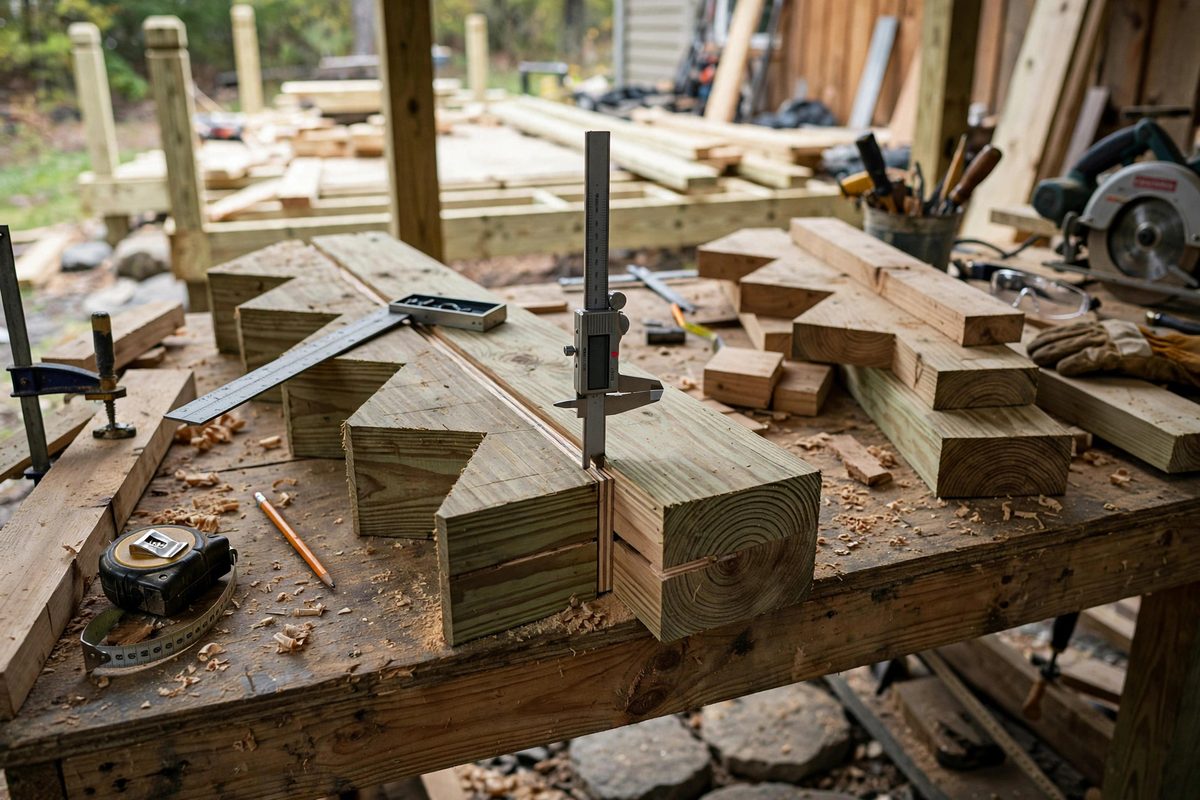
What the throat is and why it matters
The throat is the continuous strip of solid wood running along the bottom of the stringer, measured perpendicular to the stringer's length between the inside corners of the tread and riser cuts. All the load on the stair travels through that strip. Bending stress concentrates there, and because the notches interrupt the grain, the wood's effective strength is lower than a full-depth board. A generous throat keeps stresses low; a skimpy one invites a crack that starts at a notch corner and runs along the grain. Exterior stairs make this worse, because moisture cycling and freezing work at those notch corners year after year.
Minimum throat depths in practice
The commonly cited minimum throat depth is about 3-1/2 inches for typical residential stairs, and many inspectors look for at least that. That number assumes standard framing lumber, a normal residential span between supports, and ordinary foot traffic. Wider stairs, longer spans, or heavy use argue for more. Starting with 2x12 stock gives you the material to keep a healthy throat; a 2x10 often forces the throat too thin once the notches are laid out, especially with steeper stairs. Do not let lumber economy decide a structural dimension.
How layout choices eat into the throat
Stair geometry directly affects what throat you end up with. Steeper stairs, meaning shorter tread runs for the same rise, cut deeper notches and leave less wood. Taller risers paired with short treads are the worst combination. When you lay out a stringer, check the throat on paper before cutting: measure the narrowest point perpendicular to the stringer, not straight down. If it comes out thin, your options are to start with wider stock, add a support midway along the span, or reconsider the stair's proportions. All three are easier than sistering a cracked stringer later.
Pressure-treated stock considerations
Exterior stringers are almost always pressure-treated lumber, and treated stock has quirks. It is often wetter when purchased, heavier, and prone to more checking as it dries. Cuts expose untreated wood at the notch corners, so seal them with an appropriate preservative after cutting; those end-grain corners are exactly where rot starts on exterior stairs. Fastener holes and saw kerfs at the throat deserve the same treatment. The preservation step is easy to skip and expensive to wish you had done.
Intermediate support as a throat saver
A mid-span support under the stringers dramatically reduces the bending load on the throat. For long stair runs, a post or a framed support landing under the middle of the stringer span is cheap insurance and often lets you keep a moderate throat depth that would be marginal without it. The support needs solid footing of its own; a post floating on soil that heaves in winter will transfer movement right into the stringer. Tie the support to the same footing system as the landing so everything moves together.
Inspection and code realities
Stair stringers for exterior landings typically fall under the residential code, and the inspector's eye goes straight to the throat and the bearing. Keep your stringer layout notes and dimensions handy; showing that you sized the throat deliberately goes a long way. Remember that code sets a floor, not a ceiling: building beyond the minimum is legitimate craft, not waste, on the part of the stair your family walks every day.
Size the throat on paper, cut it in generous stock, seal every cut, and support long spans from below. The stair that never bounces, never cracks, and passes inspection the first time started with those decisions.
Related Guides
- Ledger Board Fastener Shear Load Spacing: A deck ledger is the board bolted to the house that carries half the deck's weight, and its fasteners carry that weight in shear while resisting the
- Post-to-Beam Knee Bracing for Lateral Sway Limits: A deck's posts and beams handle vertical loads naturally, but lateral loads, wind, foot traffic shifting, the occasional enthusiastic gathering, push
- Rim Joist Flashing Detail Under Composite Facia Boards: Composite fascia looks crisp on day one and hides a slow problem behind it. Water running off the deck surface finds its way behind the fascia board
- Fastener Corrosion Limits in Pressure-Treated Rim Sills: Pressure-treated lumber protects against rot and insects, but the preservative chemicals that do the protecting are corrosive to steel fasteners. The