
Pilots run pre-flight checklists because the cost of forgetting is catastrophic and the checklist is cheap. Shop machinery deserves the same discipline: a standardized daily check sheet, run before the machines power up, catches the loose guard, the low oil, and the dull blade before they become incidents. Standardizing the sheet makes the check reliable instead of ritual.
What goes on the sheet
Every machine gets its own section, and every section covers the same categories: guards and safety devices in place and functional, power and emergency stops working, lubrication at proper levels, tooling sharp and secure, work area clear, and dust collection connected. The items should be specific enough to check, not vague: "blade guard returns freely" beats "check guard." Write the sheet for the least experienced operator who might use the machine; the expert does not need it, but the new hire does, and the sheet protects both.
Standard format across machines
Use one format for every machine in the shop. Same layout, same categories in the same order, same pass/fail marking. Standardization means an operator moving from the table saw to the jointer already knows how the sheet works; the only new information is the machine-specific items. It also means a supervisor can scan a stack of completed sheets quickly and spot problems. A different format per machine is a collection of forms; one format is a system.
The check routine
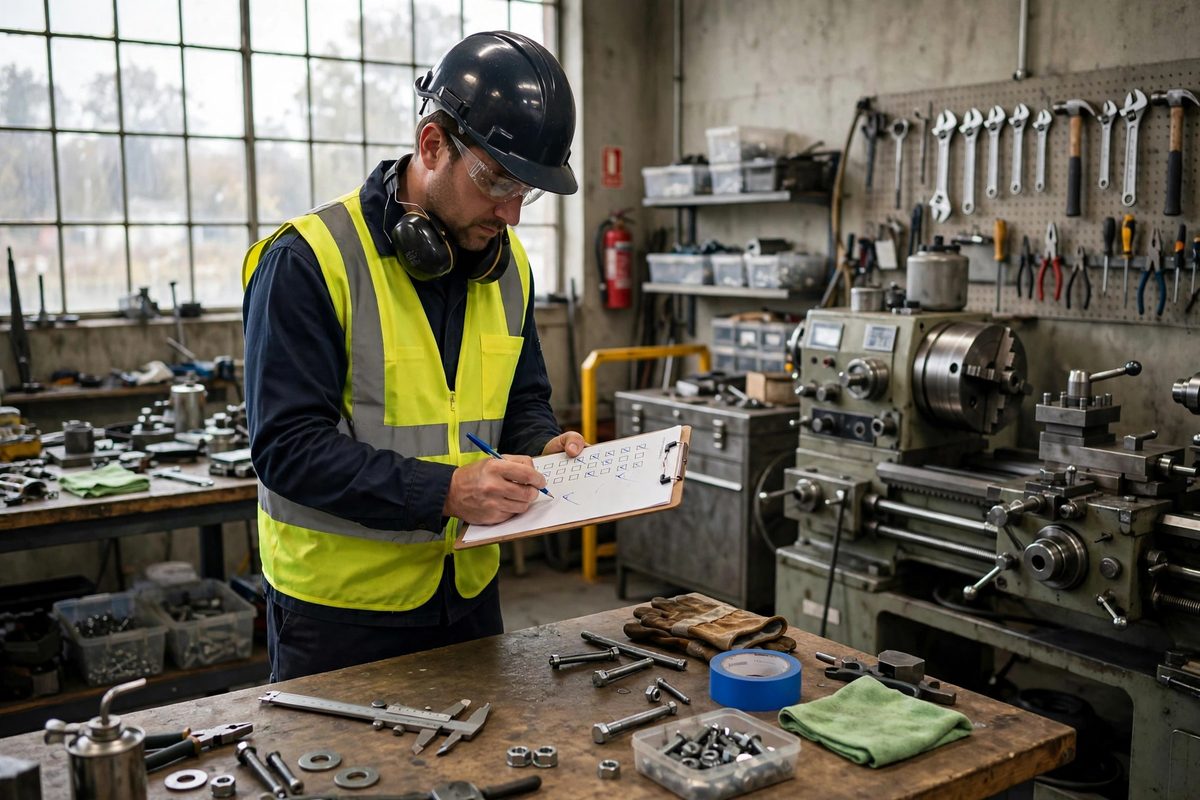
The sheet is run at the start of each day or shift, before any machine is powered for work. The operator walks the sheet top to bottom, physically checking each item, not just reading it; a checklist completed from memory at the desk is theater. Any failed item takes the machine out of service until fixed, and the sheet records the failure and the fix. This is the non-negotiable part: a check sheet that does not stop a faulty machine is just paperwork.
Sign-off and accountability
Each completed sheet gets dated and signed by the operator who ran it. The signature is not bureaucracy; it is the moment the operator takes responsibility for the machine's condition. Keep the completed sheets filed for a reasonable period; they are the maintenance history and, if something goes wrong, the record of diligence. In a shared shop, the sign-off also tells the next operator that the machine was checked today, which builds the culture of mutual care.
Updating the sheets
Machines change: new guards get fitted, procedures get revised, incidents reveal gaps. Update the check sheets when the machine or the knowledge changes, and version them so everyone knows they are using the current sheet. Review the sheets after any incident or near-miss: if the sheet did not catch it, the sheet needs a new item. A living checklist improves; a frozen one fossilizes.
Building the habit
The hardest part is not writing the sheet but making it habitual. Start by running the checks together, experienced operators modeling the routine for newer ones. Keep the sheets where the machines are, not in an office. Keep the routine quick; a sheet that takes thirty minutes will be skipped, while one that takes five becomes part of the morning. Praise the catches: when the sheet finds a real problem, say so, because the culture that values the check is the culture that keeps running it.
Write specific items, use one format everywhere, check physically before power-up, sign and file, update with experience, and build the habit deliberately. The pre-flight sheet is the cheapest safety equipment in the shop.
Related Guides
- Standardizing Machine Safety Checklists for PDF: A safety checklist that lives as a PDF on the shop wall only works if people actually use it, and people only use checklists that are clear
- Pre-Operational Safety Inspection Steps for Big Saws: Big saws, table saws, beam saws, large band saws, radial arm saws, command respect because their accidents are disproportionately severe. A
- Troubleshooting Flowchart Logic for Machine Tool Manuals: When a machine tool misbehaves, the operator needs answers in minutes, not a literature review. Troubleshooting flowcharts serve that need: they turn
- Creating Digital Maintenance Checklists for Machine PDF: Every machine in the shop has maintenance tasks that somebody is supposed to remember: oil levels, belt tension, way lubrication, filter changes