
Epoxy resin sometimes cures with a thin, wrinkled, or rubbery skin on the surface while the body underneath is fine. This surface skimming defect ruins the glass-clear finish that resin art depends on. Understanding why the skin forms and how to eliminate it keeps pours crystal clear from top to bottom.
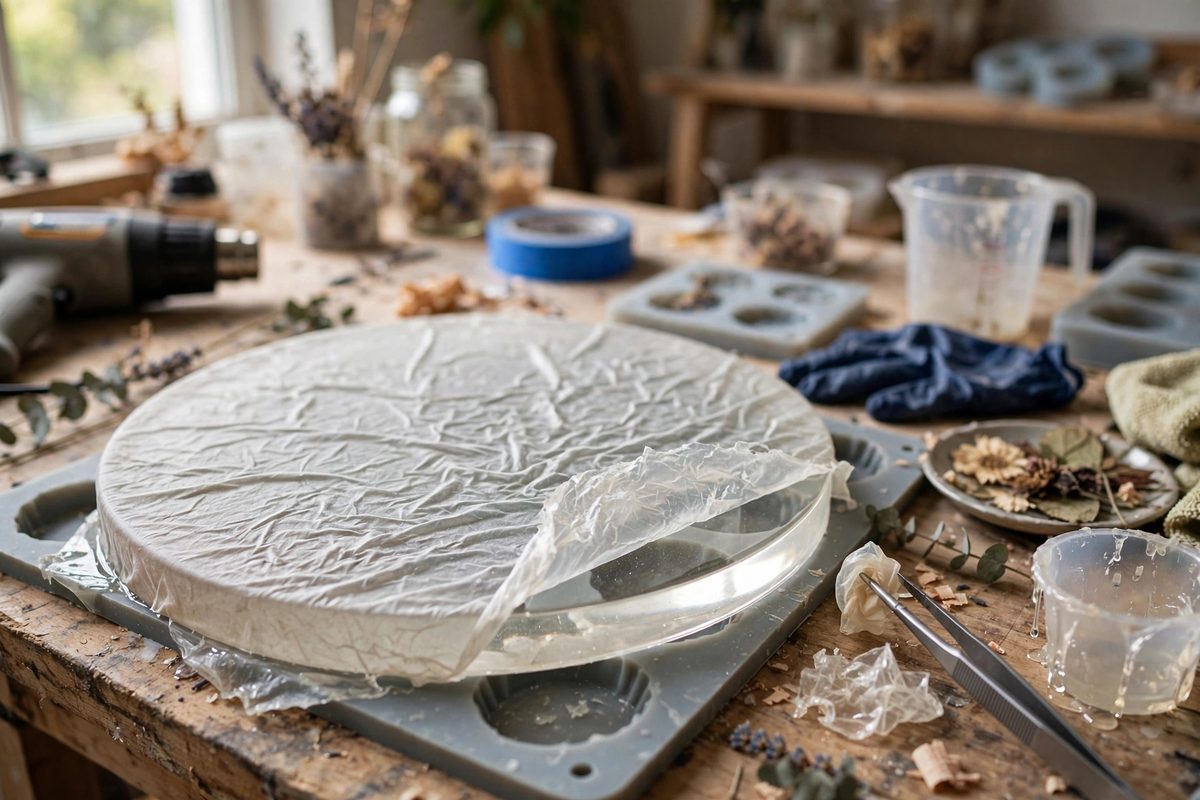
What the Skin Is
The skin is a thin surface layer where the cure went wrong: it may be under-cured and tacky, over-cured and wrinkled, or contaminated into a cloudy film. The surface is where the epoxy meets air, moisture, and temperature gradients, so it is the most vulnerable part of the pour. Amine blush, the waxy film that forms when the hardener's amine compounds react with moisture and carbon dioxide in the air, is the most common skin; it looks like a greasy or milky haze. A wrinkled skin usually means the surface cured faster than the body beneath, often from heat or airflow, and the differential shrinkage puckered it. A tacky skin that never hardens points to incorrect mixing ratio or cold curing conditions. Each skin type has its cause, and the cures differ.
Amine Blush: Prevention and Removal
Amine blush forms in humid or cool conditions, when airborne moisture reacts with the hardener at the surface. Prevent it by pouring in a controlled environment: moderate temperature, low humidity, and still air. Some epoxy formulations are labeled blush-free, meaning their hardener chemistry resists the reaction; they are worth the choice for clear-coat work. If blush appears, it must be removed before any subsequent coat, since fresh epoxy does not bond well to blush; wash the surface with clean water and a Scotch-Brite style pad, then rinse and let it dry fully. Sanding blush without washing just smears it. The washed surface should feel clean, not waxy, before recoating.
Controlling the Cure Environment
The pour's environment is the dominant variable. Cure epoxy at the temperature the manufacturer specifies, typically room temperature or slightly warm; cold slows the cure and invites blush and tackiness, while excessive heat, especially from heat guns used to pop bubbles, can skin the surface prematurely. Keep air moving gently for ventilation but avoid direct drafts across the curing surface, which cool it unevenly and carry dust. Cover the curing piece loosely to keep dust off, but do not seal it airtight; the cover should breathe. Humidity control matters most for clear coats and thin pours, where the surface-to-volume ratio is highest and the skin has the most influence on the final look.
Mixing and Pouring Discipline
Many skin problems start at the mixing cup. Measure the resin and hardener by the manufacturer's specified method, by weight or by volume as directed, with no eyeballing; an off-ratio mix may cure in the mass but leave the surface, where the ratio is most affected by incomplete mixing, tacky. Mix thoroughly, scraping the sides and bottom of the container, for the full recommended time; unmixed streaks of resin or hardener rise to the surface and create soft spots. Pour promptly after mixing, and avoid scraping the mixing container's sides into the pour, since the unmixed film on the walls becomes surface contamination. Disciplined mixing eliminates a whole family of surface defects at the source.
Fixing a Skinned Surface
If the skin has already formed, assess whether it is contamination or a cure defect. Blush and surface contamination can be washed and sanded off, revealing sound epoxy beneath; sand progressively to a fine grit and polish or recoat. A wrinkled or rubbery skin from a bad cure may go deeper; sand through it until you reach firm, sound material, which sometimes means removing significant thickness. If the skin is tacky throughout the pour's surface and sanding gums up, the mix was wrong and the pour may need to be removed and redone; no surface treatment fixes a fundamentally under-cured mass. Learn from each failure: note the temperature, humidity, ratio, and timing, and the next pour will be better.
Surface skins come from the environment, the mix, or both: control temperature and humidity, measure and mix precisely, protect the curing surface, and wash blush before recoating. Clear to the top is not luck; it is process.
Related Guides
- Exotherm Temperature Control in Deep Epoxy Pours: Epoxy cures through an exothermic reaction: as the resin and hardener crosslink, they release heat. In a thin coating that heat dissipates harmlessly
- Pressure Pot PSI Calibration to Prevent Epoxy Micro-Voids: Micro-voids, the tiny bubbles trapped in cured epoxy that show up as pinholes and cloudy spots, are a pressure problem with a pressure solution. A
- Thermal Mass Cooling Ratios in Deep Resin Blocks: Deep resin casting, pouring blocks, river tables, and sculptural masses inches thick, is a thermal management problem disguised as an art project