
The taut-line hitch is the adjustable guyline knot that lets you tension a tarp and re-tension it as conditions change. In a real storm, though, every component has a limit, and the knot is often the weakest link in the system. Knowing what the hitch can hold, and what makes it slip, keeps your shelter up when the wind is trying to take it down.
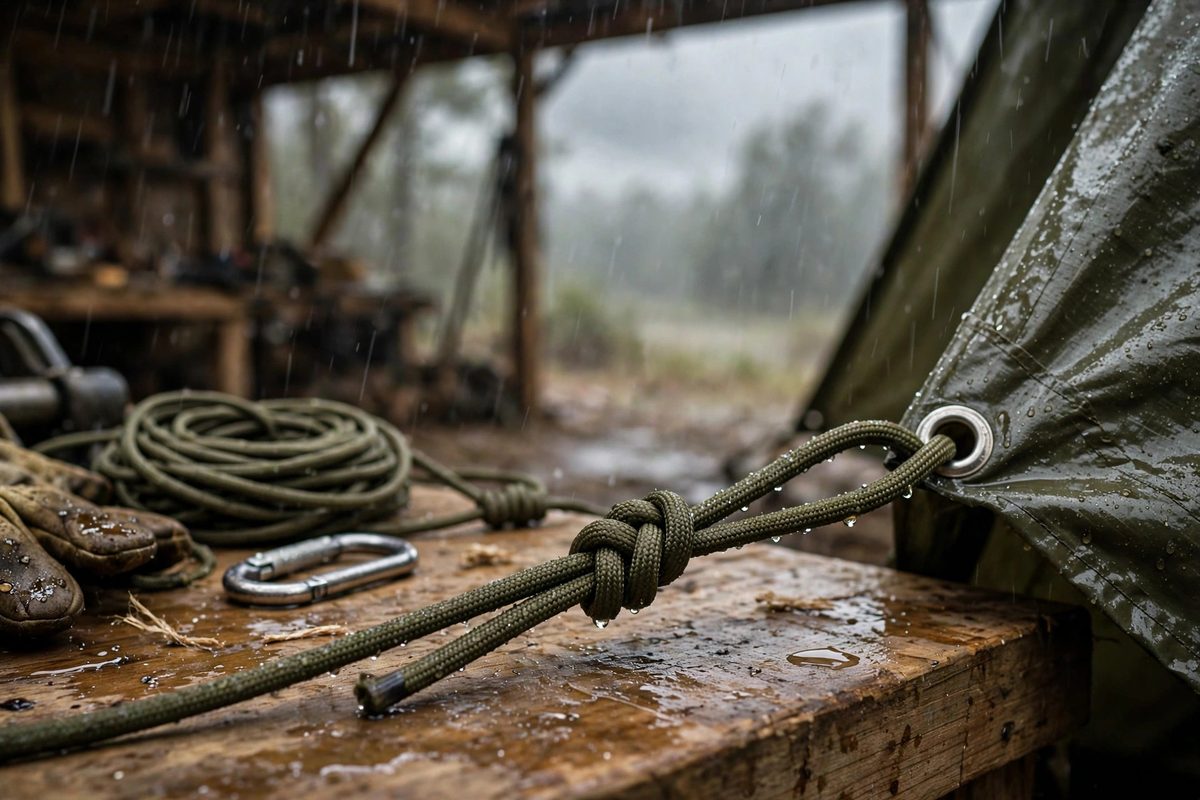
How the Hitch Holds
The taut-line hitch grips the standing line through friction from its wraps. Under load, the coils tighten and the knot locks; when you slide it by hand with the load released, it moves freely. This is the knot's genius and its vulnerability. The holding power comes entirely from friction between the cord and itself, which means it depends on cord texture, wrap count, and how the coils seat. A loosely dressed hitch with crossed wraps slips far earlier than a neatly dressed one with parallel coils.
What Makes It Slip
Slippage starts when the load exceeds the friction the wraps can generate. Slick cordage, like some braided synthetics, slips at lower loads than textured cord of the same diameter. Wet cord can behave differently than dry, sometimes gripping better and sometimes worse depending on the fiber. Fewer wraps mean less friction, and the classic three-wrap version holds less than a four-wrap variant in heavy weather. The knot also creeps under sustained cyclical loading: storm gusts that load and release the line repeatedly can walk the hitch along the cord a little with each cycle, loosening the tarp over hours.
Tension Limits in Practice
Think of the taut-line hitch as a tensioning device for moderate loads, not a high-tension anchor. On a storm tarp, it handles the steady pull of a pitched tarp and normal gusts fine. Where it struggles is in sustained high wind on a large tarp, where the gust loads spike far above the steady tension. The failure mode is merciful: the hitch slips rather than breaking, so the tarp sags instead of the cord snapping or the stake ripping out. When you need maximum storm security, back the hitch up: tie it off with a half hitch after tensioning, or double the guylines on the windward side so each carries half the load.
Dressing the Hitch for Storms
Before the storm, dress every hitch carefully. Work the coils into neat parallel wraps, snug each one down in order, and set the knot under load so it seats. Leave enough tail that a slipping hitch cannot spill off the end of the cord, and consider a stopper knot in the tail as insurance. Check the hitches after the first hour of heavy weather and re-tension as the tarp fabric stretches and the cord settles. Storm pitching is an active process, not a set-and-forget one, and the taut-line hitch is the tool that makes mid-storm adjustment possible.
When to Choose a Different System
For expedition-level storms or tarps with big sail areas, mechanical tensioners or trucker's-hitch-based systems handle higher loads with more security than a friction hitch. The taut-line hitch shines in the broad middle ground: backpacking, basecamp, and backyard storms where adjustability matters more than maximum holding power. Match the tensioning method to the expected conditions, and keep the hitch in your toolkit for everything short of the worst case.
The taut-line hitch holds a storm tarp because friction is reliable, adjustable, and forgiving. Dress it well, back it up in serious wind, and check it through the storm, and it will keep the shelter tight until the weather lets go.
Related Guides
- Taut-Line Hitch Friction Under Extreme Storm Winds: The taut-line hitch is the adjustable guyline knot: it grips the standing line under tension so your tarp stays tight, yet slides when you push it so
- Paracord Tension Angles for Windproof Tarps: A tarp shelter fails in wind for predictable reasons: the wind gets under an edge, the fabric bellies, a gust multiplies the load, and a tie-out rips
- Prusik Hitch Retention on Paracord Ridge Lines: A tarp shelter lives or dies on its ridge line, and the prusik hitch is how that line becomes adjustable: a friction knot that grips under load but
- Shear Lashing Pole Tension in Bivouac Ridge Frames: A bivouac ridge frame, two A-frame shear legs joined by a ridgepole, is one of the oldest shelters in the book: fast to build from cut poles, strong