
Waterproof India ink behaves differently from non-waterproof ink on hot press paper, and the reason sits in the binder. Waterproof India ink carries shellac or an acrylic-type binder that makes the dried line permanent, and that binder also changes how the ink flows off the nib and how it sits on a smooth rag surface. Hot press paper has almost no tooth, so there is nowhere for excess binder to hide, which means viscosity control becomes the whole game.
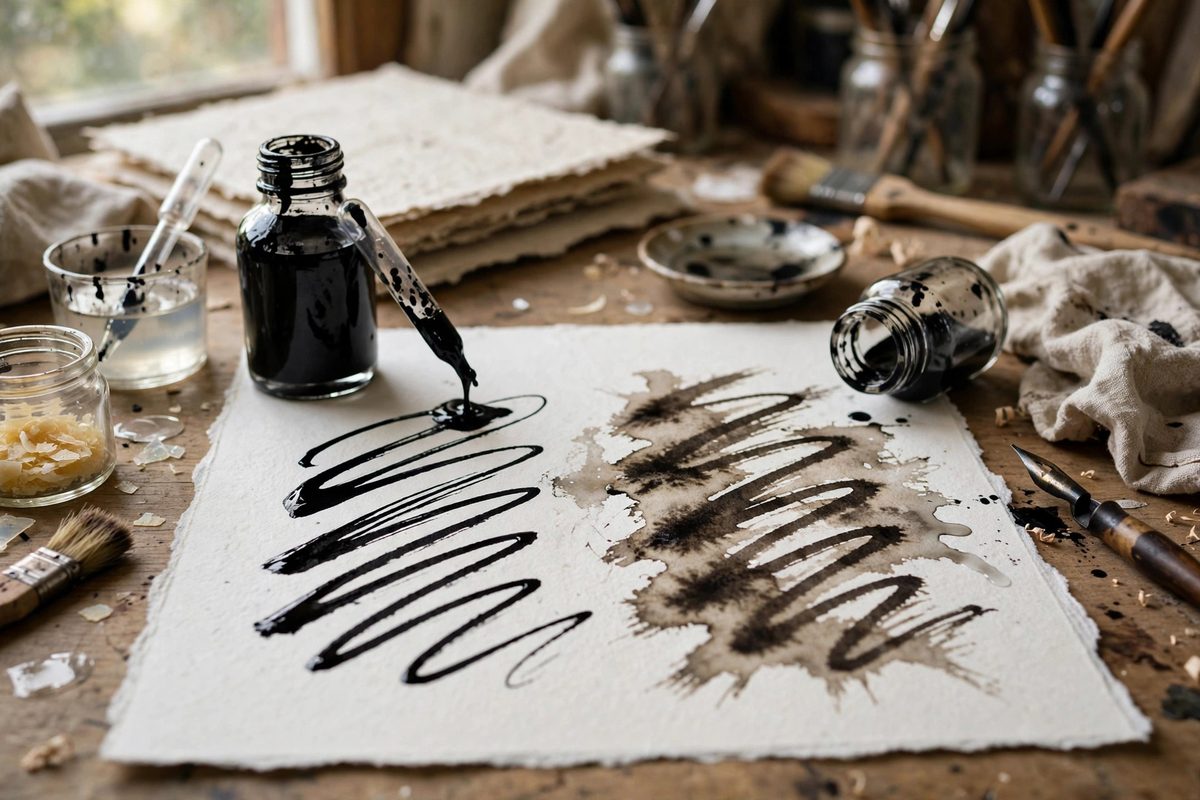
What the binder does to flow
The binder in waterproof ink is a dissolved resin that forms a film as the ink dries. In the bottle it raises the ink's viscosity above that of dye-based or non-waterproof inks, which is why waterproof ink can feel sluggish on the nib and why it clogs nibs faster. On hot press rag, a smooth cotton surface with the fibers pressed flat, that extra viscosity shows up as a tendency to bead: the ink sits on the surface in a rounded line rather than biting into the paper, and if the line is too heavy it can dry with a raised, slightly glossy ridge.
This is not a defect in the ink. It is the chemistry working as designed. The binder has to form a continuous film to waterproof the line, and film-forming means the ink stays put on the surface instead of soaking in. Your job is to manage the viscosity so the film is thin and even.
Dilution: how much water and when
A small amount of distilled water, roughly five to ten percent by volume, is usually enough to bring waterproof India ink to a flow that suits hot press paper. Add it a few drops at a time and test on scrap of the same paper, because the same dilution behaves differently on different sheets. The target is a line that flows off the nib without coaxing, dries matte or satin rather than glossy, and does not feather at the edges.
Use distilled water rather than tap, since minerals and chlorine can interact with the shellac and cause unpredictable thickening over time. Mix only what you need for the session. Diluted waterproof ink keeps for a while in a sealed container, but the binder slowly degrades once thinned, and old diluted ink can lose its waterproofing. If a wash needs to stay permanent, test a dried swatch under water before committing it to the piece.
Nib behavior on the smooth surface
Hot press rag gives the nib nothing to grip, so pointed nibs tend to skate and broad nibs tend to hydroplane on their own ink film. The viscosity sweet spot is the range where the ink wets the paper just enough to hold the nib's track without pooling. If the nib skates and leaves broken lines, the ink is too thick or the nib is too dry; thin the ink slightly or load the nib more generously. If lines spread wider than the nib edge, the ink is too thin for the paper and the binder film is too weak to hold an edge, so back off the water.
Keep a water cup and a rag at hand and rinse pointed nibs frequently. Waterproof ink dries fast on the nib, and dried binder in the slit is the leading cause of the sudden flow stoppage that ruins a long line. A quick rinse every few minutes of writing prevents the buildup that causes it.
Drying, layering, and lifting
Because the binder forms a film, waterproof ink on hot press paper can be layered once dry: new strokes sit on top of old ones without reactivating them, which is the whole point of the waterproof formulation. Let each layer dry fully before overworking it; a film that is only surface-dry will lift or tear if the nib drags across it. In normal room conditions, give it several minutes, longer for heavy lines or pooled areas.
One quirk of the film on smooth rag: a thickly applied line can be lifted with a damp brush or even a fingernail long after it dries, because the film never keyed into the paper's fibers. Thin lines key better. If permanence matters, keep lines lean and let the binder do its job in a thin film rather than a thick one.
Storage and cleanup realities
Never let waterproof ink dry in a nib or a brush; the binder is designed to be permanent, and it is. Rinse nibs in water immediately after use, and wash brushes thoroughly with soap and water before the ink sets. Bottles should be capped promptly, since the shellac skins over quickly with air exposure, and a skin stirred back into the bottle creates lumps that will haunt every line until the bottle is finished.
Dial in the dilution, keep the nibs clean, and respect the drying time, and waterproof India ink on hot press rag gives you crisp permanent lines on a surface that shows off every one of them.
Related Guides
- Preventing Nib Scratching on Cold Press Rag: Cold press watercolor paper has a beautifully textured surface that gives ink drawings character, but that same texture fights the pen nib. The nib
- India Ink Shellac Film Balancing for Rapid Pens: India ink's permanence comes from shellac: the natural resin that binds the carbon pigment into a waterproof film once dry. That same shellac is what
- Nib Flex Dynamics for Controlled Feathering Lines: A flexible nib spreads its two tines apart as you press down, letting more ink flow and drawing a wider line. Release the pressure and the tines snap