
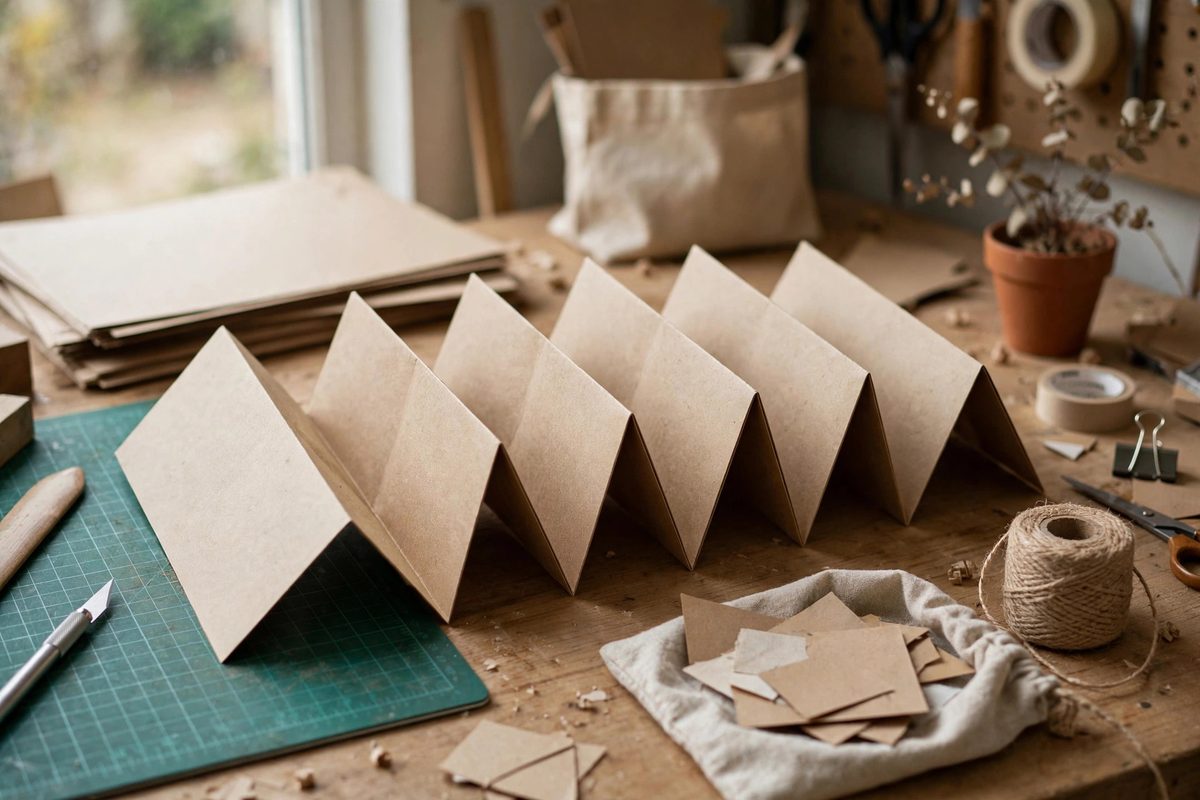
The accordion fold pamphlet, a single sheet folded into a zigzag of panels, is the perfect format for a shop primer: cheap to produce, easy to hand out, and naturally sequential, with each panel delivering one idea before the reader unfolds the next. But laying out the pages so they land on the correct panels, right side up and in order after folding, is a small puzzle called imposition. Get it wrong and the primer reads backwards or upside down. Get it right and a single sheet becomes a polished little publication. This guide covers the imposition logic for accordion folds from four to eight panels.
Why the accordion fold suits shop primers
A shop primer needs to be glanceable, durable enough to survive a workbench, and cheap enough to give away. The accordion fold delivers all three. Unlike a stapled booklet, it needs no binding equipment: one sheet, a few folds, done. The panels unfold progressively, which suits instructional sequences where each step builds on the last; the reader literally cannot see step four before unfolding past step three, which enforces the sequence. The format lies flat when open for bench reference and folds to pocket size for carrying. For zine makers, it is also forgiving: the whole publication is one file, one print run, one cut, which keeps the production pipeline simple enough to iterate quickly.
Understanding panel order and orientation
Take a sheet and fold it into a Z pattern with, say, six panels. Number the panels on the front side one through six left to right, then flip the sheet over: the back side panels run in the reverse direction, and their orientation alternates because each fold flips the paper. This alternation is the heart of imposition. When the pamphlet is folded, the reader sees panel one as the cover; unfolding reveals panels two and three, then four and five, and the back panel six closes the sequence. On the printed sheet, the panels that will be back-to-back after folding must be positioned accordingly, and every other panel on one side is upside down relative to its neighbors. The reliable method is to mock it up physically: fold a blank sheet, number every panel front and back in reading order, unfold it, and use the numbered blank as your imposition template. Ten minutes with scissors and a pen prevents hours of reprinting.
Laying out the file
Work from the physical mockup. Create your document as a single wide page, or as individual panel-sized pages assembled in the imposition order the mockup dictates, and place each content page onto its numbered panel position. Pay attention to orientation: panels that the mockup shows as inverted must be rotated in the layout. Keep critical content away from the fold lines by a safe margin, since folds are never perfectly precise and text sitting on a crease becomes unreadable. Design the cover panel, panel one, to work as a cover: title, a visual hook, and an indication of what is inside. Design the final panel as a back cover with contact info, a version date, and any safety disclaimers the primer needs. The interior panels carry the instructional sequence in order.
Folding precision and paper choice
Imposition assumes the folds land where the layout expects them, so folding accuracy matters. Score the fold lines before folding, using a bone folder and a ruler or a scoring tool; scoring compresses the paper fibers along the line and produces a crisp, straight fold instead of a wandering crease. Fold in the correct sequence, alternating mountain and valley folds to form the Z, and crease each fold firmly. Paper weight is a tradeoff: too light and the pamphlet feels flimsy and tears at the folds; too heavy and the folds bulk up and refuse to lie flat. A medium cover stock usually hits the sweet spot for a primer that must survive shop handling. Grain direction matters too: paper folds cleanly parallel to its grain and cracks across it, so orient the sheet with the grain running along the fold lines when possible.
Test prints and proofing
Always run a full test print, fold it, and read it start to finish before committing to a run. Check every panel for correct order, correct orientation, and content clear of the folds. Verify that the cover is actually the cover when folded and that the back panel lands where intended. Read the sequence as a new user would, watching for steps that assume knowledge from a panel the reader has not unfolded yet. This is also the moment to check durability: fold and unfold the test copy a dozen times and see whether the paper survives and the print cracks at the creases. Fix what the test reveals, because every flaw in the proof multiplies across the print run.
Distribution and iteration
The beauty of the single-sheet format is how cheaply it iterates. Print a small batch, hand them out in the shop or at the meetup, and watch how people use them: which panels get referenced, where readers get confused, what wears out first. Fold that feedback into the next version, bumping the version date on the back panel so old and new copies are distinguishable. Keep the source files organized and the imposition template with them; future you will not remember the panel order, and the numbered blank from the first mockup is worth its weight in gold. A shop primer is a living document, and the accordion fold makes living cheap.
Impose accordion pamphlets from a physical mockup: fold, number, unfold, and lay out to the template. Score before folding, choose stock that survives the shop, proof by folding a full test copy, and iterate cheaply. One sheet, a few folds, and your primer is in people's hands.
Related Guides
- Pocket Workshop Primers Using French Fold Impositions: A pocket workshop primer is a small printed guide that lives in an apron pocket or a toolbox: feed charts, tap drill sizes, safety checklists, the
- Micro Publishing Formats for Workshop Tool Zines: A zine about workshop tools, a stapled booklet of jigs, techniques, and shop wisdom, is micro-publishing at its most direct: no publisher, no
- Duotone Riso Separation Techniques for Tool Booklets: Risograph printing, the soy-based-ink duplicator beloved of zine makers, prints one color at a time from stencil masters, which makes it a natural
- Screen Printing Low-Cost Workshop Pamphlets on Newsprint: Workshop pamphlets, the quick guides, safety sheets, and project handouts of a maker space, do not need to look expensive. They need to exist, in