
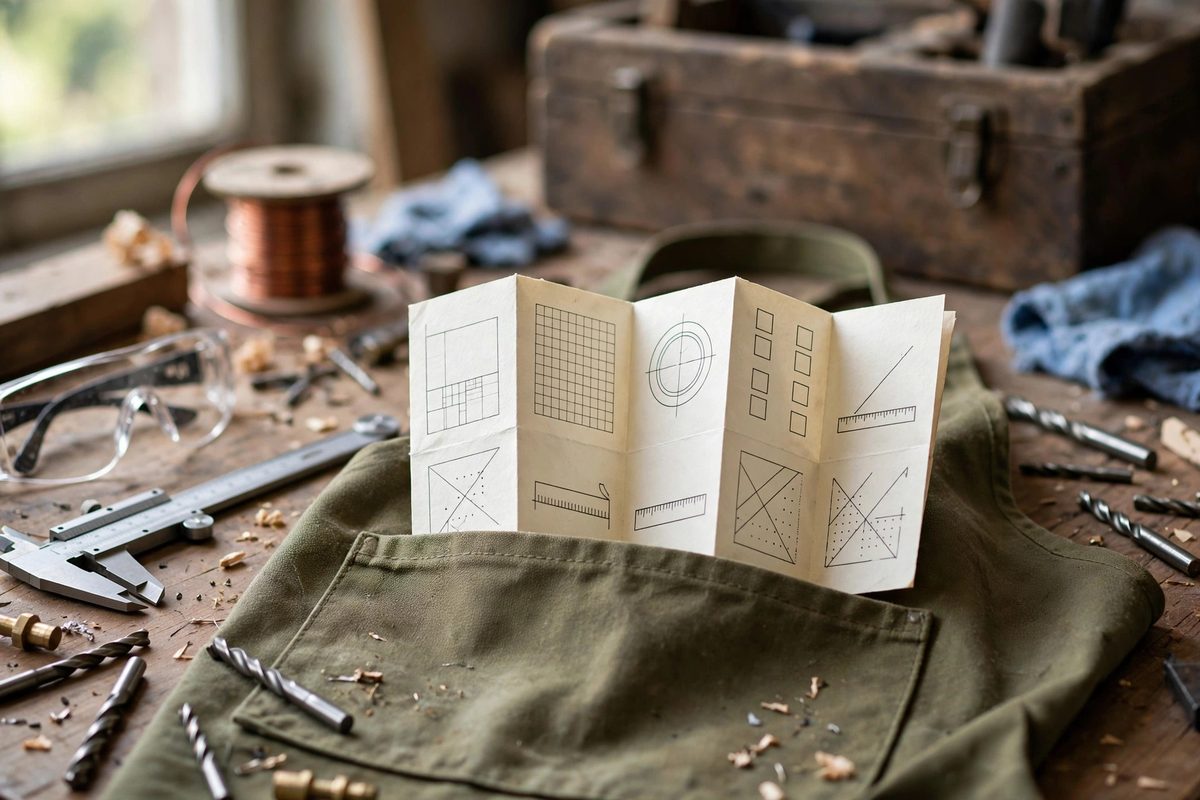
A pocket workshop primer is a small printed guide that lives in an apron pocket or a toolbox: feed charts, tap drill sizes, safety checklists, the conversions you always forget. The French fold imposition is the perfect format for it, because it turns a single sheet of paper into a sturdy little multi-page booklet with no binding, no staples, and no equipment beyond a printer and a bone folder. It is zine culture applied to shop reference, and it is deeply satisfying to make.
What a French Fold Is
A French fold takes one sheet of paper, prints on one side, and folds it twice: first in half, then in half again, creating a four-layer booklet with a closed fore-edge. The result is a small, thick-feeling booklet, typically a quarter of the original sheet size, with the folds giving it surprising rigidity. Because only one side is printed, the inside faces stay clean and the booklet has a finished feel without any binding. It is the same fold used for greeting cards and art prints, repurposed here as a bookbinding method that requires zero supplies.
Planning the Imposition
Imposition is the puzzle of arranging your pages on the sheet so they land in the right order after folding. For a French fold from a single sheet folded twice, you get four panels on the printed side, which become the booklet's pages in a specific sequence determined by the fold order. The standard approach: lay out your content as four panels in a two-by-two grid, then test with a blank sheet, numbering the panels, folding, and checking the reading order. The test fold takes thirty seconds and saves you from printing a hundred copies with the pages scrambled. Once you have the panel order right, make it a template and reuse it forever.
Designing Content for the Pocket Format
The pocket format punishes verbosity and rewards density. Each panel is small, so every primer should cover one topic tightly: a tap drill chart, a decimal-fraction conversion table, a pre-flight checklist for a specific machine. Use large enough type to read in shop lighting with tired eyes; tiny type that requires perfect vision defeats the purpose of a quick reference. Favor tables, diagrams, and bold headings over paragraphs. And design for the fold: keep critical information away from the fold lines where it can be hard to read, and remember that the outer panels get handled the most, so put the most-used reference there or protect it with the fold structure.
Printing and Paper Choices
Heavier paper makes a better pocket primer: a sturdy stock in the range of a good card or cover weight gives the folded booklet real substance and survives toolbox life far longer than copy paper. Print at the highest quality your printer offers, because small type and fine table lines need sharp rendering. If you are making many copies, a print shop's digital press on heavy uncoated stock is inexpensive and far more durable than home printing. Consider laminating the outer faces or using the fold to hide a protective layer: a primer that disintegrates from shop grime in a week is a primer nobody trusts.
Folding, Trimming, and Finishing
Score the fold lines before folding heavy stock: a scored fold is crisp and does not crack the printed surface. Fold in the correct order (your test fold established this), and crease firmly with a bone folder or the back of a spoon for sharp edges. If the fore-edge bothers you, it can be trimmed open with a sharp knife and a straightedge, converting the French fold into separate leaves, but most pocket primers work fine with the closed edge; it adds stiffness. For a run of copies, fold them in batches: score all sheets, make the first fold on all sheets, then the second. Assembly-line folding is dramatically faster than finishing each booklet individually.
Why This Format Matters for Maker Culture
The French fold primer sits at the intersection of two maker values: useful knowledge and self-publishing. It costs almost nothing, requires no special equipment, and produces something genuinely functional. Zines were always about bypassing gatekeepers to share what matters; a pocket primer bypasses the gatekeepers of technical publishing to put real reference material directly in people's hands. Make them for your shop, share the templates, and leave a stack at the maker space. The best workshop literature was never a manual; it was the folded, stained, indispensable card in someone's apron pocket.
One sheet, one side printed, two folds, and you have a pocket reference that outlasts its humble origins. Design it dense, print it sturdy, fold it sharp, and put knowledge where your hands already are.
Related Guides
- Accordion Fold Pamphlet Imposition for Shop Primers: The accordion fold pamphlet, a single sheet folded into a zigzag of panels, is the perfect format for a shop primer: cheap to produce, easy to hand
- Micro Publishing Formats for Workshop Tool Zines: A zine about workshop tools, a stapled booklet of jigs, techniques, and shop wisdom, is micro-publishing at its most direct: no publisher, no
- Screen Printing Low-Cost Workshop Pamphlets on Newsprint: Workshop pamphlets, the quick guides, safety sheets, and project handouts of a maker space, do not need to look expensive. They need to exist, in
- Duotone Riso Separation Techniques for Tool Booklets: Risograph printing, the soy-based-ink duplicator beloved of zine makers, prints one color at a time from stencil masters, which makes it a natural