
Workshop pamphlets, the quick guides, safety sheets, and project handouts of a maker space, do not need to look expensive. They need to exist, in quantity, cheap enough to hand out freely. Screen printing on newsprint is the old punk-rock answer: fast, cheap, and honest about what it is.
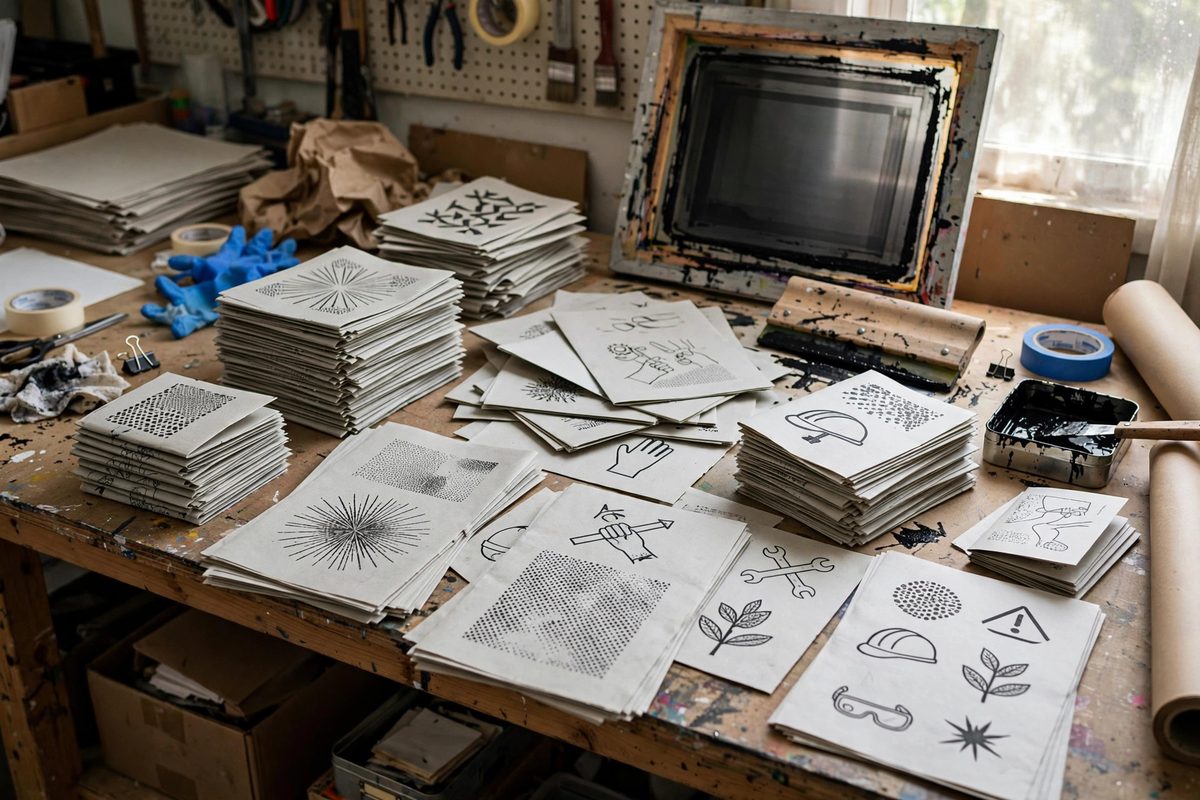
Why newsprint
Newsprint is the cheapest printable paper available in bulk, it takes screen ink well, and its disposability is a feature: a pamphlet that costs pennies can be given away without a second thought. The paper's absorbency gives prints a soft, matte quality that suits workshop handouts, and its thinness means a folded pamphlet stays flat. The tradeoff is durability; newsprint yellows and tears. For handouts meant to be used and replaced, that is the right tradeoff.
The minimal screen setup
You do not need a professional print shop. A wood frame with stretched mesh, a squeegee, and photo emulsion or even a hand-cut stencil gets you printing. For pamphlet runs, a single screen per page side keeps the logistics simple. Build a simple registration jig, two or three stops the paper butts against, so every sheet lands in the same place. The whole setup fits on a workbench and costs less than a decent dinner out if you build the frames yourself.
Ink and the newsprint surface
Water-based screen inks are the practical choice for paper: they clean up with water, dry fast on absorbent newsprint, and do not require ventilation. Newsprint's absorbency means ink sinks in rather than sitting on top, so prints look matte and slightly soft rather than glossy; plan the artwork for that, with bold shapes and generous type sizes. Test on the actual newsprint stock before the run, because absorbency varies between rolls and the ink behavior follows it. One test sheet saves a run of muddy prints.
Laying out for the fold
A pamphlet is printed flat and folded, so the layout has to account for the fold. For a simple half-fold pamphlet, the two inner pages print on one side of the sheet and the outer pages on the other, arranged so they read correctly when folded. Sketch the fold on a scrap sheet first, number the panels, and unfold it to see the print order; this physical mockup catches the layout errors that are invisible on screen. Keep the design to one or two colors per side to keep the run manageable.
Running the edition
Print in a rhythm: place the sheet against the registration stops, flood the screen, pull the squeegee in one smooth stroke, lift, and rack the sheet to dry. Consistency in the pull gives consistency in the print. Newsprint dries fast, so racking space can be modest, but do not stack sheets until the ink is truly dry or you will offset prints onto each other. A run of a few hundred pamphlets is an afternoon's work for one person once the setup is dialed.
Distribution thinking
The point of cheap pamphlets is that they move. Leave stacks at the entrance, tuck them into kit boxes, hand them out at the start of a workshop. Because they cost almost nothing, you can afford to update them: a safety sheet that changes with the shop, a project guide revised after the first class taught you what was unclear. The pamphlet is a living document, and newsprint is the medium that lets it live.
Build a screen, mix the ink, mock up the fold, and print the run. The pamphlets will not win design awards, and they will get the information into people's hands, which is the entire job.
Related Guides
- Micro Publishing Formats for Workshop Tool Zines: A zine about workshop tools, a stapled booklet of jigs, techniques, and shop wisdom, is micro-publishing at its most direct: no publisher, no
- Pocket Workshop Primers Using French Fold Impositions: A pocket workshop primer is a small printed guide that lives in an apron pocket or a toolbox: feed charts, tap drill sizes, safety checklists, the
- Duotone Riso Separation Techniques for Tool Booklets: Risograph printing, the soy-based-ink duplicator beloved of zine makers, prints one color at a time from stencil masters, which makes it a natural
- Accordion Fold Pamphlet Imposition for Shop Primers: The accordion fold pamphlet, a single sheet folded into a zigzag of panels, is the perfect format for a shop primer: cheap to produce, easy to hand