
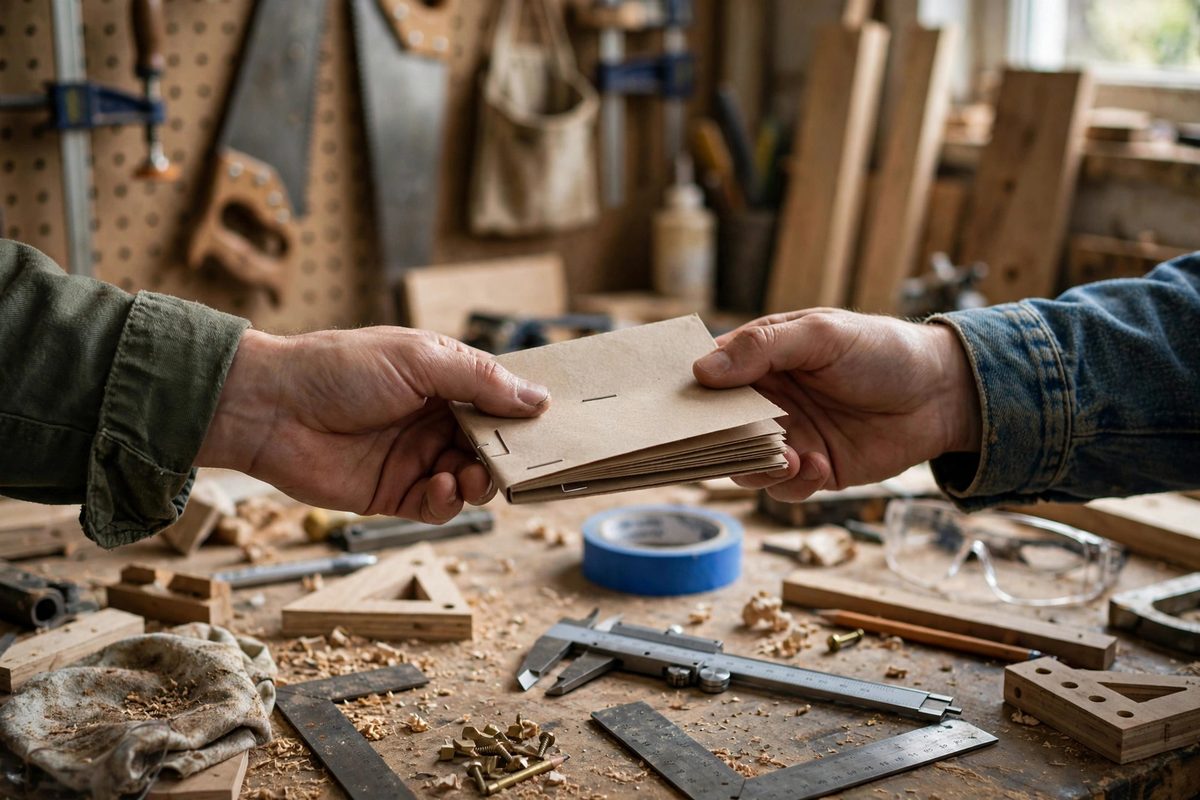
A zine about workshop tools, a stapled booklet of jigs, techniques, and shop wisdom, is micro-publishing at its most direct: no publisher, no platform algorithm, just knowledge folded into paper and handed to someone who needs it. The format choices, size, binding, layout, determine whether the zine gets used in the shop or admired on a shelf. This is a practical guide to the formats that work for tool zines specifically.
Why zines suit tool knowledge
Tool knowledge is procedural, visual, and durable: how to tune a plane, how to lay out a joint, how a jig works. It does not expire like news and does not need the interactivity of video. A printed zine puts the procedure at the bench, immune to dead batteries and sawdust-covered touchscreens, in a form cheap enough to get dirty. The zine's constraints, small size, limited pages, force clarity: every spread must earn its place.
Zines also carry a voice that manuals lack. A tool zine can be opinionated, funny, and personal in ways corporate documentation cannot, and that voice is part of why readers trust and remember them. The format is the message: this knowledge comes from a practitioner, not a marketing department.
Format options and their trade-offs
The classic single-sheet zine, one page folded into eight mini-pages, is the fastest path from idea to finished object: design on one side of one sheet, fold, cut, done. It suits single techniques or tool profiles. The limitation is space; complex procedures need more room.
Multi-signature booklets, several folded sheets nested and stapled, scale up to dozens of pages and suit collections: a season of jigs, a complete sharpening guide. Saddle-stapling is the standard binding, cheap and durable enough for shop use. For the ambitious, perfect-bound or spiral formats handle reference-style zines meant to live at the bench for years, at higher production cost and complexity.
Layout for the shop environment
Design for dirty hands and bad lighting. Large clear illustrations beat dense text; step-by-step sequences beat paragraphs; high-contrast black-and-white art reproduces on any copier and stays legible under a shop lamp. Number the steps, key them to the drawings, and put the critical dimensions where the eye lands first.
Size the format for the bench: a zine that lies flat or folds to a pocketable size gets used; a large floppy format fights for space with the workpiece. Consider paper stock that tolerates the shop: heavier cover stock, pages that survive a little oil. Laminating the cover is cheap insurance for a zine meant to live in the shop.
Production and distribution
Produce with what you have: a home printer or the copy shop down the street handles most zine runs. Design in black and white at first; color is a luxury that doubles costs and complicates copying. Print a short run, twenty to fifty copies, and revise based on reader feedback before committing to more. The zine improves fastest in the hands of real users.
Distribute where tool people gather: makerspaces, guild meetings, craft fairs, the counter of the local tool store. Price to cover costs and fund the next issue, or give them away and treat the zine as community infrastructure. Digital PDFs extend reach, but the printed object is the point; keep the physical edition primary.
Sustaining a zine practice
A zine series survives on routine, not inspiration. Set a modest schedule, quarterly beats monthly for sustainability, and a consistent format so each issue is faster to produce than the last. Collect material continuously: every jig you build, every technique you refine is a future spread. Reader contributions, shop tips from the community, multiply your content and build ownership.
Archive everything. Past issues become a library, and the back catalog is often more valuable than the latest issue. Number the issues, keep the files, and reprint the classics. A zine practice compounds; the fifth year of issues is worth far more than the sum of its parts.
Tool zines are micro-publishing with a purpose: durable procedural knowledge in a cheap, bench-proof, opinionated package. Pick a foldable format, lay out for dirty hands, print short runs, distribute in person, and keep the series alive. The shop gets smarter one stapled booklet at a time.
Related Guides
- Pocket Workshop Primers Using French Fold Impositions: A pocket workshop primer is a small printed guide that lives in an apron pocket or a toolbox: feed charts, tap drill sizes, safety checklists, the
- Screen Printing Low-Cost Workshop Pamphlets on Newsprint: Workshop pamphlets, the quick guides, safety sheets, and project handouts of a maker space, do not need to look expensive. They need to exist, in
- Duotone Riso Separation Techniques for Tool Booklets: Risograph printing, the soy-based-ink duplicator beloved of zine makers, prints one color at a time from stencil masters, which makes it a natural
- Accordion Fold Pamphlet Imposition for Shop Primers: The accordion fold pamphlet, a single sheet folded into a zigzag of panels, is the perfect format for a shop primer: cheap to produce, easy to hand