
Drop-shoulder sweaters look simple: the sleeve hangs from a straight shoulder line, no shaping required. But a well-fitting drop sleeve still needs the shoulder taper calculated, because the body width, the sleeve depth, and the wearer's shoulder slope all interact. The taper is compound, changing in two dimensions at once, and getting it right is pattern math worth doing.
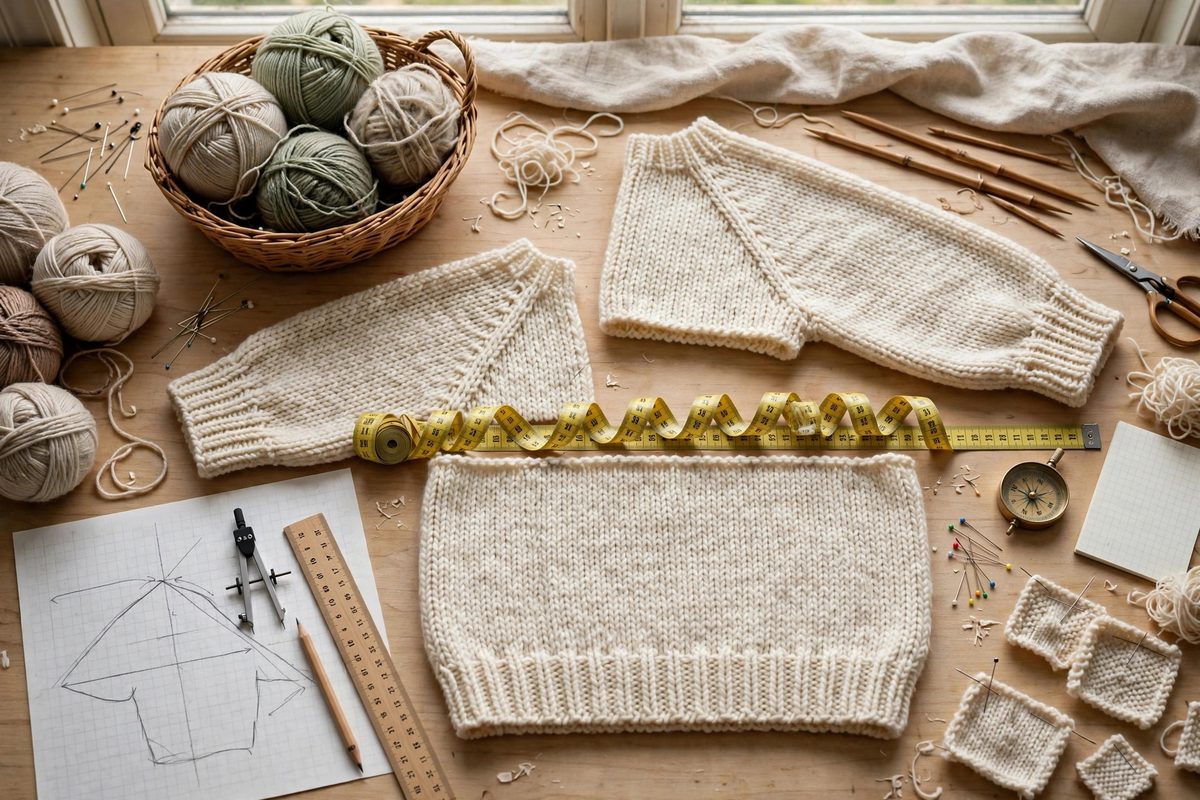
The geometry of the drop shoulder
In a drop-shoulder garment, the shoulder seam sits below the wearer's actual shoulder, and the sleeve cap is shallow or nonexistent. The body's shoulder width determines where the sleeve joins, and the sleeve's upper width determines how the fabric drapes over the upper arm. The taper in question is the transition from the body's full width at the underarm to the narrower width at the shoulder join, combined with the sleeve's own shaping. These two tapers meet at the join, and they have to agree with each other and with the body wearing the sweater.
Measuring the wearer
Start with real measurements: the shoulder width where the seam will sit (below the natural shoulder), the upper arm circumference with ease, the desired drop depth, and the total garment length. The drop depth, how far below the natural shoulder the seam sits, is a style choice that drives everything else: a deeper drop means a wider body and a shallower sleeve cap. Measure on the body or on a well-fitting garment, not from a size chart; the taper calculation is only as good as its inputs.
Calculating the body taper
The body typically narrows from the chest width to the shoulder-join width over the drop depth. Convert the stitch counts: chest stitches minus shoulder stitches, divided by two for the two sides, gives the decreases per side. Distribute them evenly over the rows of the drop depth, or concentrate them if the design calls for a shaped rather than straight taper. A straight taper, decreases spaced evenly, gives the classic relaxed drop shoulder; a curved taper, with decreases clustered, gives a more tailored line. The math is simple division; the design choice is yours.
Calculating the sleeve taper
The sleeve works the same calculation in reverse: from the cuff width up to the upper-arm width over the sleeve length, then the shallow cap shaping over the cap depth. In a true drop sleeve the cap is minimal, sometimes just a few bind-off rows, because the dropped position does the fitting work. But "minimal" still needs calculating: the sleeve's top width must match the armhole depth it joins, or the seam puckers. Check the numbers against each other before knitting; the sleeve cap and the armhole are a matched pair.
Ease and how it changes the math
Drop shoulders are worn with positive ease, and the ease amount changes the taper. More ease means a wider body, a deeper drop, and less critical taper math, because the fabric drapes rather than fits. Less ease means the taper has to be more precise, because the garment sits closer to the body. Decide the ease first, then calculate; calculating first and adding ease after produces numbers that do not describe the actual garment. Write the ease into the pattern notes so the knitter knows what fit the math assumed.
Swatching for the real gauge
All of this math runs on gauge, and gauge in the finished garment differs from gauge in a flat swatch. Wash and block the swatch the way the garment will be treated, measure over the pattern stitch, and measure again after the swatch hangs for a day, because drop-shoulder fabric stretches under its own weight. Use the hanging gauge for the length calculations and the flat gauge for widths. The few extra days of swatching save weeks of reknitting.
Measure the wearer, decide the ease, calculate both tapers from real gauge, and check that the sleeve and armhole agree. The drop shoulder looks effortless when the math underneath is careful.
Related Guides
- Calculating Sleeve Cap Shaping From Gauge Swatches: A set-in sleeve's cap, the curved top that fits into the armhole, is the most mathematical part of sweater knitting: a precise curve of bind-offs and
- Calculating Diagonal Raglan Depth From Stitch Gauges: A raglan sleeve joins the body at a diagonal seam running from underarm to neckline, and the depth of that diagonal, how long the seam is, determines
- Short Row Bust Dart Shaping Calculations for Sweaters: A sweater that fits the shoulders but strains across the bust, riding up and pulling at the buttons, is missing shaping where the body needs it
- Short-Row Dart Calculations for Custom Knitted Tops: A knitted top that fits beautifully through the shoulders but strains or sags at the bust is a shaping problem, and short-row darts are the elegant