
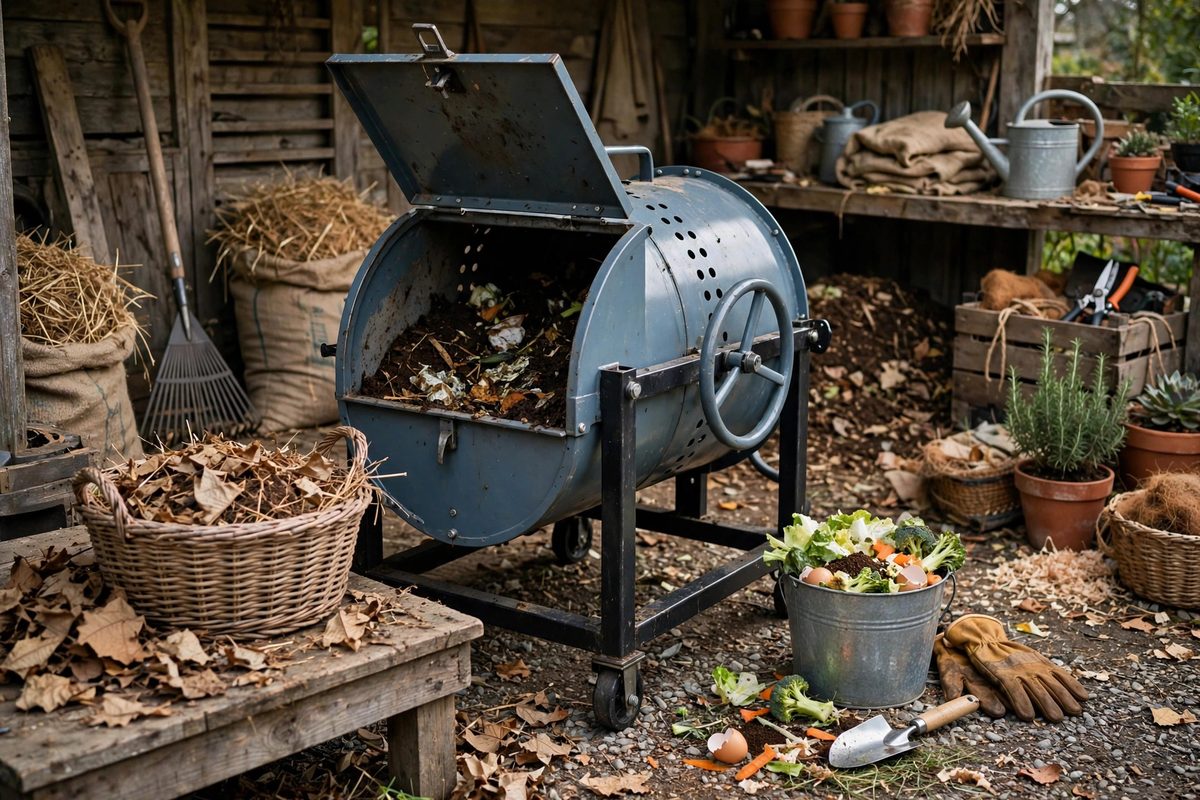
A continuous compost tumbler, the kind you add to daily and harvest from periodically, lives or dies by its carbon-to-nitrogen ratio. Batch piles can be balanced once and left alone; a tumbler receiving fresh scraps every day is a moving target. Understanding the C:N balance and how to steer it keeps the tumbler hot, sweet-smelling, and productive instead of a slimy, stinking drum.
Why the ratio matters
Composting microbes need carbon for energy and nitrogen to build their bodies, and they want them in roughly a 25 to 30 to 1 ratio. Too much nitrogen (food scraps, grass clippings) and the excess converts to ammonia: the pile smells, loses nitrogen to the air, and goes slimy. Too much carbon (leaves, shredded paper) and the microbes run out of nitrogen to reproduce; the pile sits cold and barely decomposes. The tumbler's sealed, tumbling environment amplifies both failure modes, since there is no soil contact to buffer mistakes.
Reading the tumbler's signals
The tumbler tells you its ratio if you know the signs. Ammonia or sour smell plus wet, matted material means excess nitrogen: add browns. A drum that stays cold despite regular feeding and tumbling means excess carbon or insufficient moisture: add greens and check dampness. White, dusty, dry material that will not heat is carbon-heavy and dry; it needs nitrogen and water together. Ideal tumbler contents look like a wrung-out sponge, smell earthy, and heat noticeably within a day of tumbling fresh material in.
Balancing continuous inputs
The practical method is the "handful rule": every time you add a container of kitchen scraps (greens), add roughly two to three times that volume in shredded browns, dry leaves, shredded cardboard, or wood shavings. Volume, not weight, because browns are fluffy and greens are dense; the volume ratio approximates the right C:N balance for typical household inputs. Keep a bag or bin of browns next to the tumbler so the balance happens at the moment of feeding, not as a corrective chore later. Tumble after each addition to mix the fresh material into the active core.
Moisture and air in the balance
C:N ratio is only half the equation; microbes also need oxygen and water. The tumbler's rotation provides aeration, but only if the drum is not overfilled: keep it no more than about two-thirds full so material actually tumbles and mixes with air. Moisture should be at the wrung-sponge level; a tumbler with drainage issues goes anaerobic fast, and anaerobic decomposition smells terrible regardless of the C:N ratio. In rainy climates, shelter the tumbler or check that its vents are not funneling water inside.
Harvesting from a continuous system
A continuous tumbler never fully finishes, since fresh material is always entering. Harvest from the end opposite the fresh additions, or use a two-chamber tumbler: fill one side while the other cures undisturbed. Material that is dark, crumbly, and earthy-smelling is done; anything still recognizable goes back in. Screen the harvest if you want a refined product, and let it cure in a pile for a few weeks before using it on sensitive plants; tumbler compost can be biologically hot even when it looks finished.
Feed greens, bury them in browns, keep it damp and tumbling, and harvest from the far end. The ratio takes care of itself when the habit is right.
Related Guides
- Aeration Plenum Pipe Perforation Ratios for Hot Bins: A hot compost bin lives or dies on oxygen. The thermophilic bacteria that drive temperatures into the active range need a steady air supply, and in a
- Passive Induction Vent Sizing for Static Compost Piles: A static compost pile, one that is built and left to cook without turning, lives or dies on airflow. The microbes doing the composting need oxygen
- Perforated Aeration Tube Spacing for Static Bin Piles: Static compost bins fail for one reason: the middle of the pile goes anaerobic, and an anaerobic middle smells, stalls, and composts at a crawl
- Static Aeration Tube Spacing for Winter Compost Bins: Winter composting stalls for one reason: the pile goes anaerobic. Cold slows microbial activity, wet material mats down, and without oxygen the pile