
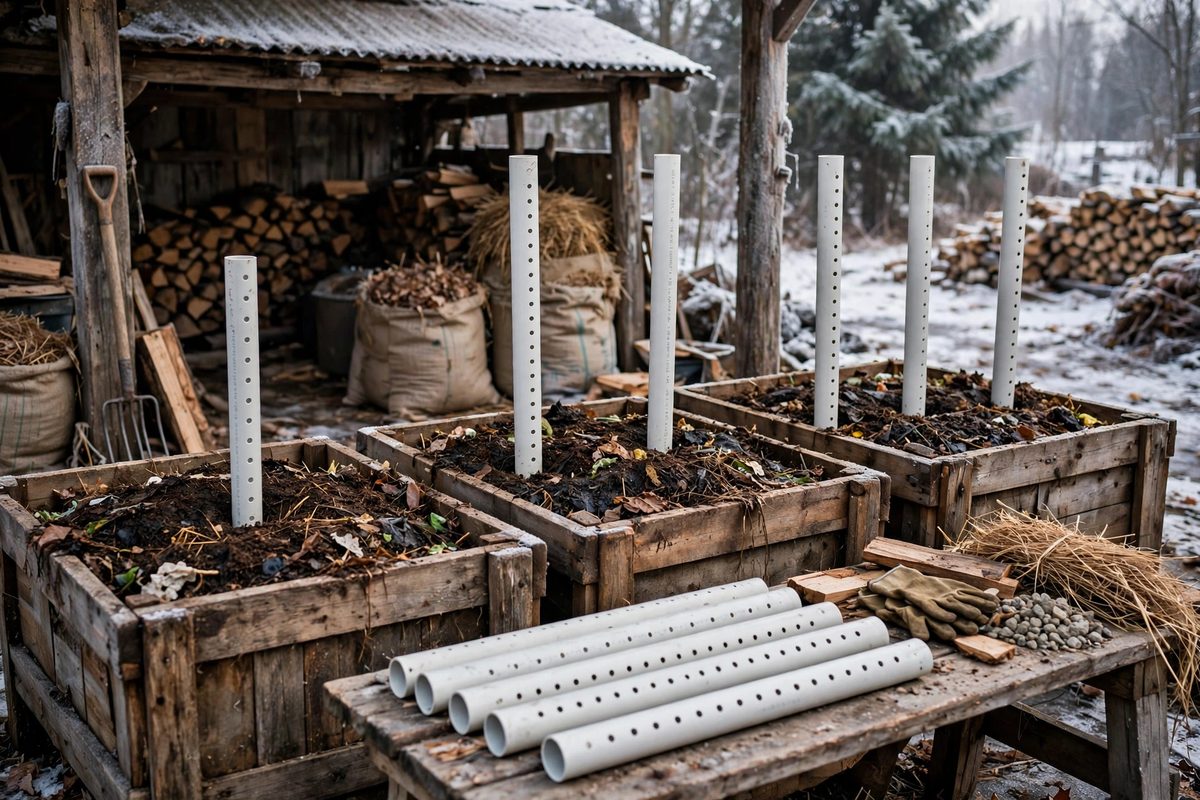
Winter composting stalls for one reason: the pile goes anaerobic. Cold slows microbial activity, wet material mats down, and without oxygen the pile stops heating and starts smelling. Static aeration tubes (perforated pipes run through the bin, no fan, no turning) feed air passively into the pile's core all winter long. Their spacing is the design variable that decides whether the whole pile breathes or only the material near the pipes does.
How Passive Aeration Works
A perforated tube buried in a compost pile acts as a chimney in reverse. Warm air rising off the active compost creates a slight draft that draws fresh air in through the tube's exposed ends, and the perforations distribute that air along the tube's length. No electricity, no moving parts. The draft is weak, which is exactly why spacing matters: each tube can only oxygenate the material within a limited radius, and the zones between tubes must be close enough that oxygen diffuses across the gap.
Tube Spacing in the Bin
For winter bins, space aeration tubes roughly 12 to 18 inches apart in a grid, measured center to center. Closer spacing (around 12 inches) suits dense, wet feedstocks like kitchen scraps and leaves, which compact and resist airflow. Wider spacing (up to 18 inches) works for chunky, high-carbon material like wood chips that already have air spaces. In a typical 3-by-3-foot bin, that means three or four tubes running the full length of the bin at each level. Run the tubes horizontally through the pile, with both ends open to the outside air, because a tube with only one open end cannot develop a draft.
Multiple Levels for Deep Bins
A single layer of tubes only aerates the material near that layer. In bins deeper than about 2 feet, stack a second grid of tubes 12 to 18 inches above the first, offset so the upper tubes sit over the gaps in the lower grid. This honeycomb arrangement covers the pile's cross-section with overlapping aeration zones. The bottom layer carries the most moisture (leachate drains down), so keep its tubes clear of standing liquid by raising them on small blocks or running them through a coarse gravel bed at the bin floor.
Tube Diameter and Perforations
Four-inch perforated drain pipe is the practical standard: large enough that it will not clog completely with compost fines, small enough to fit a backyard bin. Drill additional holes if using solid pipe, roughly 1/2-inch holes every 6 inches, staggered around the circumference so air exits in all directions. Cap the exposed ends with coarse mesh or hardware cloth to keep rodents out while letting air flow freely. Slope each tube very slightly toward the outside so condensation and leachate drain out instead of pooling inside the pipe.
Feedstock Prep Still Matters
Aeration tubes cannot rescue a pile built from a solid mat of wet leaves or grass clippings. Chop or shred bulky material, mix carbon and nitrogen sources as you load, and aim for the classic damp-sponge moisture level. The tubes handle the oxygen; you handle the structure. In deep winter, insulate the bin (straw bales around the sides work well) so the pile retains enough heat for the microbes to stay active, because aeration without warmth still composts slowly.
Spring Assessment
When spring arrives, pull the tubes and assess. A well-aerated winter pile should be dark, crumbly, and earthy-smelling through most of its depth, with active decomposition visible around where the tubes ran. Pockets of slimy, foul material between tubes mean the spacing was too wide for that feedstock; tighten the grid next winter. The tubes themselves rinse clean and store flat, ready for next year's pile, which is the quiet virtue of the whole system: nothing to plug in, nothing to repair, nothing to turn.
Static aeration tubes are winter composting's simplest insurance policy. Space them 12 to 18 inches apart, stack levels in deep bins, keep both ends open, and prep the feedstock properly, and the pile keeps working through the cold instead of sitting as a frozen monument until April.
Related Guides
- Perforated Aeration Tube Spacing for Static Bin Piles: Static compost bins fail for one reason: the middle of the pile goes anaerobic, and an anaerobic middle smells, stalls, and composts at a crawl
- Aeration Plenum Pipe Perforation Ratios for Hot Bins: A hot compost bin lives or dies on oxygen. The thermophilic bacteria that drive temperatures into the active range need a steady air supply, and in a
- Passive Induction Vent Sizing for Static Compost Piles: A static compost pile, one that is built and left to cook without turning, lives or dies on airflow. The microbes doing the composting need oxygen
- Carbon-to-Nitrogen Balancing for Continuous Tumblers: A continuous compost tumbler, the kind you add to daily and harvest from periodically, lives or dies by its carbon-to-nitrogen ratio. Batch piles can