
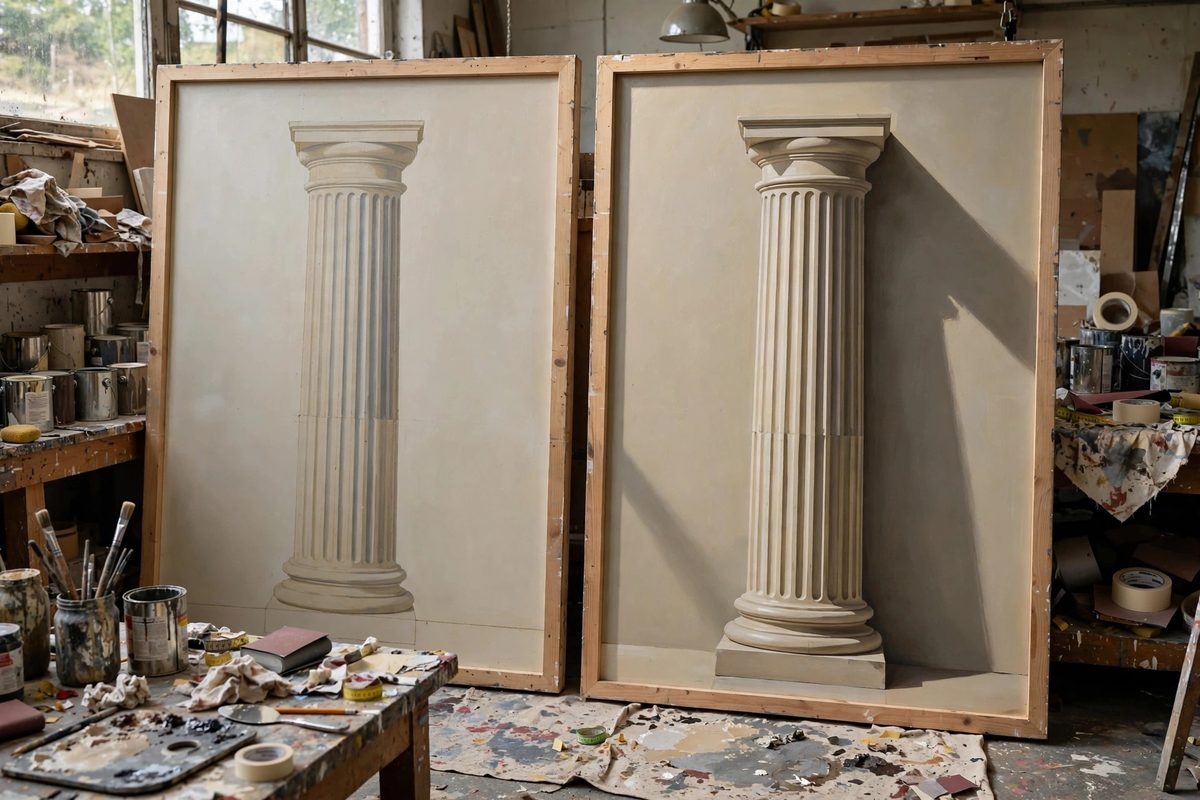
Trompe l'oeil (French for "fool the eye") is scenic painting's highest trick: flat surfaces painted to read as three-dimensional architecture. The cast shadow is the detail that sells it. A painted column without a shadow is a picture of a column; the same column with a soft shadow falling across the wall behind it becomes a column standing in the room. Glazing (thin, transparent layers of paint) is how scenic artists build those shadows with the depth and softness that opaque paint cannot achieve.
Why Shadows Make the Illusion
The eye judges depth largely from light and shadow. A highlight says "this surface faces the light"; a cast shadow says "this object stands in front of that surface." Without the shadow, the brain files the painting under "flat decoration." With it, the brain promotes the painting to "real object," at least at stage distance under stage lighting. Every trompe l'oeil element (moldings, panels, arches, niches) needs its shadow painted with the same care as the element itself, because the shadow is doing half the dimensional work.
Establishing the Light Source
Before painting a single shadow, decide where the light comes from and document it: a sketch showing the light direction, pinned to the flat while you work. Every shadow in the composition must fall away from that light source consistently; a molding casting its shadow left while the column beside it casts right destroys the illusion instantly. Stage lighting will add its own real shadows on top of your painted ones, so keep the painted shadows soft and consistent rather than dramatic; subtle painted shadows survive under real stage light, while harsh ones fight it.
Glazing Technique for Shadows
Glazing builds shadow color in transparent layers rather than one opaque pass. Mix your shadow color (usually the local wall color darkened and cooled, not straight black) with glazing medium to a thin, translucent consistency. Lay down a first pass defining the shadow's shape and darkest core, let it dry, then add subsequent passes to deepen the core while leaving the edges soft. Each layer remains slightly visible through the next, which gives the shadow a luminous depth that a single coat of opaque paint cannot match. Three to five thin passes typically build a convincing shadow.
Soft Edges and the Dry Brush
Cast shadows have soft edges (the penumbra), softer the farther the shadow falls from the object. Achieve this by dry-brushing the shadow's edges: load a dry brush with a small amount of glaze and scrub lightly outward from the shadow's core, fading the color into the surrounding wall. Work while the glaze is workable, and step back frequently; shadows that look right at arm's length often read too harsh or too faint at twenty feet. Scenic painting is a distance art, and the viewing distance is the only critique that matters.
Highlights Complete the Pair
A shadow without its corresponding highlight is half a lie. Where the shadow falls on one side of the molded element, paint a thin highlight on the light-facing edge, also glazed, in a warmed version of the local color. The highlight-to-shadow pairing is what the eye reads as a rounded or projecting form. Keep highlights narrow and restrained; overpainted highlights look like the trim is glowing. The sequence that works: paint the element's base color, glaze the shadow, glaze the highlight, then step back and judge the trio together.
Sealing and Touch-Up
Seal finished flats with a clear matte sealer to protect the glazing during handling; glossy sealers create hot spots under stage lights that betray the flatness. Keep the exact glaze mixes labeled for touch-ups, because flats get scuffed in transit and a touched-up shadow in the wrong color is worse than the scuff. Photograph each finished flat under neutral light for the records; when the show remounts, the photos tell the next crew exactly what the shadows are supposed to look like.
Cast shadow glazing is patient work: thin layers, soft edges, consistent light, and the discipline to step back and look. Master it and your flats stop being painted walls and start being architecture, which is the whole beautiful fraud of trompe l'oeil.
Related Guides
- Trompe L'Oeil Cast Shadow Values on Stage Flats: Trompe l'oeil, fool-the-eye painting, turns a flat piece of scenery into apparent three-dimensional architecture: moldings, panels, and stonework
- Faux Stone Texture Glazing Over Carved Polystyrene: Carved polystyrene takes a stone shape beautifully and weighs almost nothing, which is why it is the backbone of scenic rockwork and masonry. But raw
- Scumble Glaze Texturing on Faux Masonry Backdrops: Faux masonry, painted stone or brick on a flat backdrop, succeeds or fails on texture. Flat, uniform paint reads as flat paint no matter how accurate
- Spattering and Rag-Rolling Blends for Old Brick Effects: A flat painted brick wall reads as exactly that: flat paint. Old brick has centuries of soot, lime, patching, and weather in its surface, and two